
All companies, from one-person proprietorship to those employing hundreds of thousands of people, established firms or start-ups, are equally struggling in these trying times. One can surely, and perhaps effectively argue about the impact which may vary on a case to case basis, however generally speaking, the newer a company, the bigger the battle in front of it.
Startups are going through a tough time during this pandemic situation. India has the third highest number of startups next to U.S. and China. Quite obviously, the country is highly affected by the downturn of startups. Especially, during a time when the government has placed more emphasis in the development of startups for economic growth. But the Covid pandemic seem to thwart the plans of Government to nurture more startups for their economic growth. During this pandemic crisis, it is reported that most startups have failed, and only a few seem to be in the curve of progression.
Covid hampers Startups
Covid has had a devastating impact on almost every business in the world. The most affected industries include travel, hospitality and education among others. The social distancing behavior has restricted people from attending offices. These issues have caused the businesses to struggle in running their day to day operations. In many cases it is reported that the work productivity has been highly hit during the pandemic.
Although, many firms are managing through remote work, the effectiveness in terms of productivity, communication and collaborative work is a big question. Apart from it, many businesses are disrupted and new opportunities seem to arise. Experts estimate that the impact of Covid is believed to last for many months, and we can expect a recession hit economy for the next several years.
As per a nationwide survey on the ‘Impact of COVID-19 on Indian Start-ups’ conducted by Federation of Indian Chambers of Commerce and Industry (FICCI), jointly with the Indian Angel Network (IAN) with 250 start-ups, 70% of start-ups stated that their businesses have impacted by Covid-19. About 12% of the start-ups have shut operations and 60% are operating with disruptions.
The survey depicts that only 22% of the start-ups have cash reserves to meet the fixed cost expenses of their companies over the next 3-6 months.
The findings show that 68% of the start-ups are majorly cutting down their operational and administrative expenses.
Close to 30% of the companies stated that they will lay off employees if the lockdown was extended too long.
About 43% of the start-ups have already started salary cuts in the range of 20-40% over the period of April-June 2020.
On the investment front, 33% start-ups said that the investors have put the investment decision on hold and 10% stated that the deals have been called off.
Fragile nature of startups makes things worse
Startups in general are very fragile considering the constraints they operate in. Many startups may have very little funding to bootstrap their process. We understand how hard it takes for a startup to be successful under normal circumstances. Finding the right product fit for the market and acquiring customers are among the factors that determine the success and growth of a startup. The Corona pandemic makes it difficult for startups, since the world undergoes unpredictable changes and business is hard to get. The startups need more incubation and support during their initial years to be more productive in the future. These factors that make startups more fragile in nature make them vulnerable and difficult to survive.
In this Corona pandemic situation, the startup firms are affected badly. It is believed that about 90% of the startups have failed in India. There is another report that the startups have cash reserves to last only for the next 3 months. These are bad news for the startups in our economy. The fragile nature of startups and the inexperience of entrepreneurs can very well be the cause for such failures.
A quarter of India’s startups would be in serious trouble if adverse consequences of the COVID-19 pandemic persist for long, according to information technology industry veteran Senapathy (Kris) Gopalakrishnan. “There will be more failures, unless they get additional funding from existing investors or support from banks on working capital or support from government for some form of debt or grants. We will see more companies get hurt as this prolongs,” said the Chairman of early stage startup accelerator and venture fund, Axilor Ventures.
A comparison of priority investment sectors pre and during COVID-19 shows that 35% of the investors are now looking at investments in healthcare start-ups, followed by EdTech, AI/Deep Tech, FinTech and Agri. Meanwhile, 44% of the incubators surveyed highlighted that their day-to-day operations have been considerably impacted by the COVID-19.
How should startups respond to the Corona crisis
However, there is a silver-lining amidst all the gloom of Corona pandemic. We will take a look at some of the brave startups who have looked up-to new opportunities for growth. Indian startups have ground-breaking ideas and are hard-working people, and success is just around the corner. A few startups are adapting to the present situation and meeting the needs of current market conditions. These are certain aspects that can help startups to survive during the pandemic.
New Opportunities Arise amidst Corona
It is time for startups to look beyond the ordinary to be successful. Relying on traditional mode of business may not yield good results. That may be the reason for failure of many startups. Successful startups have capitalized on the new opportunities that are presenting itself in the society. To make this understand better, people are looking for safety during this time, and providing ways for safe products and services can help startups to stay afloat. Startups should keep looking for those new opportunities that are opening up, and make plans to meet those opportunities. After all this is not the end of the world and keeping your company alive for the next several months can be crucial for their success in the long run.

Rapid Innovation
Rapid innovation is another startup thing that’s caught the eye of business community. Think of startups like Uber, Airbnb and many others, they all brought an innovative idea to the table. The world is a different place because of these firms. These rapid innovative ideas are the prime reason for the success of these next generation technology firms. They saw a unique need in the society and countered it with smart tech solutions that solved people’s problems. Uber has solved the cab problem in providing a hassle-free cab riding experience in the city. Take Aribnb, they provide an innovative concept in accommodating people in shared spaces, which is a big hit and has grown to become a multi-million dollar company. Likewise, many startups today are coming with rapid innovation ideas to fight the Corona pandemic. It is a noble effort by the startups to endeavor in such activities through their ideas and technology. I personally know of an Artificial Intelligence startup that lends its AI search technology for free to the medical community to find vaccine for Corona. The AI start up firm found their technology suitable for medical research community and tailor made their AI product to be useful for medical research purpose.
Government initiative to sustain Startups
The Government has a huge role to play to support startup firms in this pandemic. The Indian government has come up with many initiatives to support startups in the country. The business community can take advantage of these government initiatives and make the best out of it. The government has announced new plans to mentor startups, regulatory reforms in favor of startups, funding sources and investor engagement facility to name a few. It is indeed difficult for startups to survive without favorable government initiatives. It is imperative that Government looks keenly into the affairs of startup development and does the needful. These initiatives can meet the financial deficit of startups. The mentorship programs provided by the Government can be handy to get business insights for experienced campaigners. They can provide valuable advice to steer the startups in the right direction nullifying the Covid impact.
Stakeholder support is essential for Startup growth
The support of stakeholder can go a long way in sustaining the Startups. During these tough times, sometimes startups may need additional funding or much needed morale boost from the stakeholders. It is vital for Stakeholder to have confidence on the ambitions of startups. These are little things that can fetch a long distance. Encourage and support from the stakeholder can keep the morale of the team to achieve their goals.
Success stories of Startups and coping mechanism
Some startups are doing a great job in adapting to the present circumstance. For instance, Zomato has been hit badly as customers have grown skeptical about buying food online. The firm went ahead to establish measures to comfort its clients about the safety of their food, and found a vast opportunity. Zomato has made good business strategic moves in finding big opportunities opposed to smaller ones to be able to survive. They have founded a new segment called Zomato Market where groceries are delivered to home residents, which adds great value to customers during this pandemic. The success of the Zomato Market has led them to launch their extended service in countries like UAE and Lebanon. In an interesting equation, Zomato is ready to deliver alcohol to home residents.
While the travel industry has taken a heavy beating, firms like MakeMyTrip have to be on the edge to add tremendous value to the present scenario to stay afloat. In a strategic move, MakeMyTrip realized the present travel equation and is offering a platform for short stays for their customers. They have piloted a short stay program for travelers wanting to visit Tirupathi in collaboration with Goibibo and Redbus. MakeMyTrip is keen to provide a great experience for its customers even during this pandemic situation, and their co-branded cards with leading banks like ICICI provide a rewarding travel experience.
A popular gym and fitness joint called Curefit in the country has succumbed to the pressures of Covid. The firm has taken to online classes to keep their gym facility running. They have created a subscription model, so the fitness enthusiasts can still keep the ball rolling and maintain their perfect physique. The virtual classes will help them to stay connected with their instructors, and continue their exercise routine.
What we can perceive from these interesting stories is there are ways to keep a business going. Zomato, Makemytrip and Curefit are good examples on how startups are coping during this pandemic. The entrepreneurs who have put their thinking cap on to assess the situation and do the right thing have found the big advantage.
It is tough, but not impossible
Startups can leverage the government support, policies, stakeholder support, rapid innovation to come successfully out of this Covid crisis. It can be tough, but it is not impossible. We should appreciate the noble efforts of some startups who have geared up in fighting the Corona spread. Seeing the new opportunities and adapting to the disruptive world is key to surviving in this pandemic. Taking the right initiatives at the right time and having the belief to succeed will help startups to see through this massive storm.
“Startups must use their strengths in innovation to re-strategize and re-think their business,” said Ganesh Raju, Co-Chair, FICCI Start-up Committee and Founder, TurboStart.
]]>
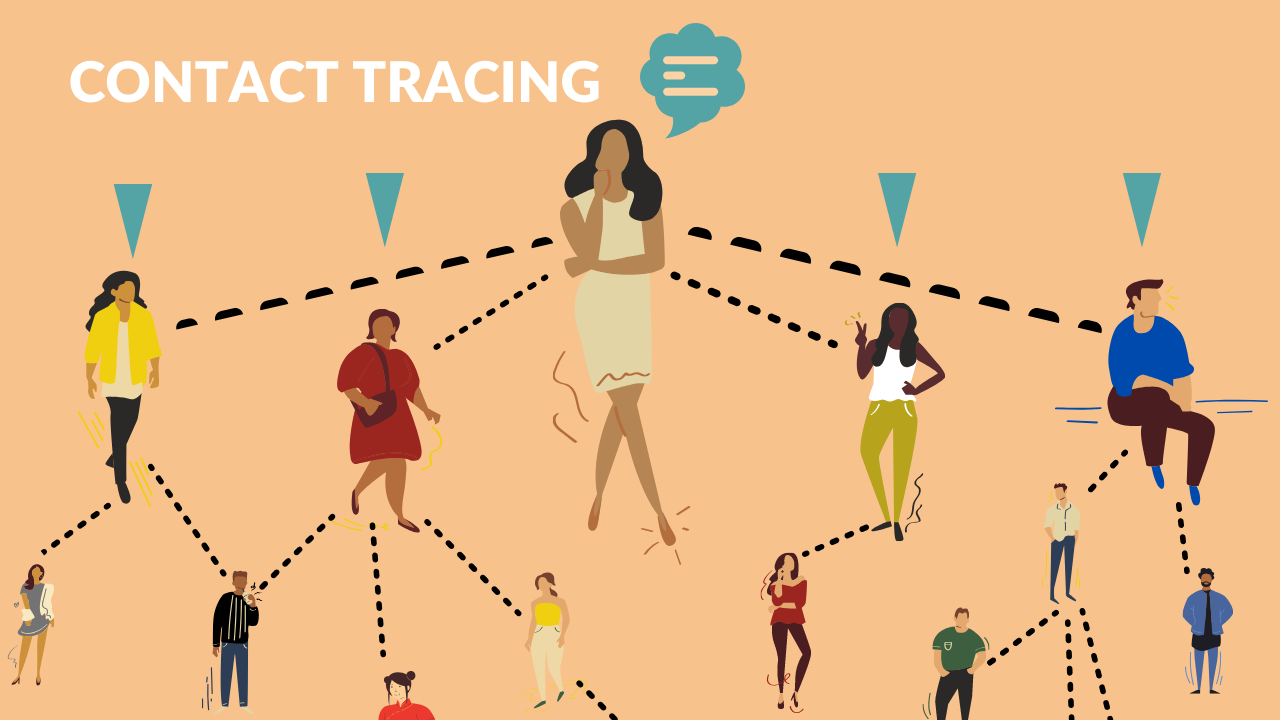
Image Credit: University of South Florida
Exposure notification and Contact Tracing: Essential tools
As the Novel Coronavirus or COVID-19 pandemic has gripped the world, Governments, Organizations and People all over the World are trying desperately to break the vice like grip of this deadly pandemic. With more than 830,000 people dead and 25 million directly infected, and the disease showing little signs of slowing down, the nature of the crisis is unprecedented and unmitigated.
The software development communities across the World have contributed since the start of the pandemic in 2019 by developing apps, data collection programs and frameworks to assist the medical communities and local, state and national or federal governments in their attempt to fight against this pandemic. The indefatigable spirit of doctors and nurses across the world required a solid backing and the tech community came forward unselfishly.
According to Wikipedia, the Exposure Notifications System, originally known as the Privacy-Preserving Contact Tracing Project, is a framework and specification developed by Apple Inc. and Google to facilitate digital contact tracing during the COVID-19 pandemic. Contact tracing is a technique used by public health authorities to contact and give guidance to anyone who may have been exposed to a person who has contracted COVID-19. The project’s aim was to produce a framework to do a digital trace of COVID-19 cases so if one happens to be near someone or in contact with someone who is later diagnosed with COVID-19, one can get a notification and take the appropriate steps to self isolate and get medical help if necessary. Think of it as an Early Warning System for those who came in contact with known or unknown COVID-19 positive people. The reason behind this close collaboration is evident – just like the Novel Corona-virus doesn’t differentiate between people, any efforts to digitally trace the spread of infection must transcend the very human boundaries of technology, software and hardware.
The announcement of this unprecedented collaboration project, a first of its kind among two arch rivals, immediately stoked fears of unreserved data collection and many people started voicing their concerns and feedback started flowing in. The people at large had genuine cause to worry. Tech companies after all have a less than acceptable track record of masking data collection activities while aggressively repudiating any efforts to control their massive arsenal of data-collecting apps.
Exposure Notification makes it possible to combat the spread of the coronavirus — the pathogen that causes COVID-19 — by alerting participants about possible exposure to someone they have recently been in contact with, who has subsequently been positively diagnosed as having the virus. There are three broad parts to this COVID-19 Exposure Notification system. The first part is defining the users. The second part is the feature of communication standard used to communicate between devices. And the third and final part is the contact tracing app developed by the local or state health agencies.
They process of Exposure Notification System woks through sharing anonymous Bluetooth beacons with nearby devices running the same software, tagging those that suggest extended and close contact associated with coronavirus spread, and saving the last 14 days of these records.
The first contact tracing app, Virginia’s COVIDWISE, debuted Aug. 5. North Dakota and Wyoming shipped their Care19 Alert Aug. 13, Alabama launched its GuideSafe app Aug. 17, and Nevada introduced COVID Trace on Monday. The University of Arizona is testing Covid Watch Arizona, with a statewide release expected soon.
So now lets look at the first part. According to Apple, there are two primary user roles identified within the Exposure Notification framework.
So who are the Users?
Affected user -: When a user has a confirmed or probable diagnosis of COVID-19 (as defined by the Health Authority), the framework identifies them as affected and shares their diagnosis keys to alert other users to potential exposure.
Potentially exposed user -: To assign a user the potentially exposed role, use the framework to determine whether a set of temporary exposure keys indicate proximity to an affected user. If so, the app can retrieve additional information such as date and duration from the framework.
How does the Exposure Notifications System work?
The second part of the project concerns with the actual working of the feature and communication. The Exposure Notification Service is the vehicle for implementing exposure notification and uses the Bluetooth Low Energy wireless technology for proximity detection of nearby smartphones, and for the data exchange mechanism.
The Exposure Notification system is made up of few components, namely Bluetooth keys, an API to communicate, and an app typically distributed by the local public health authorities.
First up, an API or Application Programming Interface is a software intermediary or bridge that allows two applications to talk to each other. Each time some uses an app like Facebook, or sends an instant message, or check the weather on phone, the application is using an API to fetch and display the data.
Apple and Google developed the underlying APIs and Bluetooth functionality, but they are not developing the apps that use those APIs. Instead, the technology is being incorporated into apps designed by public health authorities worldwide, which can use the tracking information to send notifications on exposure and follow up with recommended next steps.
- Contact tracing app download by users – Users download the contact tracing app provided by local public health authorities that are compatible with ENS (Exposure Notification System)

- User opts in to the ENS (Exposure Notification System)
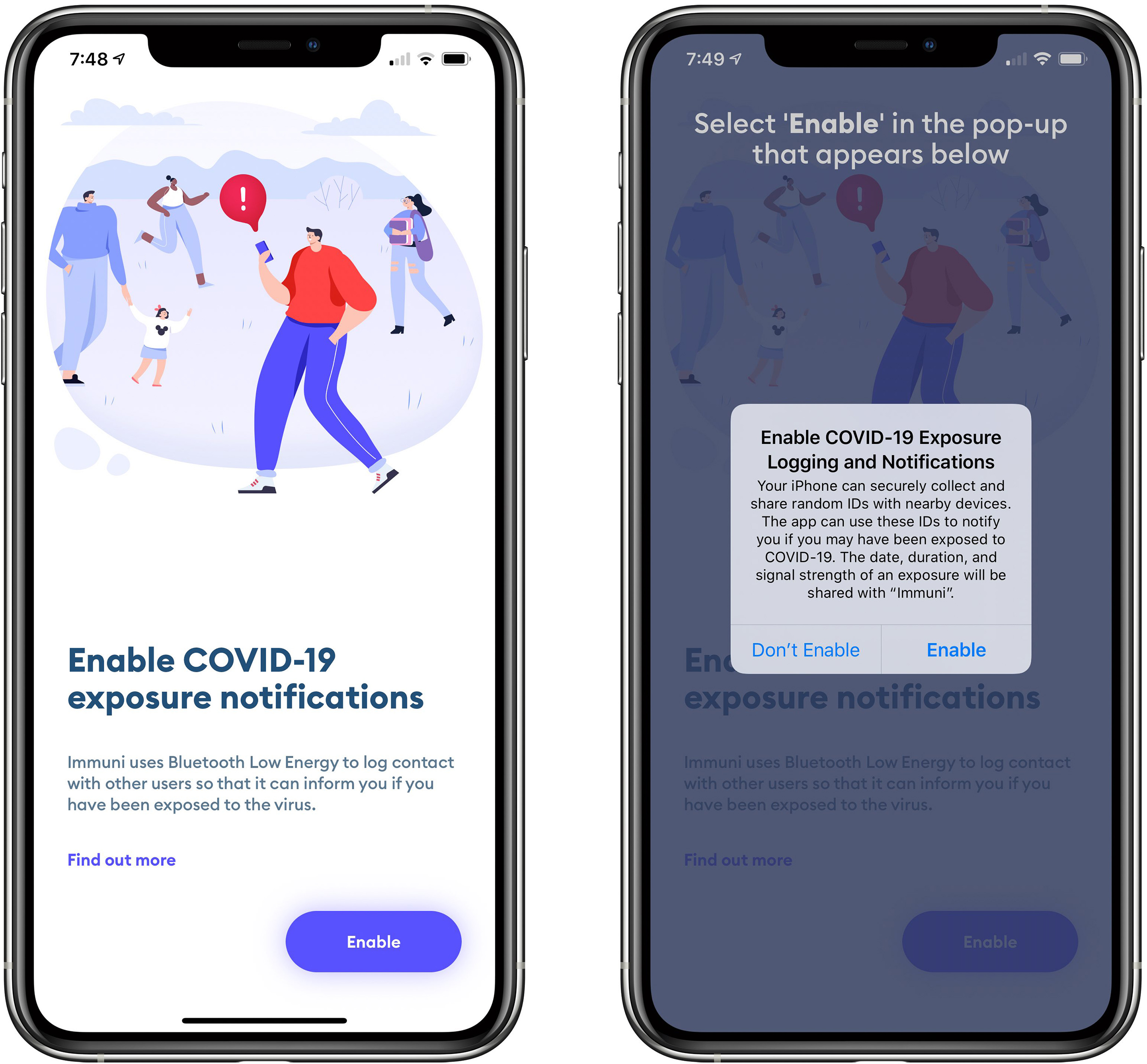
Image Credit: Macrumors
- ENS (Exposure notification system) generates a random ID for user’s device. To help ensure these random IDs can’t be used to identify the user or user’s location, they change every 10-20 minutes.

Image Credit: Nevada Health Response
- The user’s phone and the phones around user work in the background to exchange these privacy-preserving random IDs via Bluetooth. The users do not need to have any app open or opt-in or opt-out for this process to take place.
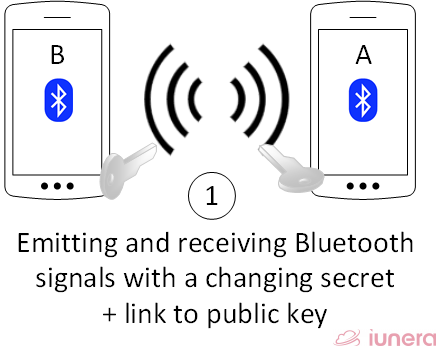
Image Credit: iunera
- User’s phone periodically checks all the random IDs associated with positive COVID-19 cases against its own list.

- If there’s a match, the app will notify the user with further instructions from their public health authority on how to keep user and the people around them safe.
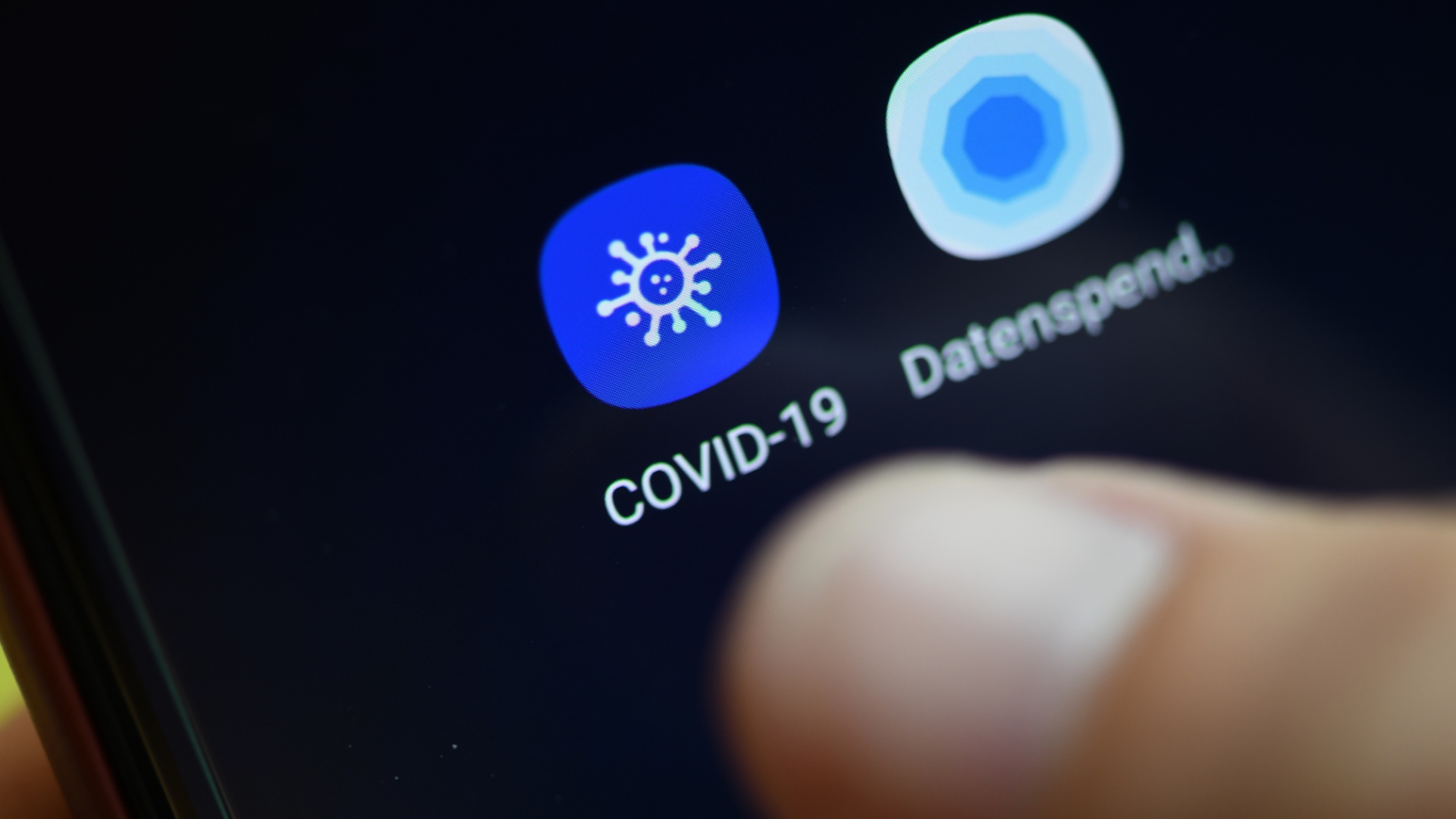
Image Credit: CGTN
Finally, what about Privacy
The Exposure Notifications System was designed with users’ privacy and security at the center and essentially everything else floating around the need to keep contact’s identity secure. An user’s identity is not shared with other users, Google, or Apple. Even a cursory read of the document produced by Apple and Google detailing the specifications and working details of the program reveal that the concerns around privacy may afford to be relaxed at least in the case of this feature. Here’s a look at the top privacy concerns.
- The APIs have been created with privacy and security in mind, and app usage is opt in rather than mandatory.
- User decides whether they want to use Exposure Notifications—it’s off unless user turns it on.
- ENS doesn’t use location data from your device.
- User’s identity is not shared with Google, Apple or other users.
- Only public health authorities can use this system.
Phase 1 of Exposure Notification System
The first phase, released by Apple through iOS version 13.5 on 20 May, 2020 required that users first download an app from their public health authority to opt-in to Exposure Notifications.
iOS 13.7 lets you opt-in to the COVID-19 Exposure Notifications system without the need to download an app. System availability depends on support from your local public health authority. For more information see covid19.apple.com/contacttracing. This release also includes other bug fixes for your iPhone.
This method makes contact tracing significantly easier for public health authorities who won’t have to waste critical time or spend valuable money on developing an app.
So What’s coming
The Exposure Notification System or ENS allows public health authorities to develop apps that augment manual contact tracing efforts while preserving the privacy of their citizens. As of today, public health authorities have used ENS to launch in 16 countries and regions across Africa, Asia, Europe, North America and South America, with more apps currently under development.
Apple likely made the change to use Exposure Notification service without the need for a contact tracing app to quietly encourage more public health departments to use its service. Only a handful of states in the United States and a few countries worldwide are using Google and Apple’s mobile technology. Most health departments still use an old fashioned contact tracing method that relies on in-person interviews and phone calls to locate those individuals who came in contact with an infected person.
Recently, Nevada Department of Health and Human Services started offering its own contact tracing app to use the ENS (Exposure Notification Service) to keep people safe.
]]>