This article offers a critical view of how content available on the internet quintessentially shapes public opinions and provides an unique challenge to governments around the world.
Introduction
The Social media today has a very different impact potential than it used to 10 years ago. Today the social media is capable of influencing country-wide elections, swaying public opinions, making or breaking brands and people associated with those names, and raising or flat-lining issues. The power wielded by content is truly mind-boggling when one considers that more than 56% of world’s population is online one way or the other. With growing penetration of smartphones and increase in bandwidth accompanied with decrease in data charges, content sharing is becoming ubiquitous and as easy as texting or talking.
Governments, regulators and public experts around the world have expressed concern amidst growing need to monitor content which is distributed largely freely today. Who controls what can be seen publicly has been a matter of much debate which is far from settled, however almost everyone involved favors some level of control on viewership of the media content posted online, or in other words, policing the internet. Most through recognize this policing as not a negative or an impediment, rather as a virtue or a social responsibility. Given the power, both direct and indirect, that content platforms usually possess, online available content has become the new hidden weapon on both sides of the debate.
The best way to prevent undesirable content from being seen is to never let it be uploaded in the first place. If content publishing platforms like Facebook, YouTube and several hundred others out there are required to screen every single video or post uploaded on their platform, it would simply lose out on millions of subscribers who want to upload their content immediately. If the platforms employ AI powered algorithms to pull down videos, then it must expect errors and content being pulled down or demoted needlessly.
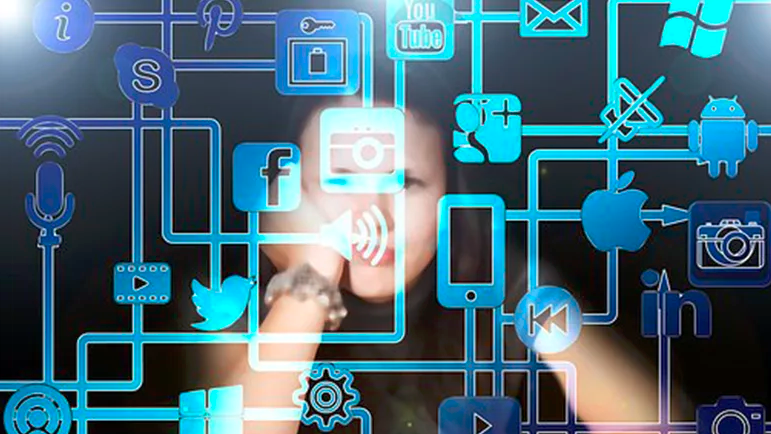
Image Credit: Internet
Is Social media uncontrollable?
YouTube works in 80 different languages, is free at the entry level, is available almost everywhere, is extremely popular in the 18 – 24 year age group around the world, even in countries like P.R. China which have their own version of YouTube, and is increasingly being used to ‘monetize’ content like never before. With such mass viewership, Cisco predicts that videos will make up more than 80% of global internet traffic by 2022. YouTube, the world’s foremost content sharing site, has close to 2 billion logged-in users each month (one doesn’t need to be a logged in user to just view videos). Given its low entry barrier, almost everyone with an internet connection has used YouTube at some time.
Social media platforms, especially where content is freely distributed, or nearly freely distributed, have had an unfettered run over the past decade leading to their massive popularity today.
“We’re just a platform” is almost an extremely convenient way to avoid taking full responsibility for an increasingly serious set of problems. Yet this is exactly the approach that majority of platforms have adapted when it came to own up the responsibility of content moderation and review.
Few years back, Steve Stephens recorded himself murdering an innocent victim and then uploaded the footage to Facebook. The horrific act put Facebook under immense pressure to do something. This incident is not alone as there have been may documented cases of teens posting suicides on the internet.
Recently, the ghastly attack on the two churches in Christchurch, New Zealand killing more than 50 people was streamed live on Facebook for the world to see. Millions of people watched in disbelief while the lone gunman went on a rampage gunning down unarmed civilians. The video was streamed for several minutes while YouTube Moderators fought back hard taking down the video as newer versions kept popping up seemingly beating the controls that YouTube has in place to immediately flag already removed material. The up-loaders were able to sneak past by using a loophole – exact re-uploads of the video are banned by YouTube, however videos that contain clips of the original footage must be sent to human moderators for review, thereby delaying the process. And again this loophole existed for a purely legitimate reason – to ensure that news videos that use a portion of the video for their segments aren’t removed in the process.
For all live streaming and news events, especially ‘Breaking News’, YouTube’s safety team prefers not to use the system for immediately removing child pornography and terrorism-related content, by fingerprinting the footage using a hash system, and rather depends on a system similar to its copyright tool, Content ID, but not exactly the same. The system takes the much longer route – it first searches re-uploaded versions of the original video for similar metadata and imagery. If it’s an unedited re-upload, it’s removed. If it’s edited, the tool flags it to a team of human moderators, both full-time employees at YouTube and contractors, who determine if the video violates the company’s policies. YouTube considers the removal of newsworthy videos to be just as harmful. YouTube prohibits footage that’s meant to “shock or disgust viewers,” which can include the aftermath of an attack. If it’s used for news purposes, however, YouTube says the footage is allowed but may be age-restricted to protect younger viewers, reports The Verge.
Image Source: Internet
Rasty Turek, CEO of Pex, a video analytics platform that is also working on a tool to identify re-uploaded or stolen content, told The Verge that the issue is how the product is implemented. Turek, who closely studies YouTube’s Content ID software, points to the fact that it takes 30 seconds for the software to even register whether something is re-uploaded before being handed off for manual review. YouTube’s Content ID tool takes “a couple of minutes, or sometimes even hours, to register the content,” Turek said. That’s normally not a problem for copyright issues, but it poses real problems when applied to urgent situations. A YouTube spokesperson could not tell The Verge if that number was accurate.
Further, Turek contends, There is no harm to a society when copyrighted things or leaks aren’t taken down immediately. There is harm to a society here though when live-streaming and breaking news puts harmful content out there. This is precisely the reason why live-streaming is considered a high-risk area by Facebook and YouTube and nearly every other platform that provides live-streaming. People need to have different credentials for live-streaming and people violating rules related to live-streaming, who are sometimes caught using Content ID once the live stream is over, lose their streaming privileges because it’s an area that YouTube can’t police as thoroughly. The teams at YouTube are working on it, according to the company, but it’s one the safety team acknowledges is very difficult. Turek agrees.
In another incident, Facebook admitted last November that it did not do enough to prevent its platform from being used to “foment division and incite offline violence” in Myanmar against the Muslim Rohingya minority. That came after the United Nations described the events surrounding the mass exodus of more than 700,000 Rohingya people from Myanmar as a “textbook example of ethnic cleansing.”
These incidents are not limited to YouTube and Facebook. In China, Bytedance chief executive Zhang Yiming had to issue a public apology in April 2018 after the company was ordered by the central government to close its popular Neihan Duanzi app for “vulgar content”. The company’s Jinri Toutiao news aggregation app was also ordered to be taken down from various app stores for three weeks. Bytedance pledged to expand its content vetting team from 6,000 to 10,000 staff, and permanently ban creators whose content was “against community values”.