
Image Source: Internet
The Blitzkrieg
Major JFC Fuller, then 37 years of age, was posted at the Somme battlefield in France at the time of WWI in 1916. On that battlefield, Major Fuller observed for the first time the awesome power of the newest savagery in the war technology, known simply as the armored tank. Major Fuller seized immediately that this new machine, the tank, holds the answer to most perplexing tactical question in modern day warfare – how to cross an open muddy field, littered with trenches and barbed wire against a haze of blazing guns? No approach had worked so far, and even hundreds of thousands of brave men laying down their lives only had as much effect as millions of raindrops washing against stone façade. But the tank held the most promise. For, it seemed indestructible, carried more firepower and could march on undeterred in all kinds of weather and most all ground conditions. Major Fuller enthusiastically sent reports of the success of this new weapon to the English war leadership. To Major Fuller, the evidence of tank’s superiority was undeniable and hence there exists every reason for tanks to replace the archaic ways of horse mounted cavalry warfare.
All the major countries in World War I (1914–1918) entered in to the conflict with cavalry forces. German forces continued the use of horses on the Eastern Front well into the war while on the Allied side, the United Kingdom used mounted infantry and cavalry charges throughout the war.
The British war leadership was steeped thoroughly in tradition and failed to see the alternate methods, regardless of the pragmatism or inevitable tide of changing times. One British General compared the faces of soldiers riding horses to those riding tanks and quipped about the lack of intelligence on the faces of tank mounted soldiers. Not just the Leadership, many soldiers on the front lines who had never seen tanks in action were at best skeptical of the new beast.
Major Fuller sought transfer to the Tank division and went on to produce brilliant papers of how to break the German lines, destroy vital rail and road links, invade deep in to the territory and strike at the German war offices. A tactical approach aided by airstrikes and resting squarely on unarguably superior technology available to the British Army in form of tank will surely make quick work of the Germans, Major Fuller conceived. By striking suddenly at the German command, the Blitzkrieg will cause the German army to disintegrate and fall. Major Fuller didn’t give up hope and continued in his efforts undeterred. In late 1917, during the battle of Cambrie, the British war leadership finally gave in to Fuller’s persistent demands and decided to use 400 tanks to attack German front lines. Unsurprisingly the British tanks decimated German defense system and made quick work of the barbed wires and shrugged off lines of soldiers firing guns at the armored plating of the tanks. A measly top speed of 4 miles per hour was enough for the tanks to run through German war lines and trenches. The Germans were caught off-guard and outmaneuvered tactically and strategically. The soldiers who saw the power of tanks for the first time were awe-stuck. In what can only be dubbed as an irony, the British Army decided to send in horses to take advantage of the gaps created by the tanks. This non-sensical move allowed German forces to regroup and drive the British back. The momentum was lost. And so was the tactical and strategic opportunity. Major Fuller once again undeterred carefully documented the events, recording what worked well and what may be improved. His ideas were reluctantly adapted and dubbed Plan 1919, to be used in the year 1919.
Major Fuller’s work did not go completely unrewarded though. For his pioneering papers in strategy work, Major Fuller received many accolades and won the Gold Medal from a prestigious think tank of the day. The most important possible beneficiary of his careful and well documented work however remained cold. The British Army continued to give Major Fuller a cold shoulder. The most brilliant and accurate strategic work in modern warfare was seen more as a threat than an opportunity.
The beliefs of British war leadership were so deep rooted that the newly formed Tank core and rapid advances in tank technology throughout the war years amounted to exactly nothing. Before Major Fuller’s plan saw the light of the day, the war ended in 1918. However, that was not the end of tank warfare or for that matter the strategy of sudden, lightning paced attacks backed by airstrikes destroying vital road and rail links that Major Fuller had conceived. Exactly twenty years later, at the start of World War II, Germany used the same Blitzkrieg approach to effectively lap up entire Europe within a matter of weeks, almost unchallenged and nearly unstoppable. Despite possessing clear technological superiority and strategical advantage of having a brilliant war strategist in Fuller, the British squabbled away the technical and strategic momentum to German forces by late 1930s. Major Fuller’s strategy proved right, not just right, in fact it was proven to be arguably the biggest breakthrough in war technology since the invention of guns.

Image Source: ideanote
How enterprises react to Innovation?
Major Fuller though is not alone, nor is the blissful ignorance of ground realities a trait reserved for British War Leadership. In 1970, the photocopying giant Xerox developed a state of the art research center in Palo Alto, California, called PARC, short for Palo Alto Research Center. PARC scientists quickly paid back Xerox by doing innovative work in laser printing that would establish Xerox as leader in printing technology for decades. Shortly thereafter Xerox scientists developed the first computer, truly ahead of its time. Steve Jobs during one of his visits to PARC was stunned by what he saw, the mouse and computer interface was truly revolutionary he felt. Xerox however had other ideas. The same Xerox leadership team that led its PARC scientists to produce breakthrough in laser printing technology in 1971 and many other innovations, seemed equally capable of squandering away the strategic advantage held by true game-changer, the personal computer. Xerox was then dubbed as the company that fumbled the future.
In 1975, Steven Sasson invented the first self-contained digital camera at Eastman Kodak. Sasson’s patent claimed an arrangement that allowed the CCD to be read out quickly (“in real time”) into a temporary buffer of random-access memory, and then written to storage at the lower speed of the storage device; essentially all modern digital cameras still use such an arrangement. His was not the first camera that produced digital images, but was the first hand-held digital camera. 37 years later, in 2012, the digital camera technology became the prime reason for Kodak’s demise. Though Kodak did eventually market both professional and consumer cameras, it did not fully embrace digital photography until it was too late.
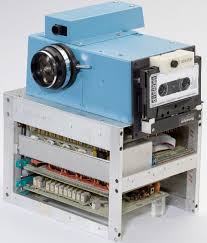
Image Source: NY Times
In 1999, Sony launched world’s first digital music player. Sony possessed the iconic and generation-defining brand Walkman and had endorsements of virtually every heavyweight in the music entertainment industry. Yet, within few years, Apple’s ipod defined the music industry, virtually destroying the Walkman promise. Sony worried about cannibalization and was slow to react, thoughtful and diligent at every turn. If it built a music player and service that made it easy for people to share digital songs, that might hurt sales of its own music records division, which had its own profit and loss statement. Apple on the other hand had one single profit and loss statement for the entire company. Steve Jobs’s business were simple and radical. Never be afraid of cannibalizing yourself. ‘If you don’t cannibalize yourself, someone else will,’ Steve Jobs said. Result is a bed of roses for Apple, while becoming thorns under the skin for Sony.
By 2013, Nokia had lost 4/5th of its peak market capitalization in 2007. Customers were driving away in troves to competition. Nokia had ignored the glitz and glamor of Android, while it severely underestimated the new ecosystem. Microsoft lapped up Nokia’s handset business for a fraction of its value. However, unbeknownst to Microsoft, things had become so bad for Nokia that no amount of effort would be able to revive the brand. Microsoft’s own windows phone OS was in no way a challenger to Android – iOS domination. When Satya Nadella took over Microsoft from Balmer in 2014, he wrote off the entire $7.2 billion Microsoft investment in to Nokia, gave up efforts to review Microsoft’s 7 year old foray in to mobile phones and put the entire Microsoft mobile phone business on the chopping block, marking the end of a rather painful journey for Microsoft’s handheld devices business unit. This is a particularly hard pill to swallow as windows OS had won over many critics with its arguably superior interface when it launched in 2010. The initial success was short-lived and couldn’t be replicated to subsequent versions of both software and hardware.

Image Source: gsmarena
Could it all be a coincidence? The tank powered blitzkrieg, the underrated digital camera, the before-it’s-era personal computer and carry-in-your-pocket digital music player? Why do well-established, pioneering organizations lose out to maverick, new-comers? What powers the engine of growth in unconventional yet strategically sound products and technologies? Why does organizations get complacent and let upstarts overtake them? Why do leadership of these organizations fail to grasp the potential of emerging products and technologies in front of them? Isn’t guiding the organization through unknown times the primary purpose of bringing together individuals, otherwise known as leadership team? If the top organizations fail so miserably and so often, there must be some reason, some logical, rational explanation.
Answers to these questions are often hidden underneath layers of organization culture. Many modern business people, strategists and industry watchers coined the term ‘Disruptive’ and attached it to any new product, service or technology that sought to bring something new to the consumers. Disruption, in pure business terms is defined as an innovation that changes the business and industry dynamics in such a way that incumbent organizations must adapt to the change or fall by the wayside. In the face of disruptive technology or product, the incumbent organization needs to maintain its leadership status by embracing it as quickly as possible. If the organizations keep doing what worked for them in the past, they are more likely to fail as such disruptive forces demand disruption to the way of thinking and ethos of working. “Disruption” in classic business parlance describes a process whereby a smaller company with fewer resources is able to successfully challenge established incumbent businesses. That sadly is not true of how market leaders work.
Disruptive Innovation and Architectural Innovation
The question is: why don’t organizations adapt? Its certainly not for lack of innovation. For kodak, Sony and Xerox were all highly innovative companies with zealous management teams. Then what made them lag behind and eventually lose the fight? This is where the theory of Disruptive Innovation pioneered by Clayton M. Christensen comes in. Briefly the theory of Disruptive Innovation suggests this: Specifically, as incumbents focus on improving their products and services for their most demanding (and usually most profitable) customers, they exceed the needs of some segments and ignore the needs of others. Entrants that prove disruptive begin by successfully targeting those overlooked segments, gaining a foothold by delivering more-suitable functionality—frequently at a lower price. Incumbents, chasing higher profitability in more-demanding segments, tend not to respond vigorously. Entrants then move upmarket, delivering the performance that incumbents’ mainstream customers require, while preserving the advantages that drove their early success. When mainstream customers start adopting the entrants’ offerings in volume, disruption has occurred.
While the incumbent leader organizations are looking elsewhere, the newcomers arrive, unburdened by legacy, take a half-baked product or technology and make rapid progress carving a niche market and gaining foothold in the industry to displace the incumbent.
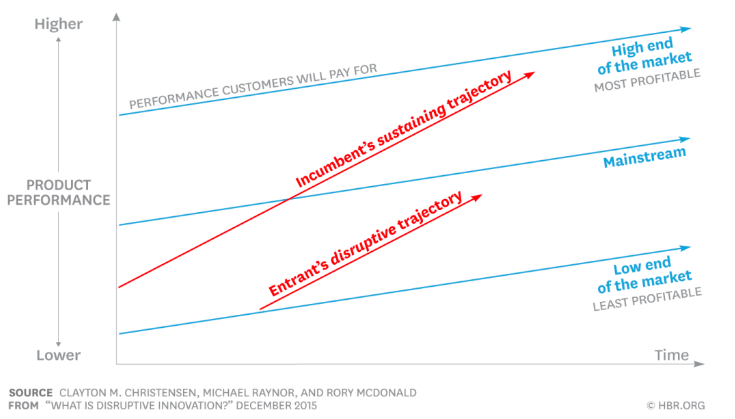
Image Credit: HBR.ORG
The theory of Disruptive Innovation explains as much as it leaves out. The theory is certainly valid, and elegant for the most part. Christensen has a single clear idea of how disruption happens — and recommends a solution, too: disrupt yourself before you are disrupted by someone else. However, stretching it to fit all scenarios is at best a naïve attempt at explaining the why and how of how people work.
Kodak, Sony and Xerox were all highly innovative companies, each possessing an enviable track record. The technical teams at these organizations boasted of some of the sharpest minds, while the business leaders were equally brilliant. The leadership teams at these organizations could see what lay ahead. As with innovation, the lack of vision could not be a factor. They could articulate the challenges of the times ahead and the promises of untested technologies. Yet, they were unable to put together a cohesive response strategy. It seemed no one at the helm could do the right thing. Where does this inability to lead the tanks in place of horses stem from?
The theory of Disruptive Innovation was not new in 1995 when it was first proposed, or over two decades when it was further developed. Perhaps the ideas were old, only the changing global nature of businesses made the traits ever so apparent. Or that disruption has been happening forever, we are just starting to recognize it now. Or perhaps, disruption is the normal.
When a company discovers or arrives at a successful business model often following years of painstaking work, management are given the explicit mandate to exploit that advantage to its fullest extent. This invariably means that most companies are structurally geared to manage, protect and nurture their currently successful business model. All the company’s assets – structures, operations, human resources, processes, tools and culture are geared towards doing what they have always done – protect, grow and nurture its current strengths.
It is no surprise then that swords are pulled out when there is even a shadow cast on the company’s current affairs. Any harbingers of change, which bring a radical suggestion or new idea, no matter how sound, or logically accurate, tend to be at odds with almost the entire company. This is not necessarily bad – companies do need to exploit their current positions as this is where their revenues and profits are coming from. The mistake organizations and leaders make is to focus exclusively on exploitation while ignoring most other ideas.
In the quest to understand the behavior of leaders better, theory of Disruptive Innovation does seem to fall short. Its true that Disruptive innovation changes the marketplace, however it doesn’t speak to why the incumbent organizations fail to take action? Or why the same organization with brilliant track record at innovation suddenly stops innovating?
Rebecca Henderson and Kim Clark postulated that unlike what is suggested in the theory of disruptive innovation, there are multiple points of failure where an organization fails to seize the opportunity. These points may exist all along, up and down the organization in no order. For example, in JFC Fuller’s case, almost every branch, company and division of the armed forces had little faith, mainly because many had not seen the tank in action. Questions on its size, slow pace, cramped insides, and unsightly presence were all valid, yet short-lived.
Then there are challenges about the financial viability of a product, or about its perceived value to the company, or about its future. An architectural innovation challenges an old organization because it demands that the organization remake itself. The simple explanation is that a market leader in producing printers is much likely to accept breakthrough innovations in printer ink technology as there is no real organizational stress in pursuing that product line, and highly unlikely to accept the idea for a personal computer as there is little organizational mechanism for paying attention to the innovation and nurturing it along.
Within the camera business — Canon and Nikon made the transition to digital technology successfully while Kodak could not. Was that because Kodak was hidebound and clueless about digital technology? Not remotely as Kodak entered the digital market very early and with some early successes. What killed Kodak, though, was that it hadn’t really been a photography company for a long time, rather it was a film, photo paper, and chemical company.
The message of Henderson’s work with Kim Clark and others is that when companies or institutions are faced with an organizationally disruptive innovation, there is no simple solution. There may be no solution at all. “I’m sorry it’s not more management guru-ish,” she says. “But anybody who’s really any good at this will tell you that this is hard.”
Tesla’s solar powered vehicles, Tesla’s SpaceX, Tesla’s home solar program are all examples of what happens when organizations shun perfectly valid ideas or technologies for lack of viability, and lesser known players enter in to the market to fill that small gap of that niche product. Tesla started off as a ‘niche’ EV manufacturer, in a market segment which itself was considered a joke by several top automobile manufacturers, and in little more than 1 decade, managed to claim the spot of most valued US Automobile brand ever. And this feat is even more enviable considering that Tesla manufactures all of 3 vehicles today. That is 3 vehicle models competing against 100’s of competitors’ models, using technology which is barely two decades old against almost 120 years of development in conventional gas powered automobiles.
Oil Industry has dominated the game for almost a hundred years now. Yet, the implications for the Big Oil are really very straightforward. Adapt and invest in clean fuel or simply rollover. And that is not an exaggeration by any means. The writing has been on the wall for some time now and the Oil Industry is cognizant of the same.

Image Source: Forbes
Conclusion
The thing with new, game-changing technologies, products or ideas, is that to thrive it needs to find an organization that will accept it. Adaption of any new technology has severe implications; it not only changes the organization but often times creates a new industry or segment altogether. The tank changed the modern warfare forever; Netflix ushered in an era of online streaming; personal computers took computing out of huge air-conditioned rooms to homes; iPods created an entirely new marketplace for music; and the digital cameras brought photography to 3 year old and 80 years old alike. These are all game-changers, whose potential was not unknown to their parent organizations, yet it took alien organizations to realize their full potential.
Only those organizations which are truly willing to change themselves, reorganize and adapt, re-skin and lose its earlier identity, and let that idea, or technology or product guide it to the future, those organizations mature enough to understand that immaturity is a gift, those are the organizations that create unparalleled wealth and unimaginable success stories.
]]>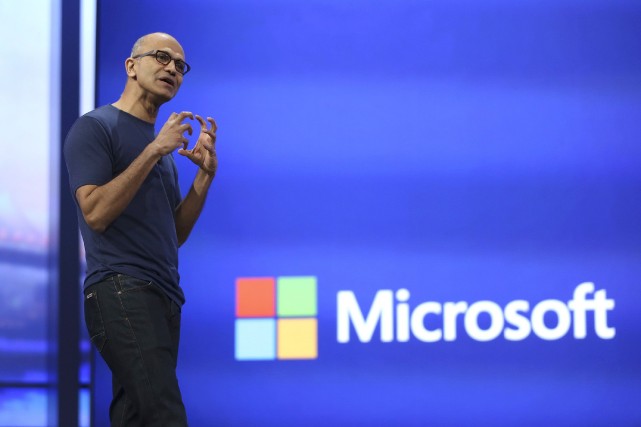
Microsoft has mostly been recognized as the industry leader in technology and innovation. Having cornered 90% of world personal computer market and having massively popular enterprise services as a cash cow meant that Microsoft always carried significant advantage over its competitors and peers. It could literally burn few billions in cash and not break sweat over it. Or acquire couple of companies for few billions and choose to write the investment off as an unsuccessful bet. Microsoft had been the favorite of most of its critics at some point, and has been at loggerheads with various governments, domestically and overseas, and yet survived without breaking the bank. Employing more than 100,000 people since forever and leading the way in consumer and enterprise computing, Microsoft was easily considered too big to fail.
Yet during the late 2000s, trouble was brewing at Microsoft. The years leading up to 2014 were very difficult as Microsoft was seen struggling on various fronts. Part of the reason was internal while a big part of it lay outside Microsoft. Externally, technology itself was shifting along with user preferences and increasing complexity was no longer feared by most IT organizations. The focus was to move away from large, one vendor solution to having multi-vendor stack of products which gave the organization flexibility to choose the best providers. All these changes meant that Microsoft’s model was coming under increasing pressure.
Mobile platform was considered Microsoft’s biggest, most glaring shortcoming. At the start of 2014, Microsoft’s mobile market share amounted to just 3.5 percent. That was a dismal number, compared with Apple’s 15% and Android’s 80% market share. Additionally, its Surface tablet was struggling with less than 3% of the tablet market. This made Microsoft’s Windows the only major operating system that didn’t have a viable mobile component. The personal computer sales were declining at the same time, as shipments slowed down by more than 10% for the first time.
Apart from the above hardware troubles, Microsoft was coming under intense heat on the software and ecosystem side as well. Customers were growingly seeking a seamless, integrated user experience across devices and Microsoft was nowhere close to providing that. Bing remained a distant second to Google Search (18.7 percent versus 67.6 percent, respectively), and Microsoft had just released a free online version of Office — Microsoft Office Online — in response to Google Drive. Apps available on windows store numbered 1/5th of those available in App store and Google Play.
Further in the years leading to 2014, Microsoft was increasingly coming across as an organization happy to rest on its past laurels. Pace of innovation was slowing down, confidence in the organization was at an all time low, its products were seen as out of touch from market realities while the product pricing model was considered by many as greedy or obscene, or at best, overpriced. Microsoft was late to launch its smartphone, Windows phone, and the market was already in love with iPhones by the time first Windows phone came out – more than 3.5 years after the launch of first iPhone. Its new operating system, Windows 8, touted to provide seamless experience across devices was considered a market dud, while offerings such as Xbox gaming system lost out purely due to poor pricing strategy.
Dawn of an Era
When Nadella took over as Microsoft’s CEO in Feb 2014, his challenges were immediate and spotlight was always on, as is expected in case of world’s 4th largest corporation.
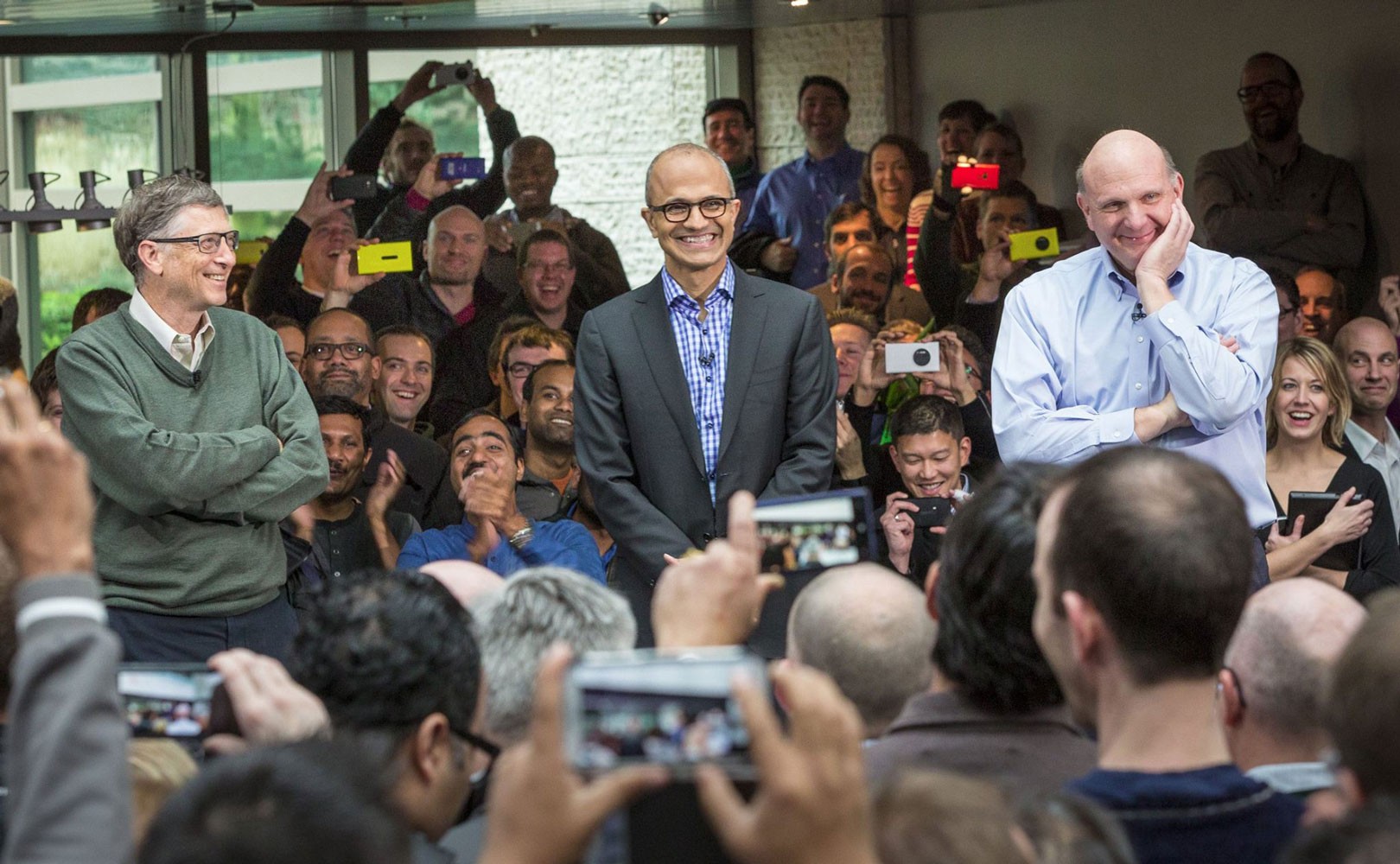
When Nadella came on to take the charge at Microsoft, both analysts and Wall Street agreed that the organization was fading to irrelevance. Over the next 6 years, Nadella set out on an inspiring journey, one that would see Microsoft make radical changes, charting out its course amidst uncertainty. This journey would see Microsoft change its business structure, breaking new frontiers and boundaries, launch new products and repackage old products and forge new partnerships on the road to regain its lost charm. Nadella began this journey humbly and quietly, two attributes which have become his hallmark and an unmistakable part of his legacy. Looking back, his first decisions during his first year were the hardest any CEO can be expected to make anytime during their stint as CEO, yet the finesse and calmness displayed by Nadella is worthy of unparalleled praise.
In the almost 6 years since Nadella has taken over, Microsoft’s market cap has risen from $315 billion to $830 billion. Considering that Nadella came in when Microsoft was under pressure from all fronts, and then managing to turn around the ship completely is just incredible.
2014 and Beyond: Grand Strategy, the Nadella way!
Image Source: zdnet
Nadella’s grand strategy for Microsoft covered 4 essential elements. First, to make any long lasting changes, he needed to fix the culture and maintain the improvements made in the short run. Second, products and services, across the domains of hardware and software need to reflect the changing customer outlook. Third, Microsoft needed to re-launch itself with unparalleled cooperation and collaboration, forging previously unthinkable partnerships. And fourth, in all its products and service offerings Microsoft needed to make a ruthless self-evaluation of Make vs Buy and proceed to acquire firms and businesses where it sees value.

Image Credit: Microsoft
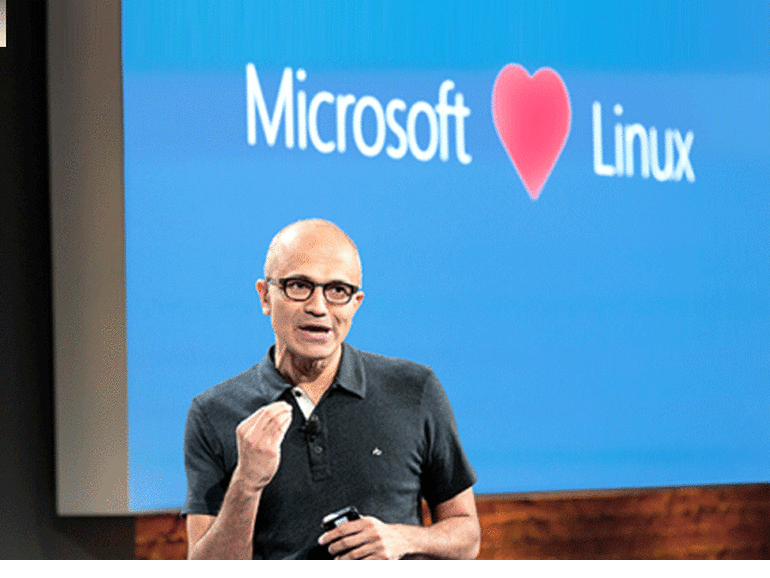
Image Credit: Microsoft
Fixing Culture
Nadella immediately started working to create an outward focused, critique-hungry organization where formal power structures fade away to make way for productive partnerships; where direct communications are more important than showmanship; where tradition and hierarchy do not stand in way of pragmatism; and where ‘getting things done’ is more important than who does them. From his very first public appearance where he gave the impression of being directly approachable and responsible, to his first actions where he took decision to ramp down windows phone product line, Nadella meant change.
He fixed the culture through direct communication and leadership. He focused the company on cloud, winding down Windows Phone, de-emphasizing Windows as a whole, and turning Office and XBox into cloud-centric products. Back in the day, partners, vendors and developers alike talked about a much hostile environment, where it was difficult to get things done, or to get the needed resources, and the whole attitude was not geared towards cooperation. This attitude changed a great deal under Nadella and its clear that this change has a lot to do with ‘the buck stops here’ culture Nadella introduced. Not all of this worked perfectly every time, but by maintaining a growth mindset, they learned and improved. As a result, the company is the clear #2 cloud provider and occasionally the most valuable company in the US.
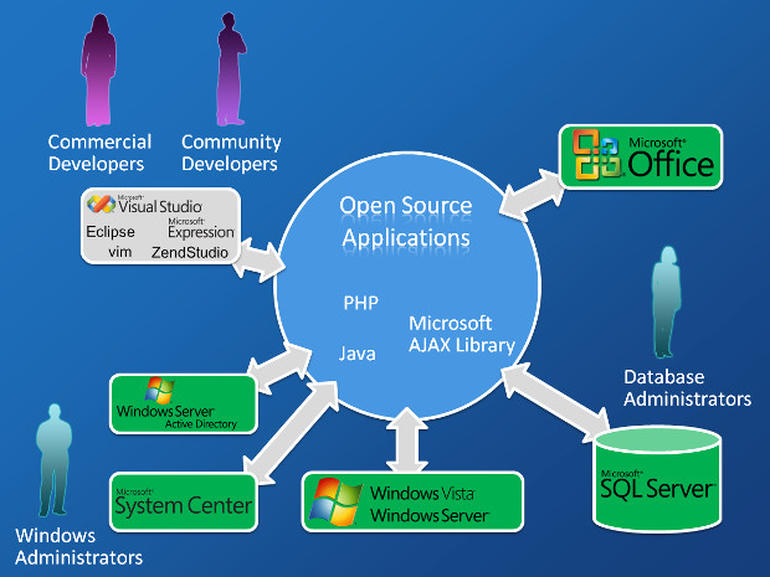
Windows run with everything, not just Windows run everywhere!
Nadella quickly made an impression and emphasized on Microsoft being a cloud-first and mobile-first company, moving away from a Windows-first company. The aim was to have Windows run with everything, not just having Windows run everywhere. Nadella knew that the latter goal was self-limiting and almost non-achievable whereas the former goal can lead to Microsoft becoming the number 1 and the most relevant technology company for decades to come. The world was increasingly becoming a cloud and mobile-first environment and for Microsoft to grown and remain relevant, they would need to adapt rather than resist. He laid down the entire roadmap of moving from a Windows-first company to a Cloud-first company. They underwent a huge engineering reorganization where he asked then Windows chief Terry Myerson (Microsoft Executive Vice President, former head of Windows) to step down. To speed up matters, he focused on inorganic growth, by acquiring Minecraft, LinkedIn, and Github in quick succession enabling the focus to shift towards the cloud.
Moving Office and Windows to a SAS model, dimming the gap between platforms by not only releasing popular products cross-platform but also allowing developers to use proprietary tools to build product across any platform, open sourcing .Net, making Visual Studio Community free, releasing products like Visual Studio Code for OSX and Linux, HoloLens, round the clock feature addition to Azure cloud services, are all great examples that indicate Microsoft’s shift towards openness and rapid development/innovation.
Shortly after taking over, Nadella wrote off Ballmer’s $7 billion acquisition of Nokia’s mobile phone business as a loss, eliminating more than 20,000 jobs in rather muted acknowledgment that Windows was not going to catch the iPhone and Android anytime. Microsoft was better off placing its bets elsewhere and that’s exactly what Nadella did, without remorse. Microsoft then went on to extend its collaborative approach to release more than 100 iOS apps and even embraced Linux (described later), the open-source Windows rival.
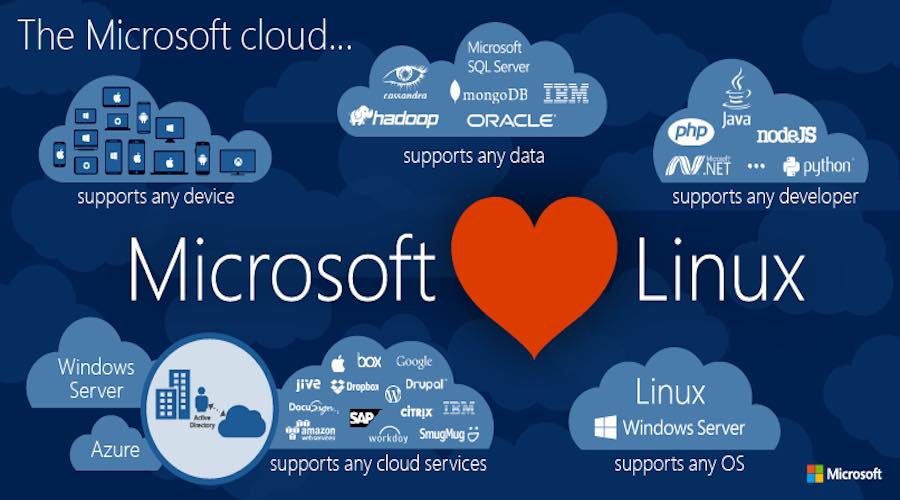
Image Source: Microsoft
With Microsoft revolutionizing its flagship MS-office suite and Windows OS through launch of Microsoft 365 Enterprise, which combines Office 365 Enterprise, Windows 10 Enterprise, and Microsoft’s Enterprise Mobility and Security features into a single subscription Office365.
Nadella is not just content with taking down barriers. He is equally keen to invest greatly in research around Mixed Reality, Artificial Intelligence and Quantum computing. Nadella reportedly believes these three to be the next key growth areas for them.
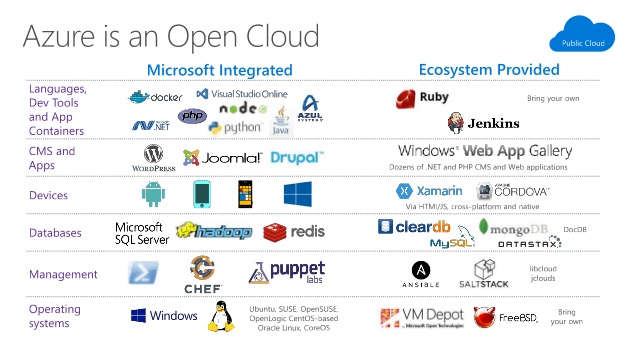
Image Credit: CSA
Cooperation and collaboration to keep customer first
Nadella seemed to be happy working on multiple fronts at the same time. From trying to shift culture at Microsoft to working with partners and collaborating across competitors, he made a point to keep customers first. Under Nadella, Microsoft went from a company trying to make customers buy Windows all the time to a company that recognized customers want solutions that Nadella laid out his new vision of cooperation through a quote which has been quoted multiple time, “It is incumbent upon us, especially those of us who are platform vendors to partner broadly to solve real pain points our customers have.”
To show his seriousness, Nadella attended Dreamforce in 2015, setting aside his personal differences with Salesforce management. In the backdrop of lawsuits both companies had filed, Nadella extended a hand of cooperation and collaboration. In the year prior, launching MS Office for iPad was Nadellas first major announcement immediately after his becoming CEO.

Image Source: Microsoft
Nadella’s acute business acumen and willingness to break traditional structures led to a truly path-breaking partnership with Linux. Azure was at a crossroads when Nadella took over. It was built to challenge Amazon’s market-leading AWS cloud service, launched several years earlier. Azure was also supposed to entice customers into meeting the bulk of their computing needs with other Microsoft products. If a client wanted Azure to run a Windows operating system, Microsoft was proud to take their business. Yet, if the client preferred the rival Linux approach (which Ballmer once dubbed a “cancer”), it was out of luck as Microsoft couldn’t offer a matching product. During a visit to a small start up called Okta Inc., based in San Francisco, to see how small start ups are using cloud, Nadella came up with Microsoft’s path-breaking move. Todd McKinnon, CEO and co-founder of Okta Inc., remembers telling Nadella, “We’re not using Azure, we use AWS.” Nadella shrugged. This wasn’t a sales call. It was somewhere between fact-finding and espionage. At the end of the hour-long visit Nadella had drawn out a detailed map of what startups like Okta wanted from the cloud. Over the next few months he met with at least seven other startups in similar settings. Those talks inspired Nadella to offer Linux at a special, lower price on Azure–forgoing Windows licensing fees to keep customers happy. The decision was so at odds with Microsoft’s usual lockstep methods that it later became the subject of a Harvard Business Review case study. Azure now is the fastest-growing of the five major cloud infrastructure services.
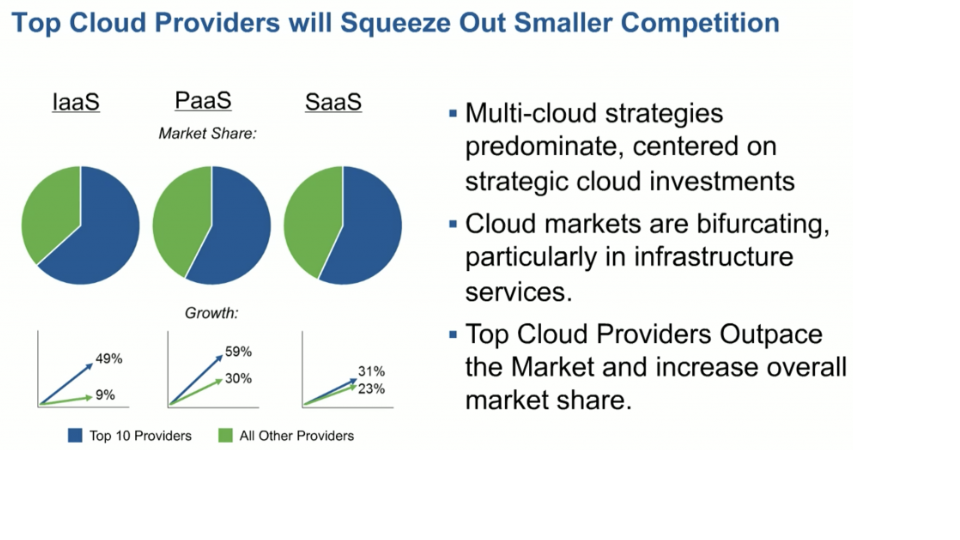
Image Credit: Microsoft
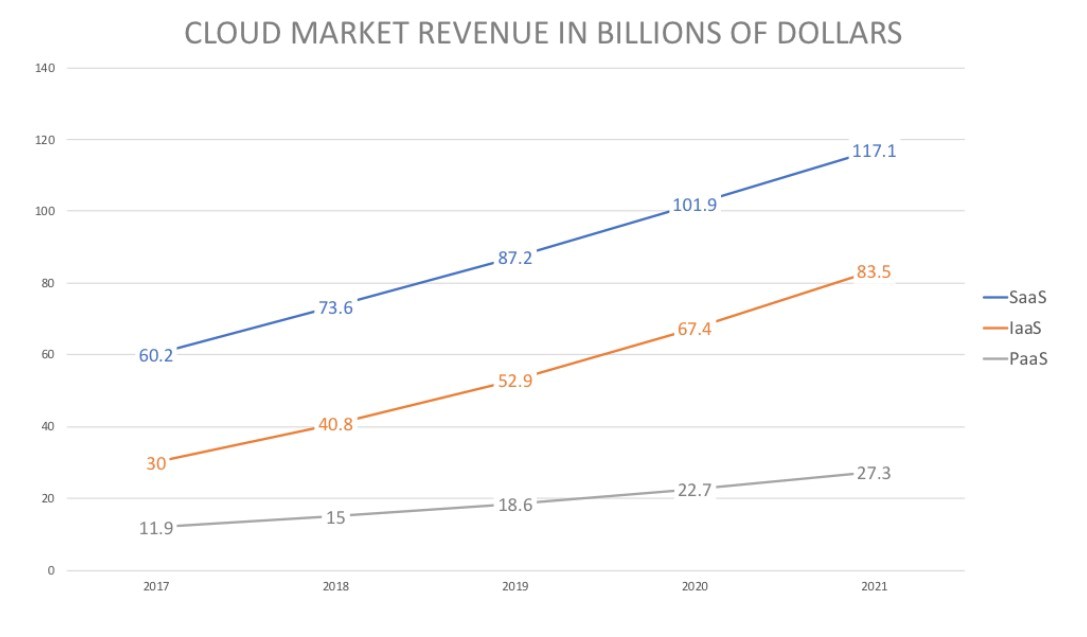
AWS started in 2006 while Microsoft launched Azure in 2010. Despite getting a significant early start and cornering substantial market share, AWS has been steadily losing ground to Azure. And for good reason. Microsoft has been very successful in signing on enterprise customers to Azure. Most large enterprises, especially those in financial services and those with any kind of sensitive data find better value proposition in Azure due to Azure’s substantial support for hybrid cloud applications. Azure helps companies protect the information that they deem particularly delicate or sensitive. Microsoft developed this hybrid approach by tapping in to its considerable background and experience with enterprise-level solutions and that has paid huge dividends.
Some of Azure’s products offer a sliding scale of hybrid cloud platform functionality, with one of their newest products providing almost all of the functionality of Azure on client’s own on-site data centers, with the payment and maintenance equal to the public cloud equivalent.
Azure supports the broadest selection of operating systems, programming languages, frameworks, tools, databases and devices. Run Linux containers with Docker integration; build apps with JavaScript, Python, .NET, PHP, Java and Node.js; build back-ends for iOS, Android and Windows devices. Azure supports the same technologies millions of developers and IT professionals already rely on and trust. Any developer or IT professional can be productive with Azure. The integrated tools, pre-built templates and managed services make it easier to build and manage enterprise, mobile, Web and Internet of Things (IoT) apps.
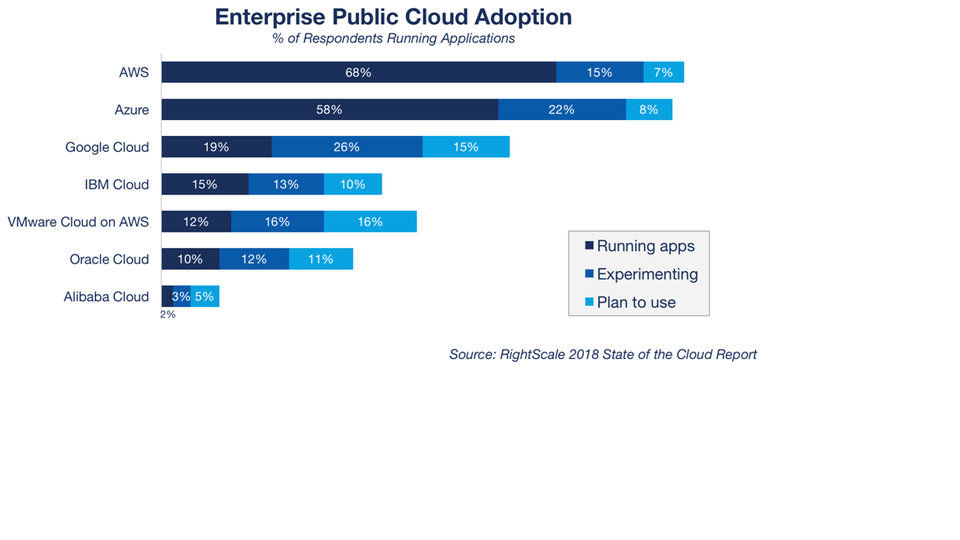
Image Credit: Right Scale
Amazon Web Services is the most popular public cloud infrastructure platform, comprising 41.5% of application workloads in the public cloud. While Amazon has long been viewed as the dominant provider of public cloud infrastructure, Microsoft Azure is gaining ground quickly in application workload. Azure currently holds 29.4% of the installed base, measured by application workloads. Google Cloud Platform trails with 3.0% of application workloads
Announced just last week, Microsoft Azure has been partnering with retail industry through its tie-ups with grocery store chain, Kroger and Walgreen Boots Alliance, the parent company of Walgreens. According to analysts, the partnership with Walgreens, which aims to develop new healthcare delivery models, technology and retail innovations to advance and improve the future of healthcare, is akin to the model Amazon has launched with Whole Foods. With Kroger, Microsoft offers retail-as-a-service, allowing Kroger to use Azure’s artificial intelligence and cloud infrastructure.
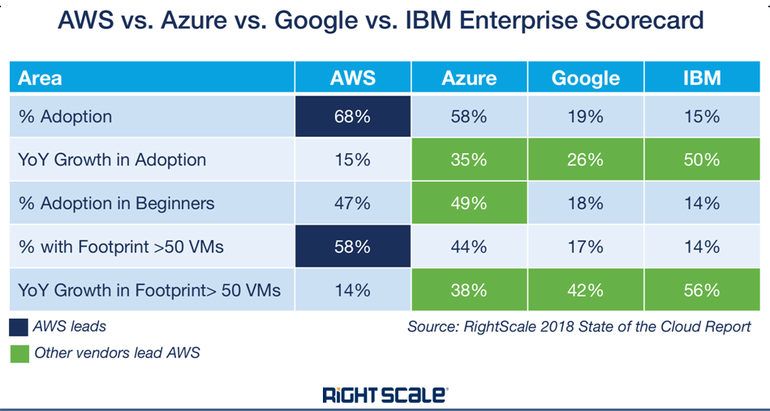
Image Source: RightScale
On the digital side, Microsoft recently announced an exclusive partnership deal with TomTom, Dutch mapping company. According to the agreement the companies reached, TomTom will become Microsoft’s leading location data provider for Microsoft Azure, putting TomTom’s maps and traffic data onto Microsoft’s cloud. Meanwhile, TomTom is picking Microsoft Azure as its preferred cloud provider.
AWS on the other hand mostly targets product makers and start ups who continue to be its main target segment. If an organization wants to build a new product on cloud, AWS is the way to go. If an organization runs an enterprise and / or has any kind of sensitive data, then Azure is your natural choice because chances are they have already made some investment in Microsoft as part of their IT strategy.
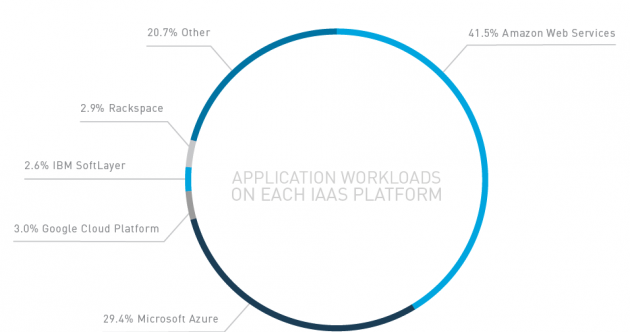
Image Credit: CSA
Make vs Buy
In his first year as CEO, Nadella hired Peggy Johnson from Qualcomm in 2014 as executive VP of business development, giving her specific mandate to strengthen Microsoft’s ties with Silicon Valley and pursue deals with companies it once solely considered rivals, such as Box and Dropbox.
In order to give the entire grand strategy push even more impetus, Nadella ordered his team to go on a buying spree. Over the last 2 years, Microsoft’s most prolific buys include scooping up LinkedIn in 2016 for $26 billion and GitHub in 2018 for $7.5 billion. Beyond the much hyped take-over of LinkedIn and GitHub, Nadella’s Microsoft has been on a quiet spree of acquiring niche firms which have added tremendous value. The below table represents how many companies has Microsoft acquired since 2014.
In 2017, Microsoft acquired Cloudyn, an innovative company that helped organizations track their cloud investments. Cloudyn gives enterprise customers tools to identify, measure and analyze consumption, enable accountability and forecast future cloud spending.
Most of Microsoft’s buys are centered around AI, Mixed Reality, Networked communities and cloud assets. “For the past five years, we’ve been incredibly consistent — buy communities, look for networked assets, look for growing markets, and look for where we’re a better owner,” Microsoft CFO Amy Hood said during a conversation with Fortune senior writer Michal Lev-Ram at the 2018 Fortune Most Powerful Women Summit in Laguna Niguel, California.
Microsoft’s most recently released quarterly statement displays stronger than before performance. Currently, Xbox Live is used by 400 million gaming devices and it has the potential to multiply its success to reach many more users across the base of 2 billion users on Nintendo Switch, Android and iOS screens. This means cross-platform play can become a big segment and that users cannot be just limited by just community features like achievements and clubs. LinkedIn now has 610 million users. And LinkedIn sessions grew 30% year-over-year driven by higher levels of engagement in the feed. And Xbox Live now has 64 million monthly active users, up from 59 million a year ago.
If one graph could say it all about Microsoft’s resurgence under Satya Nadella, the one below would be top contender. The Wall Street has rewarded Nadella’s vision and breathtaking finesse the only way it knows – through an increase in the share price, thereby increasing market capitalization.
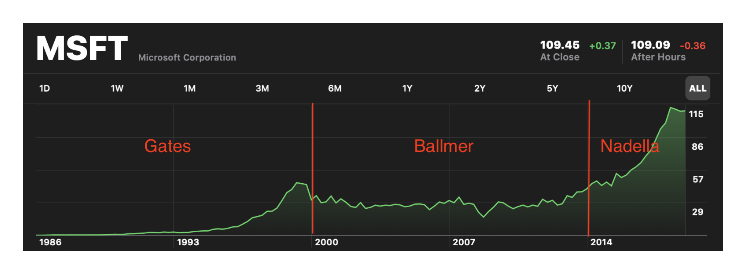
Image Source: 500ish
The Push Forward!
Nadella’s unrelenting focus was to Identify channels to ensure sustainable growth. Nadella is a firm believer that the key to Microsoft’s future is presence across entire ecosystem, offering an entire assortment consisting of hardware and software combined with cloud computing.
In the words of one analyst, “Microsoft was a very monolithic and slow moving beast. However, four or five years ago, Microsoft completely changed. Now, it doesn’t look so much like one giant company as a weird conglomerate of thousands of little startups. They’re moving fast and nimble, trying things out and iterating very quickly.” Powered by this change in atmosphere, many of Microsoft’s erstwhile talent who left for greener pastures have been returning home. According to one report, more than 2,200 employees have returned to Microsoft after exiting once.
During the last season of Super Bowl, Microsoft aired a commercial with focus on accessibility. Specifically, the ad features the Xbox Adaptive Controller, designed primarily to meet the needs of gamers with limited mobility. In the ad, it shows several young kids sharing stories about using the Xbox Adaptive Controller. “When everybody plays, we all win,” says the tagline of the ad.
]]>