Notice: Function _load_textdomain_just_in_time was called incorrectly. Translation loading for the boldgrid-inspirations domain was triggered too early. This is usually an indicator for some code in the plugin or theme running too early. Translations should be loaded at the init action or later. Please see Debugging in WordPress for more information. (This message was added in version 6.7.0.) in /home/nearth9/public_html/wp-includes/functions.php on line 6170

Notice: Function _load_textdomain_just_in_time was called incorrectly. Translation loading for the heartbeat-control domain was triggered too early. This is usually an indicator for some code in the plugin or theme running too early. Translations should be loaded at the init action or later. Please see Debugging in WordPress for more information. (This message was added in version 6.7.0.) in /home/nearth9/public_html/wp-includes/functions.php on line 6170

Notice: Function _load_textdomain_just_in_time was called incorrectly. Translation loading for the nginx-helper domain was triggered too early. This is usually an indicator for some code in the plugin or theme running too early. Translations should be loaded at the init action or later. Please see Debugging in WordPress for more information. (This message was added in version 6.7.0.) in /home/nearth9/public_html/wp-includes/functions.php on line 6170

Notice: Function _load_textdomain_just_in_time was called incorrectly. Translation loading for the ninja-forms domain was triggered too early. This is usually an indicator for some code in the plugin or theme running too early. Translations should be loaded at the init action or later. Please see Debugging in WordPress for more information. (This message was added in version 6.7.0.) in /home/nearth9/public_html/wp-includes/functions.php on line 6170
Digital Experience – Earthtech https://1earthtech.com Fri, 28 Aug 2020 20:13:23 +0000 en-US hourly 1 https://wordpress.org/?v=7.0.9 146148357 Privacy and partnerships: Apple WWDC 2020 https://1earthtech.com/privacy-apple-wwdc-2020/ https://1earthtech.com/privacy-apple-wwdc-2020/#respond Tue, 14 Jul 2020 20:57:00 +0000 https://1earthtech.com/?p=1021

Image Credit: Techcrunch


In an industry which is not limited by any conventional restraints, Apple® has once again proven to the thought and market leader in promoting what it’s users want. It is not however what Apple® has promised to do, as its customer and user-centricity is quite legendary, rather it’s the timing of the changes that is quite interesting.


During the Worldwide Developers Conference (WWDC) held remotely for the first time, Apple® announced some new privacy and security features for iOS. Apple®’s 31st Worldwide Developers Conference 2020 was a digital-only event kicked off June 22. WWDC is Apple®’s annual Worldwide Developers Conference where developers can attend sessions and meet with Apple® engineers and this year’s event witnessed Apple®  debut iOS 14, iPadOS 14, macOS Big Sur, tvOS 14, and watchOS 7. The online event typically allows millions of developers worldwide to get close proximity access to future versions of iOS, iPadOS, macOS, watchOS, and tvOS, as well as engage and network with Apple® engineers and community through engineering sessions, one-on-one lab appointments, and the revamped Apple®  Developer Forums. The event for the first time had no physical gathering in California due to the ongoing global health crisis, making everyone sorely miss the Networking and touch and feel of events like this.


During this year’s event, Apple® provided a full digital WWDC experience with online keynote, a Platforms State of the Union for developers, technical and design-focused engineering sessions, Apple® Developer Forums with Apple® engineer participation, and one-on-one developer labs. Apple® also hosted a Swift Student challenge, though winners received a jacket, pins, and virtual one-on-one lab sessions with Apple® engineers rather than free admission to WWDC.


Image Credit: appleinsider


With the new changes Apple® announced, publishers need to quite very much overhaul their entire value offering to stay compliant. As compared to the earlier practice of virtual free for all, publishers will now be required to provide information about their app’s data collection practices while explicitly seeking permission from their users to track the users’ shadow across apps and websites owned by other companies. This is a major change for the industry players, since thus far, users were required to opt-out if they wanted from sharing their data and identifiers with third party networks. To aggravate the matters, the opt-out process itself in most cases was not straightforward, with self-regulation and delayed actions in most cases giving no real out to the users. This gave the publishers of the app a virtual free rein to use the users’ implied consent in any way the publishers deemed fit. That all is set to change as now with the new changes, users will have to explicitly opt-in within their apps to allow tracking or sharing of their data.


The updates mean that you can limit how much location information is shared with apps — only allowing it approximate data rather than your precise whereabouts. Apple® also introduced recording indicators through an orange dot on your status bar that will tell you when your camera or microphone is activated. Apple® also introduced labels for app permissions to inform people how much data an app requests before they download them. The feature will show people those labels in two categories, on “Data Linked To You” and “Data Used to Track You.”


The last few years have seen an entire new industry segment open up which specializes in driving users to download an app, accessing user information, sometimes with consent, sometimes without, then tracking users across apps, collecting data and then selling the data, a process leading to shortcut of app monetization. Instead of charging user to use the app, the app pays itself through tracking, collecting and selling user data. While users complained, and while the more privacy minded users combed through the fine print of legal agreements and terms of conditions or terms of services for each app they installed, most users even those who were concerned, just shrugged and moved on. Most users just took it as the cost of using apps.


An important point to note here is that apps don’t exist in isolation or in silos. There is almost a complete app ecosystem, and as with any ecosystem, the app ecosystem requires continuous sustenance. From App development to app launch and promotion, to making the app stick with target audience, then capturing and tracking of data, and finally utilizing the data, are key parts of the ecosystem. On the technical side, or for the more technically minded, Apple® uses something called an IDFA, the Identifier for Advertisers (IDFA), which is a random device identifier assigned by Apple® to a user’s device. Advertisers use this to track data so they can deliver customized advertising. Each IDFA contains no personal identifying information, or PII, instead serving to measure and identify user interactions with ad campaigns, installs, and in-app activity. Some industry insiders put the value of app driven advertisements in iOS in excess of $45 billion dollars.


Just looking at the app development itself, unarguably the first step towards launching an app, there can be no mistake in gauging the potential of the industry. Skipping all the factors in cost breakdown, a median price to create an app by specialist agencies was found to be $171,450, while many online app cost calculators provide a price tag between $200,000 and $350,000 for an app with dozens of features. Small apps generally cost much less – apps with few basic features could cost between $10,000 and $50,000, indicating there’s an opportunity for any type of business to make a decent ROI. Needless to say, this potential saw anyone and everyone jump headfirst in to the fray.

Aided with technological advancements like microservices and APIs, it is no surprise that making, launching and monetizing apps has become big business. For a while, it really seemed to be the Wild, Wild West, with no real control, oversight or accountability.


Image Credit: cnet


The above is however set to change in a big, yet unprecedented way in near future. The upcoming changes will make it harder for app publishers, advertisers and marketers to track and target users across apps, creating a level of uncertainty on how that industry will work from now on. The changes are expected to improve transparency on users’ privacy, but they will also have an impact on the current app’s economy and how apps monetize. Some of the most important players in that space such as ad networks and attribution networks will be immediately affected.


According to a recent survey of iOS and Android users, 68.3% of iOS and 67.5% of Android users will likely deny tracking permissions if they are requested in-app to opt-in. With Android sure to follow, this is definitely good news for privacy minded and not-so-privacy-minded users alike as the move spearheaded by Apple® will strengthen the privacy laws in the entire marketplace.


Some critics do feel that it’s not big tech or app developers pushing back, it’s the GDPR in Europe that is forcing companies like Apple® to announce such measures. Coupled with an increasing awareness of the privacy violations that have been suffered by average consumer over the last decade or more, firms are bound to act sooner than later. While this may be partially true, there is no denying that the end result is what privacy advocates have always wanted.


To summarize, the upcoming privacy changes in iOS as announced in WWDC are forecasted to have a significant impact not only on how apps monetize their audience and how advertising and attribution networks work, but also the entire app ecosystem. The study showed that a large proportion of the users will not allow themselves to be tracked, a crucial step in effectively running and attributing ad campaigns in the apps space at the moment. Similar findings were also revealed with Android users. Privacy seems to be a key concern among users in the mobile space and providing them with more transparency and choices seems to change the current app landscape dramatically.

]]>
https://1earthtech.com/privacy-apple-wwdc-2020/feed/ 0 1021
Social Media and managing content! https://1earthtech.com/social-media-moderation-content/ https://1earthtech.com/social-media-moderation-content/#respond Wed, 22 Jan 2020 21:51:46 +0000 https://1earthtech.com/?p=781

This article offers a critical view of how content available on the internet quintessentially shapes public opinions and provides an unique challenge to governments around the world.

Introduction

The Social media today has a very different impact potential than it used to 10 years ago. Today the social media is capable of influencing country-wide elections, swaying public opinions, making or breaking brands and people associated with those names, and raising or flat-lining issues. The power wielded by content is truly mind-boggling when one considers that more than 56% of world’s population is online one way or the other. With growing penetration of smartphones and increase in bandwidth accompanied with decrease in data charges, content sharing is becoming ubiquitous and as easy as texting or talking.


Governments, regulators and public experts around the world have expressed concern amidst growing need to monitor content which is distributed largely freely today. Who controls what can be seen publicly has been a matter of much debate which is far from settled, however almost everyone involved favors some level of control on viewership of the media content posted online, or in other words, policing the internet. Most through recognize this policing as not a negative or an impediment, rather as a virtue or a social responsibility. Given the power, both direct and indirect, that content platforms usually possess, online available content has become the new hidden weapon on both sides of the debate.


The best way to prevent undesirable content from being seen is to never let it be uploaded in the first place. If content publishing platforms like Facebook, YouTube and several hundred others out there are required to screen every single video or post uploaded on their platform, it would simply lose out on millions of subscribers who want to upload their content immediately. If the platforms employ AI powered algorithms to pull down videos, then it must expect errors and content being pulled down or demoted needlessly.


Image Credit: Internet

Is Social media uncontrollable?

YouTube works in 80 different languages, is free at the entry level, is available almost everywhere, is extremely popular in the 18 – 24 year age group around the world, even in countries like P.R. China which have their own version of YouTube, and is increasingly being used to ‘monetize’ content like never before. With such mass viewership, Cisco predicts that videos will make up more than 80% of global internet traffic by 2022. YouTube, the world’s foremost content sharing site, has close to 2 billion logged-in users each month (one doesn’t need to be a logged in user to just view videos). Given its low entry barrier, almost everyone with an internet connection has used YouTube at some time.


Social media platforms, especially where content is freely distributed, or nearly freely distributed, have had an unfettered run over the past decade leading to their massive popularity today.


“We’re just a platform” is almost an extremely convenient way to avoid taking full responsibility for an increasingly serious set of problems. Yet this is exactly the approach that majority of platforms have adapted when it came to own up the responsibility of content moderation and review.


Few years back, Steve Stephens recorded himself murdering an innocent victim and then uploaded the footage to Facebook. The horrific act put Facebook under immense pressure to do something. This incident is not alone as there have been may documented cases of teens posting suicides on the internet.


Recently, the ghastly attack on the two churches in Christchurch, New Zealand killing more than 50 people was streamed live on Facebook for the world to see. Millions of people watched in disbelief while the lone gunman went on a rampage gunning down unarmed civilians. The video was streamed for several minutes while YouTube Moderators fought back hard taking down the video as newer versions kept popping up seemingly beating the controls that YouTube has in place to immediately flag already removed material. The up-loaders were able to sneak past by using a loophole – exact re-uploads of the video are banned by YouTube, however videos that contain clips of the original footage must be sent to human moderators for review, thereby delaying the process. And again this loophole existed for a purely legitimate reason – to ensure that news videos that use a portion of the video for their segments aren’t removed in the process.


For all live streaming and news events, especially ‘Breaking News’, YouTube’s safety team prefers not to use the system for immediately removing child pornography and terrorism-related content, by fingerprinting the footage using a hash system, and rather depends on a system similar to its copyright tool, Content ID, but not exactly the same. The system takes the much longer route – it first searches re-uploaded versions of the original video for similar metadata and imagery. If it’s an unedited re-upload, it’s removed. If it’s edited, the tool flags it to a team of human moderators, both full-time employees at YouTube and contractors, who determine if the video violates the company’s policies. YouTube considers the removal of newsworthy videos to be just as harmful. YouTube prohibits footage that’s meant to “shock or disgust viewers,” which can include the aftermath of an attack. If it’s used for news purposes, however, YouTube says the footage is allowed but may be age-restricted to protect younger viewers, reports The Verge.


Image Source: Internet


Rasty Turek, CEO of Pex, a video analytics platform that is also working on a tool to identify re-uploaded or stolen content, told The Verge that the issue is how the product is implemented. Turek, who closely studies YouTube’s Content ID software, points to the fact that it takes 30 seconds for the software to even register whether something is re-uploaded before being handed off for manual review. YouTube’s Content ID tool takes “a couple of minutes, or sometimes even hours, to register the content,” Turek said. That’s normally not a problem for copyright issues, but it poses real problems when applied to urgent situations. A YouTube spokesperson could not tell The Verge if that number was accurate.


Further, Turek contends, There is no harm to a society when copyrighted things or leaks aren’t taken down immediately. There is harm to a society here though when live-streaming and breaking news puts harmful content out there. This is precisely the reason why live-streaming is considered a high-risk area by Facebook and YouTube and nearly every other platform that provides live-streaming. People need to have different credentials for live-streaming and people violating rules related to live-streaming, who are sometimes caught using Content ID once the live stream is over, lose their streaming privileges because it’s an area that YouTube can’t police as thoroughly. The teams at YouTube are working on it, according to the company, but it’s one the safety team acknowledges is very difficult. Turek agrees.


In another incident, Facebook admitted last November that it did not do enough to prevent its platform from being used to “foment division and incite offline violence” in Myanmar against the Muslim Rohingya minority. That came after the United Nations described the events surrounding the mass exodus of more than 700,000 Rohingya people from Myanmar as a “textbook example of ethnic cleansing.”


These incidents are not limited to YouTube and Facebook. In China, Bytedance chief executive Zhang Yiming had to issue a public apology in April 2018 after the company was ordered by the central government to close its popular Neihan Duanzi app for “vulgar content”. The company’s Jinri Toutiao news aggregation app was also ordered to be taken down from various app stores for three weeks. Bytedance pledged to expand its content vetting team from 6,000 to 10,000 staff, and permanently ban creators whose content was “against community values”.


Image Credit: Internet

Addressing the elephant in the room!

YouTube reportedly employees more than 10,000 people on it’s content moderation and rule enforcement team which represents a 25 percent increase from just about a year ago. according to YouTube took this decision after a number of controversies surfaced over recent past concerning children’s safety on the platform—for those who watch the content as well as those who appear in videos. Yet as other platforms have also struggled with the delicate task of protecting viewers while also ensuring free speech, the big question next year for YouTube is whether this will work.


Similarly, Facebook employees close to 15,000 people while Twitter employees close to 2,500 people to moderate the content on its platforms.


Relying purely upon humans to act as content moderators and reviewers is not the most viable option. Further the process of reviewing user-reported content is time consuming in itself. Yet, machine learning is not advanced enough at the moment to completely automate the process, though A.I. researchers at Facebook are working on software that they say will eventually enable computers to do most of the work. Current AI and ML systems are not close to being mature enough to address the complexities of moderation, given that almost all intelligence systems operate at a pattern recognition level, where any change in any one of the hundreds of attributes can throw a false positive, thereby passing the content and throwing the system off track. Advanced use cases such as differentiating a jibe from something more serious whether in a video or written format, in an efficient manner that doesn’t unduly stifle free speech is certainly out of question for many years to come.


More traditional methods of reviewers depending on user-reported content and user feedback to promote or demote content is too slow and is often regarded as “too-little, too-late“. It could take crucial hours for user-reported infractions to filter through and reach the reviewers, by which time the damage is already done.

Image Credit: Internet

To overcome these challenges, most platforms are now deploying combination of AI with human moderators to come close to building a viable system. The system begins with AI assisted, algorithms based logic program which does an initial flagging and flags anything where it finds even barely perceptible objectionable content. Once the content is flagged, it is taken down immediately or if not yet online, stopped from proceeding further, and queued up for an in-depth review by human operators. The content is then finally posted back online or taken down permanently based on the decision of human moderation process.


To illustrate this use of AI, let’s look at Inke, which is one of China’s largest live-streaming companies with 25 million users. As of the end of last year, almost 400 million people in China had done the equivalent of a Facebook Live and live-streamed their activities on the internet. Most of it is innocuous: showing relatives and friends back home the sights of Paris or showing nobody in particular what they are having for lunch or dinner (Source: South China Morning Post). Inke employs 1,200 mostly fresh-faced college graduates who have seconds to decide whether the two-piece swimwear on their screens breaches rules governing use of the platform. The team is the biggest in Inke, accounting for about 60 per cent of its workforce. The content moderators work to detailed regulations on what is allowed and what has to be removed. AI is employed to handle the grunt work of labelling, rating and sorting content into different risk categories. This classification system then allows the company to devote resources in ascending order of risk. A single reviewer can monitor more low-risk content at one time, say cooking shows, while high-risk content is flagged for closer scrutiny.


Yet even that – employing AI assisted algorithmic logic coupled with human moderators – may not be enough as Mark Zuckerberg, Facebook’s CEO and majority shareholder, published a memo on censorship in Dec 2018. “What should be the limits to what people can express?” he asked. “What content should be distributed and what should be blocked? Who should decide these policies and make enforcement decisions?” One idea he aired might be thought of as a Supreme Court of Facebook. “I’ve increasingly come to believe that Facebook should not make so many important decisions about free expression and safety on our own,” Zuckerberg wrote. “In the next year, we’re planning to create a new way for people to appeal content decisions to an independent body, whose decisions would be transparent and binding.”


Image Credit: Internet

Bigger elephant in the room

There are two major challenges to building and deploying any content monitoring system. The first challenge is simply of scale. As more than 300 hours of videos are uploaded just on YouTube every single minute, the humans monitoring the videos must be capable to correctly identify inappropriate content very, very quickly, virtually in seconds. Making those removal decisions are not simple yet must be made in seconds. Personal biases and tolerances need to be re-calibrated in favor of policies and law. In addition the biggest challenge humans face monitoring content is to maintain their objectivity while watching hours upon hours of videos. Many content reviewers have reported increase in stress levels and allegations of mental illnesses are not uncommon. A group of moderators sued Microsoft in January alleging that they were suffering from PTSD as a result of watching child abuse and other sadistic acts.


The second challenge is bigger and is not going to go anywhere anytime soon. As Mark Zuckerberg mentioned in Dec 2018, this challenge is all about who gets to regulate and to what extent, and more importantly who decides the rules of the game? Is it solely up to each content publisher or platform to define their own rules on what content to be flagged as inappropriate and taken down or demoted? Or is it up to the government or a regulatory body to fix this? Zuckerberg feels its clearly the latter.


Experts believe that for now at least human curators must continue to work alongside AI. This of course means that both the human moderators and AI backed algorithms have immense ground to cover before a reasonable degree of accuracy can be achieved. It will take time for the platforms, lets say, Facebook, to train its neural networks to streamline that process, while the human moderators continue to face the daunting task of identifying proverbial needle in the haystack.


Image Credit: Internet

Conclusion

Lets remember the main problem once again. The social media platforms are responsible for the content hosted on their platform and this responsibility cannot and must not be avoided in the name of freedom of expression, viewers’ choice, viewers’ promoted content, etc or whatever fancy term once may come up with.


When anyone speaks about identifying harmful content and the need to censor such content, it feels like the work should be done by robot moderators, but as reality beckons, AI doesn’t yet grasp context and gray areas. The struggle between free speech and censorship keeps humans in the center in this undesirable yet undeniable role.


As a content publisher, content aggregator or content reviewer, the stakes have never been higher to allow the content which is legitimate and in the interest of pubic to run freely, while any content which doesn’t meet these two conditions to be taken down as soon as it is put up before the content has the chance to reach any audience.

]]>
https://1earthtech.com/social-media-moderation-content/feed/ 0 781
Big Tech, content moderation and regulations – Three way road! https://1earthtech.com/big-tech-content-moderation/ https://1earthtech.com/big-tech-content-moderation/#respond Tue, 21 Jan 2020 19:45:30 +0000 https://1earthtech.com/?p=779 Big Tech controls lives yet has difficulty controlling what it hosts!


Introduction

When Mark Zuckerberg wrote the oped in WAPO in March 2019 asking for government and regulators to step in more aggressively to police the internet, he may have elaborated what many insiders feel regarding governing internet, and specifically what content is uploaded for viewers to view, download and use. Yet, not everything seems above board here as the challenges that Mark Zuckerberg cited so eloquently in his oped are the same challenges that have plagued tech industry for years. What has changed recently that governments are being called in to action, while so far the tech industry has fought tooth and nail for freedom of expression and freedom of speech?


All content platforms and social media companies must keep the content flowing because that is the business model: Content captures attention, provides viewership and generates data (users’ statistics). The platforms then sell that attention (read: viewership), enriched by that data (read: customized ads). But how do you deal with the objectionable, disgusting, pornographic, illegal, or otherwise verboten content uploaded alongside legitimate content?


The one thing we know for sure is that you can’t do it all with computing. To examine these issues, Roberts pulled together a first-of-its-kind conference on commercial content moderation last week at UCLA. According to Roberts, “In 2017, the response by firms to incidents and critiques of these platforms is not primarily ‘We’re going to put more computational power on it,’ but ‘We’re going to put more human eyeballs on it.’”


The debate on the usage of internet and governing content uploads is not new. The debate has been going on for some time now and is just about reaching peak interest levels around the world, with many governments promising action like EU and UK; few governments, like China, in fact taking strong action; and few just watching how the entire debate pans out and what, if any, changes come out as result.


The big tech players around the world have realized one thing – it’s a tough tight rope walk to control or govern the internet. If a platform puts in too strict controls, through user-reporting mechanism, AI backed algorithms and human monitors flagging and removing content, it will get labeled as ‘dictatorship’ and against free speech. If a platform puts in too few controls, hosting content freely and with little censorship, its going to get run over by activists from all ends of the spectrum, from left to right. It’s quite like an overflowing pot left simmering for long. The only difference is no one can lift the pot and no matter which way its tilted, boiling hot contents are sure to leave scalding marks.


Image Credit: Internet

Governments should Regulate!

Technology experts, including big tech companies themselves believe that for Zuckerberg and other big tech companies, “regulation” isn’t an uncouth word anymore. As with changing times, the big tech is now embracing regulations, not because of any newfound respect for regulations but purely as a business measure. From early days when big tech companies projected all regulations as reprehensible and fought any and all regulations tooth and nail, to the current day where they are welcoming regulations, the transformation cannot be more melodramatic.


Most of big tech today sees regulations as a set of common rules enforced by governments and regulators that’ll allow them to further cement their dominance of the internet. And if anything goes wrong, they always have the comfort of pointing the finger to the” Regulator” big brother.


Zuckerberg laid out 4 broad areas for government and regulators to govern more effectively and deeply.

Harmful content

The problem: Facebook serves as a platform for its billions of regular users to post, view and offer feedback about the content hosted on its servers. But when that content is more “terrorist propaganda” than “brunch photo,” or when it becomes “porn” than “essential context” to an image, the company has struggled to determine the right approach to removing it in time. The traditional methods of company moderators reviewing user-reported infractions is too time consuming, while the AI powered algorithms are too imprecise. Zuckerberg said he agrees with lawmakers that Facebook has too much power over what constitutes free speech.


Mark’s solution: Develop a more standardized approach by setting up an independent body of reviewers who are non-Facebook employees to decide which removal ban stays and to enforce rules. Think a Supreme Court.


Objection: The harmful content can be segregated in to multiple buckets. Facebook breaks down the kind of content it’s using AI to proactively detect into seven categories: Nudity, graphic violence, terrorism, hate speech, spam, fake accounts, and suicide prevention. It is unclear if Mark is encouraging the governments and regulators to look at any one category or all of these? The problem becomes even more interesting as at least 5 out of the 7 categories are effectively policed using AI and ML techniques.


  • Nudity and graphic violence: These are two very different types of content but Facebook is using improvements in computer vision to proactively remove both. Facebook’s AI backed algorithms depend on computer vision and a degree of confidence in order to determine whether or not to remove content. If the confidence is high, the content will be automatically removed; if it’s low, the system will call for manual review. The degree of confidence is further boosted by the right choices the system makes. Facebook claims that it removes 97% of violence and graphic content, and 96% of nudity before it is reported.
  • Hate speech: Understanding the context of speech often requires human eyes and human understanding as the context is very, very important. Is something hateful, or is it being shared to condemn hate speech or raise awareness about it? Facebook says it has started using technology to proactively detect something that might violate its policies, starting with certain languages such as English and Portuguese. Safety teams then review the content so what’s OK stays up, for example someone describing hate they encountered to raise awareness of the problem. In a major embarrassment, Facebook was used to spread fear and hate in Myanmar against Rohingya Muslims. Today, Facebook says it has hired more language-specific content reviewers, banned individuals and organizations that have broken rules, and built new technology to make it easier for people to report violating content.
  • Fake accounts: Facebook blocks millions of fake accounts every day when they are created and before they can do any harm. This is incredibly important in fighting spam, fake news, misinformation and bad ads. Recently, Facebook started using artificial intelligence to detect accounts linked to financial scams. An account reaching out to many more other accounts than usual; a large volume of activity that seems automated; and activity that doesn’t seem to originate from the geographic area associated with the account are clear warning signals. However, as a point of failure, Facebook failed to recognize several fake accounts set up by a government agency to lure fake admission seekers coming to US to stay long term without proper authorizations. Facebook did launch a complaint later with DHS about the fake accounts
  • Spam: The vast majority of work fighting spam is done automatically using recognizable patterns of problematic behavior. For example, if an account is posting over and over in quick succession that’s a strong sign something is wrong.
  • Terrorist propaganda: The vast majority of this content is removed automatically, without the need for someone to report it first. Facebook is proud of the way its AI systems have been able to remove most terrorist content, claiming that 99% of ISIS or Al-Qaeda content is removed even before being reported by users.
  • Suicide prevention: As explained above, Facebook proactively identifies posts which might show that people are at risk so that they can get help. Facebook claims it passed on information for thousands of suicide attempts to local first responders.

Image Credit: Internet


Protecting elections

The problem: Misinformation campaigns (aka “fake news”) on Facebook have interfered with democratic elections around the world. But as the company tries to provide more transparency, it’s having trouble classifying what should or shouldn’t be considered “political.” To be fair to tech companies, censorship is like walking a double-edged sword.


Mark’s solution: Let governments set common standards for verifying political actors. The NYT’s Mike Isaac thinks this could work: “When the next erroneous outburst inevitably occurs, Facebook could point toward the law it was forced to follow.”


Objection: Facebook has comprehensively shown it can tackle complicated political situations. In the past, the company has complied with requests from leaders of Vietnam and other countries to censor content critical of those governments. In P.R. China, Facebook reportedly created a censorship tool that suppresses posts for users in certain geographies as a way to potentially work with the government. In many western countries, the company has reportedly used the same technology it uses to identify copyrighted videos to identify and remove ISIS recruitment material. Further, Facebook claims that it has developed special programs to give people more information about the ads they see. These special features are since expanded to Brazil and the UK, and will soon in India.

Image Credit: The Verge


Privacy -:

The problem: The Cambridge Analytica scandal revealed that Facebook was playing fast and loose with user data. The fine legal print an user electronically signs has often given platforms incredible leeway over how they store and use users’ data while subjected to little or no regulations over how to use the data. There have been numerous breaches as companies have paid little attention to keeping the users’ data secure. To top it all, tech companies have been known to sell the data or allow usage for shady purposes. Worse of all, there are no effective laws in place to prevent misuse and seek preventive and corective actions. New privacy regulations, like Europe’s GDPR law, have come into effect…but that’s leading to an increasingly fragmented internet.


Mark’s solution: A global privacy framework à la GDPR.


Objection: Facebook and its affiliates through many data deals with parties having need to access users’ data have shown that commercial interests have often succeeded over the privacy concerns. Global frameworks like what Mark has suggested can take years to develop in best case scenario and yet not be applicable uniformly. Mark realizes that this is a gamble he is more than willing to play as its unclear who’s the regulator for a global policy framework?

Image Credit: The Verge

Data portability -:

The problem: Should you, as an internet user, be able to freely move your personal info from one service to another?


Mark’s solution: Yes. (Easier to say when he owns WhatsApp, Instagram, and Messenger.)


Objection: Again, a solution that serves Facebook and big tech’s own interest is hardly breaking news!


Facebook content moderators in action

Image Credit: Internet


Monika Bickert and her entire trust and Safety team at Facebook are focused to make sure that their moderators get it right while reviewing the content. There are 60 people dedicated just to crafting the policies for the company’s 15,000 content moderators. These policies are not available publicly anywhere, as these are sensitive and form the “book” which is used by safety teams and the content moderators to refer to when doing their jobs. These policies and definitions of common terms, often nuanced to the level of slangs used in local languages, are revised every two weeks to keep pace with changing ways of how people interact and speak. These sessions are often referred to as mini-legislative sessions, as different teams across the company — engineering, legal, content reviewers, external partners like nonprofit groups — provide recommendations to Bickert’s team for inclusion in the policy guidebook.


Many Facebook insiders like Neil Potts emphasize the similarity between what Facebook is doing and what government does. “We do really share the goals of government in certain ways,” he said. “If the goals of government are to protect their constituents, which are our users and community, I think we do share that. I feel comfortable going to the press with that.”


Image Credit: The Verge


Heart of the matter

In many ways, the change of heart across global tech landscape has resulted from the difficulties the platforms faced while trying to control and govern the harmful content uploaded on the internet’s content platforms. As the efforts to govern the internet continue, many who are fighting the battle daily are coming to realize the magnitude of difficulty this seemingly simple question of ‘what content to be allowed’ poses. Lets face it: Internet was never known to be deferential to peoples’ preferences. The advocates of freedom of expression and free speech, often big tech companies themselves, fought for as little government control as possible, decrying every move made by governments or regulators around the world.


Image Credit: Internet


Post the 2016 US presidential elections, when the investigations spread in to how agents posing as fake advertisers used social media platforms as a medium to spread biased propaganda to favor one side, the debate around transparency in social media, controls over content available on the internet and the influence on society converged. Google, Facebook, and Twitter were identified as primary targets of these foreign-state sponsored actors as the three companies sat through multiple congressional hearings last year to discuss how foreign agents used and abused their platforms to manipulate Americans. In the aftermath, Facebook tried desperately and failed to fix its fake news problem while it simultaneously reckoned with group of Russian government–backed agents masquerading as advocacy organizations in order to keep pushing socially divisive political messages. Facebook and Google had to publicly apologize and indirectly admit lax controls after it was revealed that advertisers (read: fake) could use their platforms to target a sub-section of society, or people in any age group or ethnicity, based on racist and bigoted interests—like “threesome rape” and “Jews ruin the world.”


Facebook hasn’t always taken content review as seriously as they do now. When Facebook Live launched, the technical tool to review the videos did not show where or which part of a video reported for review tended to generate user flags. So, if a Facebook Live video was reported or flagged for inappropriate content, and it was two hours long, the reviewers had to try to skim through entire two hours of content to figure out where the objectionable material might be. Of course, that’s during the pre-election good-old days.


Dangerous fake news has spread on platforms like Facebook in Myanmar, where the Rohingya ethnic minority are persecuted. United Nations has clearly blamed the role of social media in spreading the persecution and this is not the only example of its kind.


After a man used Facebook to live stream his attack on two New Zealand mosques in March 2019, the video quickly spread. YouTube Moderators fought back hard taking down the video as newer versions kept popping up seemingly beating the controls that YouTube has in place to immediately flag already removed material. The uploaders were able to sneak past by using a loophole – exact re-uploads of the video are banned by YouTube, however videos that contain clips of the original footage must be sent to human moderators for review, thereby delaying the process. And again this loophole existed for a purely legitimate reason – to ensure that news videos that use a portion of the video for their segments aren’t removed in the process.


Image Credit: Internet


YouTube today employs an expected 12 – 14,000 people, while Facebook now has over 30,000 people working on safety and security — about half of them are content reviewers working out of 20 offices around the world. Similarly, Twitter employees close to 4,000 people in its content review team. Facebook also announced that approx. 1,000 people will work on election focused advertisements alone to prevent the likelihood of the company getting used by false advertisers again.


In addition to the manpower, the promised marvels of cutting edge technology, a.k.a. powerful AI based algorithms written specifically to identify, target, and take down or report the harmful content have been, at best under-performers and at worst, simple waste of money and time. And lets not forget this. Facebook used AI backed technology and had an approx. 5,000 strong team of content reviewers before the 2016 elections. Yet it got itself in to significant trouble and scrutiny. Facebook now claims that it has invested record amounts in the past year in keeping people safe and strengthening its defenses against abuse. Facebook also states that its policies have provided people with far more control over their information and more transparency into policies, operations and ads.


Image Credit: Vox


Facebook also claims that amid all the efforts to control content, it has also started rolling out a content appeals process for users inquiring about their own content that’s been removed. The announcement for content appeals process came much earlier, almost like building hype around the topic is more important than the topic itself. The company said it will expand on this concept so users can appeal decision on reports filed on other people’s content. In addition, Facebook said it is training AI to detect and reduce the spread of “borderline content,” which it describes as “click-bait and misinformation.”


The content appeals process announced in 2018 was not a voluntary act of kindness at Facebook, either. Many believe that this is a dual pronged strategy as Facebook executives try to recover their public image. Firstly, this is in response to the increased global scrutiny of how content is treated, sanctioned or legitimized by content platforms. This is also in part due to the lens Facebook has come under especially since The Guardian published a leaked copy of Facebook’s content moderation guidelines, which describe the company’s policies for determining whether posts should be removed from the service. Secondly, Facebook executives hope that such measures would be seen as increasing transparency and fairness, while the opposite is actually true. Moreover, any damage resulting out of such transparent practices will pale in comparison to the risks Facebook will avert.


According to Guy Rosen, VP of Product Management at Facebook, “Artificial intelligence is very promising but we are still years away from it being effective for all kinds of bad content because context is so important. That’s why we have people still reviewing reports.” At Facebook, Guy continues, “we continue to train our software system by analyzing specific examples of bad content that have been reported and removed to identify patterns of behavior. These patterns can then be used to teach our software to proactively find other, similar problems.” However these revamped efforts came after multiple reports of algorithms which failed worldwide to identify news with harmful content, instead promoting content inconsistent with the platform’s terms of service, like a man performing sexual acts on a chicken sandwich.


Lastly, a look at the role of much touted content moderator has thrown up unmitigated and unexpected, yet serious concerns. What good is a job if it takes away from the professional much more than what it compensates for. What good is a job if it adds more to the healthcare costs and leads to destruction of professional and personal lives? The job of content reviewer itself has come under criticism from many angles. In the recent past, a former Facebook moderator sued, accusing the platform of psychological harm. Former Microsoft employees sued Microsoft for similar reasons after the alleged trauma from reviewing child porn. In a more recent report, The Verge carried out a scathing review of the job conditions for content moderators at Facebook and the harrowing conditions surrounding the job in general. As one employee interviewed in the report put it: “We were doing something that was darkening our soul — or whatever you call it,” he says. “What else do you do at that point? The one thing that makes us laugh is actually damaging us. I had to watch myself when I was joking around in public. I would accidentally say [offensive] things all the time — and then be like, Oh shit, I’m at the grocery store. I cannot be talking like this.”


Image Credit: Internet


An NPR report sheds light on the activities of content moderators as 15,000 moderators contracted by the company worldwide spend their workday wading through racism, conspiracy theories and violence. In the wake of the original story carried out by the Verge, the attention has shifted to work conditions for content moderators. However this attention is not expected to bring about any big results as there are little alternatives to the practice of hiring content moderators to sift through mountains of content daily. As Newton cites in his story, that number is just short of half of the 30,000-plus employees Facebook hired by the end of 2018 to work on safety and security.


In a related CNN report, “It’s not really clear what the ideal circumstance would be for a human being to do this work,” said Sarah T. Roberts, an assistant professor of information studies at UCLA, who has been sounding the alarm about the work and conditions of content moderators for years.


Facebook would rather talk about its advancements in artificial intelligence, and dangle the prospect that its reliance on human moderators will decline over time. However that’s not going to happen anytime soon as the AI based system isn’t fully ready or dependable yet, hence the pressure is back on humans at least for the foreseeable future.

Image Credit: Internet


Conclusion

The roles of government and regulators and the big tech companies have often overlapped. In today’s context however, given the amount of data users are generating, the roles have blurred to some extent. However critical differences have always existed.


The big tech companies need to come out of their over-leveraged positions and take due responsibility for the content they host, support and spread. It is not going to be the end of the world if content platforms become more aggressive, nor is it a matter of financial survival as the tech giants have more cash-in-hand than many smaller countries.


So, the standoff between AI, human moderators, content platforms hiring the first two, and the target itself – harmful content, continues in to the future. Merely throwing money at the problem can be effective to silence critics in short-term, however long-term improvement plans warrant much more. For one though, the Big Tech has been short of making long term commitments and they have been consistent


Image Credit: Internet

]]>
https://1earthtech.com/big-tech-content-moderation/feed/ 0 779
Transform to market realities: Leading the Microsoft way! https://1earthtech.com/microsoft-way-transform-leading/ https://1earthtech.com/microsoft-way-transform-leading/#respond Thu, 02 Jan 2020 04:00:19 +0000 https://1earthtech.com/?p=734


Microsoft has mostly been recognized as the industry leader in technology and innovation. Having cornered 90% of world personal computer market and having massively popular enterprise services as a cash cow meant that Microsoft always carried significant advantage over its competitors and peers. It could literally burn few billions in cash and not break sweat over it. Or acquire couple of companies for few billions and choose to write the investment off as an unsuccessful bet. Microsoft had been the favorite of most of its critics at some point, and has been at loggerheads with various governments, domestically and overseas, and yet survived without breaking the bank. Employing more than 100,000 people since forever and leading the way in consumer and enterprise computing, Microsoft was easily considered too big to fail.


Yet during the late 2000s, trouble was brewing at Microsoft. The years leading up to 2014 were very difficult as Microsoft was seen struggling on various fronts. Part of the reason was internal while a big part of it lay outside Microsoft. Externally, technology itself was shifting along with user preferences and increasing complexity was no longer feared by most IT organizations. The focus was to move away from large, one vendor solution to having multi-vendor stack of products which gave the organization flexibility to choose the best providers. All these changes meant that Microsoft’s model was coming under increasing pressure.


Mobile platform was considered Microsoft’s biggest, most glaring shortcoming. At the start of 2014, Microsoft’s mobile market share amounted to just 3.5 percent. That was a dismal number, compared with Apple’s 15% and Android’s 80% market share. Additionally, its Surface tablet was struggling with less than 3% of the tablet market. This made Microsoft’s Windows the only major operating system that didn’t have a viable mobile component. The personal computer sales were declining at the same time, as shipments slowed down by more than 10% for the first time.


Apart from the above hardware troubles, Microsoft was coming under intense heat on the software and ecosystem side as well. Customers were growingly seeking a seamless, integrated user experience across devices and Microsoft was nowhere close to providing that. Bing remained a distant second to Google Search (18.7 percent versus 67.6 percent, respectively), and Microsoft had just released a free online version of Office — Microsoft Office Online — in response to Google Drive. Apps available on windows store numbered 1/5th of those available in App store and Google Play.


Further in the years leading to 2014, Microsoft was increasingly coming across as an organization happy to rest on its past laurels. Pace of innovation was slowing down, confidence in the organization was at an all time low, its products were seen as out of touch from market realities while the product pricing model was considered by many as greedy or obscene, or at best, overpriced. Microsoft was late to launch its smartphone, Windows phone, and the market was already in love with iPhones by the time first Windows phone came out – more than 3.5 years after the launch of first iPhone. Its new operating system, Windows 8, touted to provide seamless experience across devices was considered a market dud, while offerings such as Xbox gaming system lost out purely due to poor pricing strategy.


Dawn of an Era

When Nadella took over as Microsoft’s CEO in Feb 2014, his challenges were immediate and spotlight was always on, as is expected in case of world’s 4th largest corporation.



When Nadella came on to take the charge at Microsoft, both analysts and Wall Street agreed that the organization was fading to irrelevance. Over the next 6 years, Nadella set out on an inspiring journey, one that would see Microsoft make radical changes, charting out its course amidst uncertainty. This journey would see Microsoft change its business structure, breaking new frontiers and boundaries, launch new products and repackage old products and forge new partnerships on the road to regain its lost charm. Nadella began this journey humbly and quietly, two attributes which have become his hallmark and an unmistakable part of his legacy. Looking back, his first decisions during his first year were the hardest any CEO can be expected to make anytime during their stint as CEO, yet the finesse and calmness displayed by Nadella is worthy of unparalleled praise.


In the almost 6 years since Nadella has taken over, Microsoft’s market cap has risen from $315 billion to $830 billion. Considering that Nadella came in when Microsoft was under pressure from all fronts, and then managing to turn around the ship completely is just incredible.
 

2014 and Beyond: Grand Strategy, the Nadella way!

Image Source: zdnet


Nadella’s grand strategy for Microsoft covered 4 essential elements. First, to make any long lasting changes, he needed to fix the culture and maintain the improvements made in the short run. Second, products and services, across the domains of hardware and software need to reflect the changing customer outlook. Third, Microsoft needed to re-launch itself with unparalleled cooperation and collaboration, forging previously unthinkable partnerships. And fourth, in all its products and service offerings Microsoft needed to make a ruthless self-evaluation of Make vs Buy and proceed to acquire firms and businesses where it sees value.

 

Image Credit: Microsoft

 

Image Credit: Microsoft


Fixing Culture

Nadella immediately started working to create an outward focused, critique-hungry organization where formal power structures fade away to make way for productive partnerships; where direct communications are more important than showmanship; where tradition and hierarchy do not stand in way of pragmatism; and where ‘getting things done’ is more important than who does them. From his very first public appearance where he gave the impression of being directly approachable and responsible, to his first actions where he took decision to ramp down windows phone product line, Nadella meant change.


He fixed the culture through direct communication and leadership. He focused the company on cloud, winding down Windows Phone, de-emphasizing Windows as a whole, and turning Office and XBox into cloud-centric products. Back in the day, partners, vendors and developers alike talked about a much hostile environment, where it was difficult to get things done, or to get the needed resources, and the whole attitude was not geared towards cooperation. This attitude changed a great deal under Nadella and its clear that this change has a lot to do with ‘the buck stops here’ culture Nadella introduced. Not all of this worked perfectly every time, but by maintaining a growth mindset, they learned and improved. As a result, the company is the clear #2 cloud provider and occasionally the most valuable company in the US.


Windows run with everything, not just Windows run everywhere!

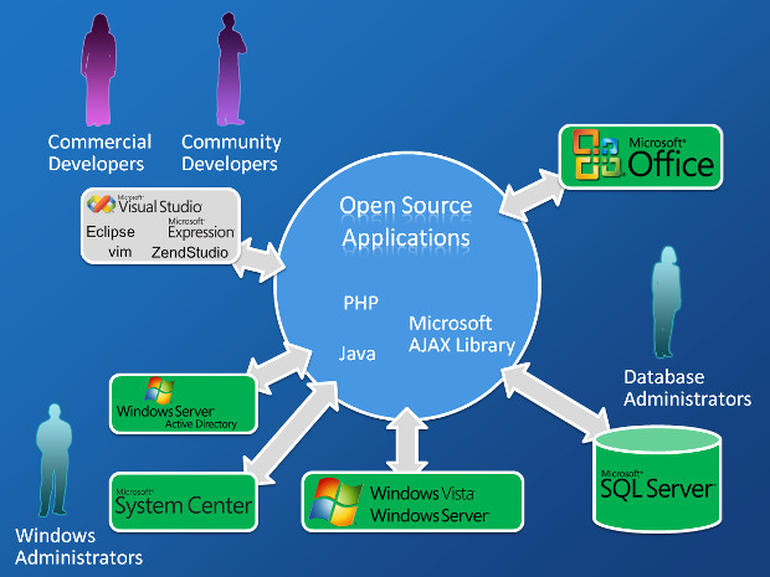
Nadella quickly made an impression and emphasized on Microsoft being a cloud-first and mobile-first company, moving away from a Windows-first company. The aim was to have Windows run with everything, not just having Windows run everywhere. Nadella knew that the latter goal was self-limiting and almost non-achievable whereas the former goal can lead to Microsoft becoming the number 1 and the most relevant technology company for decades to come. The world was increasingly becoming a cloud and mobile-first environment and for Microsoft to grown and remain relevant, they would need to adapt rather than resist. He laid down the entire roadmap of moving from a Windows-first company to a Cloud-first company. They underwent a huge engineering reorganization where he asked then Windows chief Terry Myerson (Microsoft Executive Vice President, former head of Windows) to step down. To speed up matters, he focused on inorganic growth, by acquiring Minecraft, LinkedIn, and Github in quick succession enabling the focus to shift towards the cloud.


Moving Office and Windows to a SAS model, dimming the gap between platforms by not only releasing popular products cross-platform but also allowing developers to use proprietary tools to build product across any platform, open sourcing .Net, making Visual Studio Community free, releasing products like Visual Studio Code for OSX and Linux, HoloLens, round the clock feature addition to Azure cloud services, are all great examples that indicate Microsoft’s shift towards openness and rapid development/innovation.


Shortly after taking over, Nadella wrote off Ballmer’s $7 billion acquisition of Nokia’s mobile phone business as a loss, eliminating more than 20,000 jobs in rather muted acknowledgment that Windows was not going to catch the iPhone and Android anytime. Microsoft was better off placing its bets elsewhere and that’s exactly what Nadella did, without remorse. Microsoft then went on to extend its collaborative approach to release more than 100 iOS apps and even embraced Linux (described later), the open-source Windows rival.
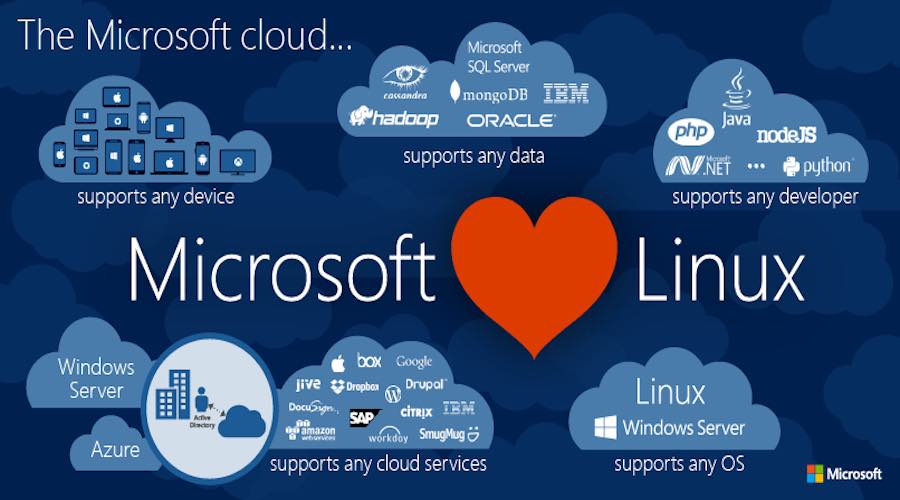
 

Image Source: Microsoft


With Microsoft revolutionizing its flagship MS-office suite and Windows OS through launch of Microsoft 365 Enterprise, which combines Office 365 Enterprise, Windows 10 Enterprise, and Microsoft’s Enterprise Mobility and Security features into a single subscription Office365.


Nadella is not just content with taking down barriers. He is equally keen to invest greatly in research around Mixed Reality, Artificial Intelligence and Quantum computing. Nadella reportedly believes these three to be the next key growth areas for them.
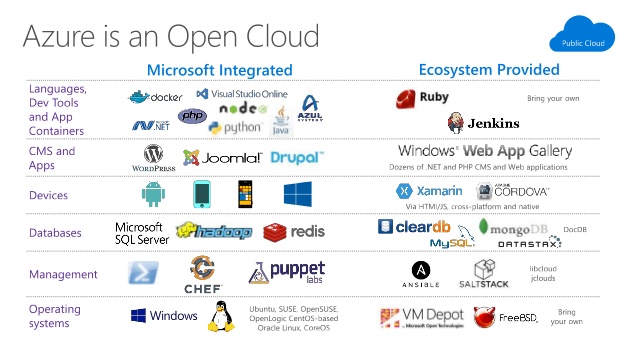
 

Image Credit: CSA


Cooperation and collaboration to keep customer first

Nadella seemed to be happy working on multiple fronts at the same time. From trying to shift culture at Microsoft to working with partners and collaborating across competitors, he made a point to keep customers first. Under Nadella, Microsoft went from a company trying to make customers buy Windows all the time to a company that recognized customers want solutions that Nadella laid out his new vision of cooperation through a quote which has been quoted multiple time, “It is incumbent upon us, especially those of us who are platform vendors to partner broadly to solve real pain points our customers have.”


To show his seriousness, Nadella attended Dreamforce in 2015, setting aside his personal differences with Salesforce management. In the backdrop of lawsuits both companies had filed, Nadella extended a hand of cooperation and collaboration. In the year prior, launching MS Office for iPad was Nadellas first major announcement immediately after his becoming CEO.

 

Image Source: Microsoft


Nadella’s acute business acumen and willingness to break traditional structures led to a truly path-breaking partnership with Linux. Azure was at a crossroads when Nadella took over. It was built to challenge Amazon’s market-leading AWS cloud service, launched several years earlier. Azure was also supposed to entice customers into meeting the bulk of their computing needs with other Microsoft products. If a client wanted Azure to run a Windows operating system, Microsoft was proud to take their business. Yet, if the client preferred the rival Linux approach (which Ballmer once dubbed a “cancer”), it was out of luck as Microsoft couldn’t offer a matching product. During a visit to a small start up called Okta Inc., based in San Francisco, to see how small start ups are using cloud, Nadella came up with Microsoft’s path-breaking move. Todd McKinnon, CEO and co-founder of Okta Inc., remembers telling Nadella, “We’re not using Azure, we use AWS.” Nadella shrugged. This wasn’t a sales call. It was somewhere between fact-finding and espionage. At the end of the hour-long visit Nadella had drawn out a detailed map of what startups like Okta wanted from the cloud. Over the next few months he met with at least seven other startups in similar settings. Those talks inspired Nadella to offer Linux at a special, lower price on Azure–forgoing Windows licensing fees to keep customers happy. The decision was so at odds with Microsoft’s usual lockstep methods that it later became the subject of a Harvard Business Review case study. Azure now is the fastest-growing of the five major cloud infrastructure services.
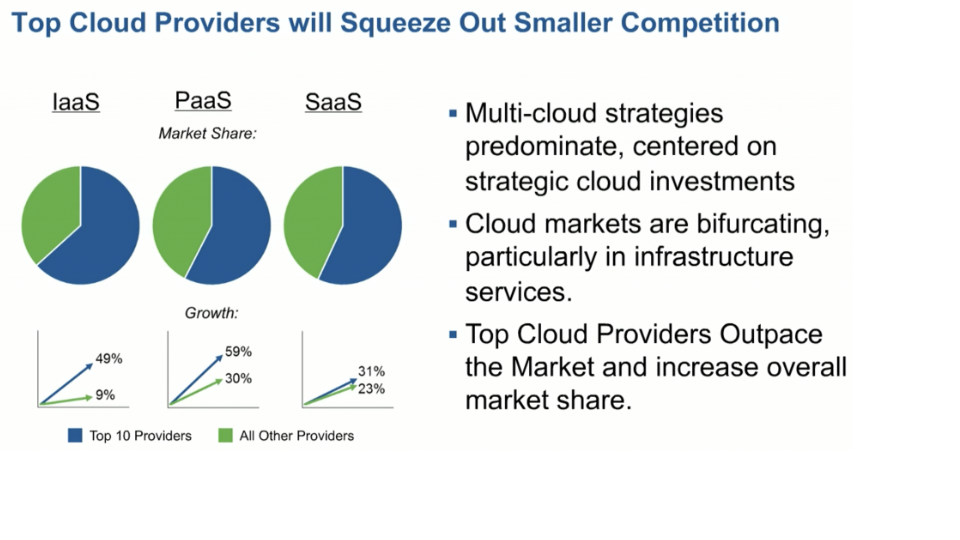


Image Credit: Microsoft


AWS started in 2006 while Microsoft launched Azure in 2010. Despite getting a significant early start and cornering substantial market share, AWS has been steadily losing ground to Azure. And for good reason. Microsoft has been very successful in signing on enterprise customers to Azure. Most large enterprises, especially those in financial services and those with any kind of sensitive data find better value proposition in Azure due to Azure’s substantial support for hybrid cloud applications. Azure helps companies protect the information that they deem particularly delicate or sensitive. Microsoft developed this hybrid approach by tapping in to its considerable background and experience with enterprise-level solutions and that has paid huge dividends.


Some of Azure’s products offer a sliding scale of hybrid cloud platform functionality, with one of their newest products providing almost all of the functionality of Azure on client’s own on-site data centers, with the payment and maintenance equal to the public cloud equivalent.


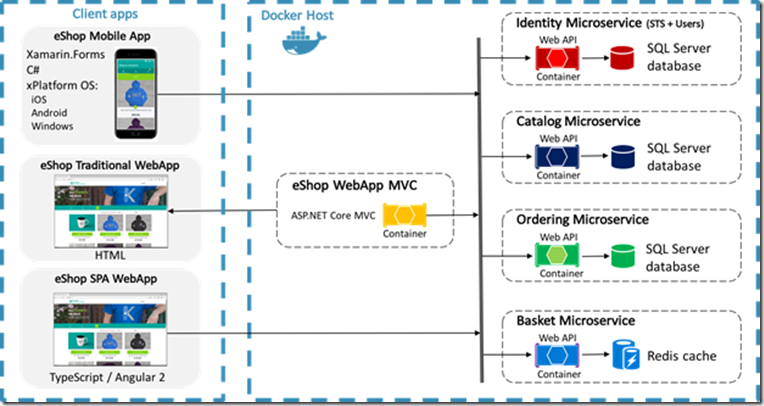
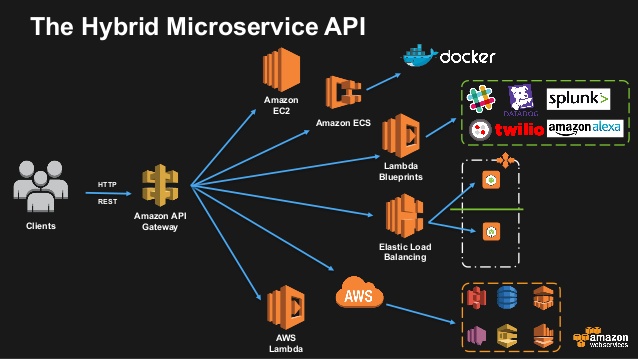
Azure supports the broadest selection of operating systems, programming languages, frameworks, tools, databases and devices. Run Linux containers with Docker integration; build apps with JavaScript, Python, .NET, PHP, Java and Node.js; build back-ends for iOS, Android and Windows devices. Azure supports the same technologies millions of developers and IT professionals already rely on and trust. Any developer or IT professional can be productive with Azure. The integrated tools, pre-built templates and managed services make it easier to build and manage enterprise, mobile, Web and Internet of Things (IoT) apps.
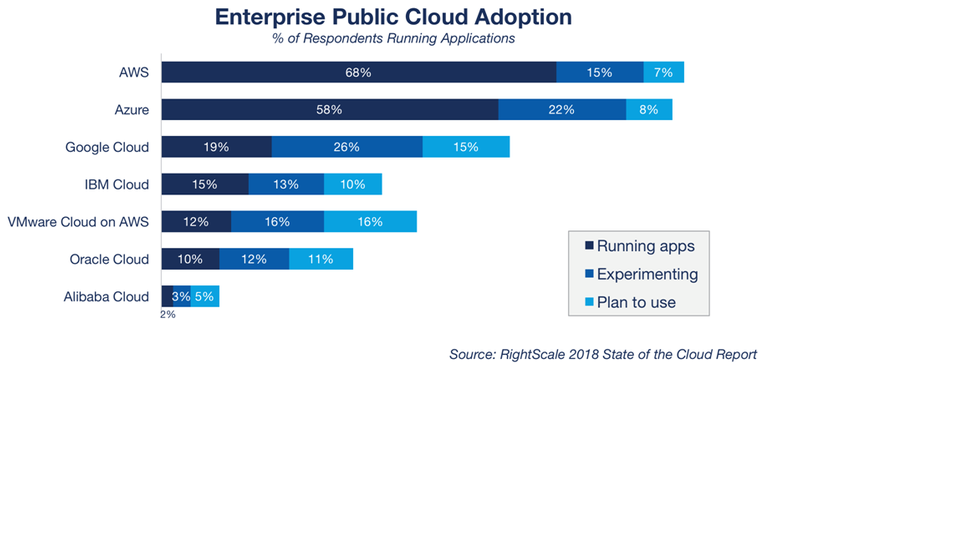
 

Image Credit: Right Scale


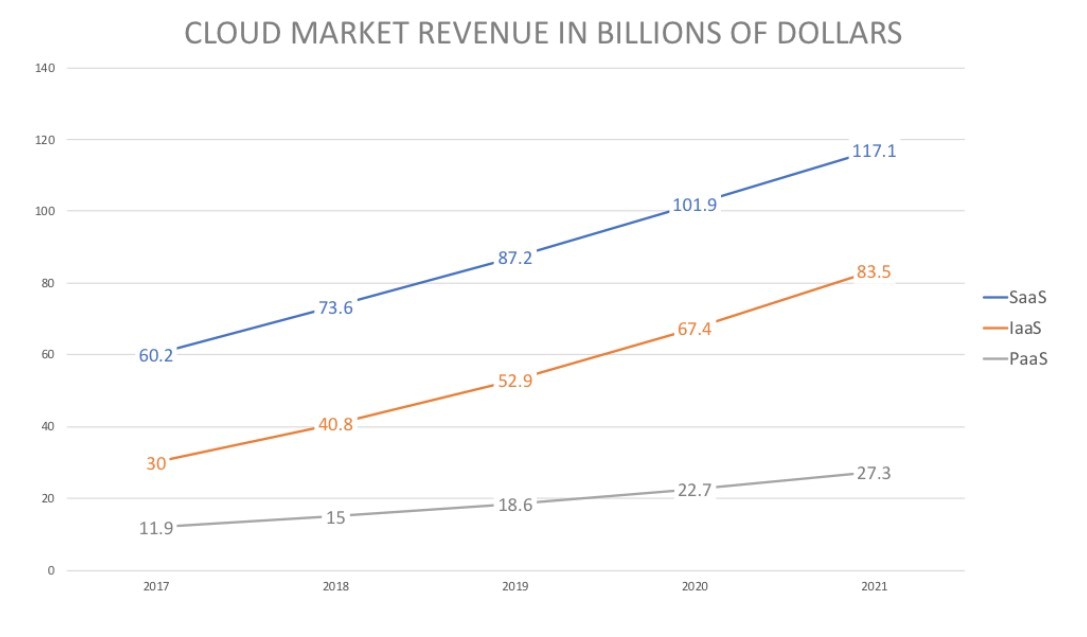
Amazon Web Services is the most popular public cloud infrastructure platform, comprising 41.5% of application workloads in the public cloud. While Amazon has long been viewed as the dominant provider of public cloud infrastructure, Microsoft Azure is gaining ground quickly in application workload. Azure currently holds 29.4% of the installed base, measured by application workloads. Google Cloud Platform trails with 3.0% of application workloads


Announced just last week, Microsoft Azure has been partnering with retail industry through its tie-ups with grocery store chain, Kroger and Walgreen Boots Alliance, the parent company of Walgreens. According to analysts, the partnership with Walgreens, which aims to develop new healthcare delivery models, technology and retail innovations to advance and improve the future of healthcare, is akin to the model Amazon has launched with Whole Foods. With Kroger, Microsoft offers retail-as-a-service, allowing Kroger to use Azure’s artificial intelligence and cloud infrastructure.
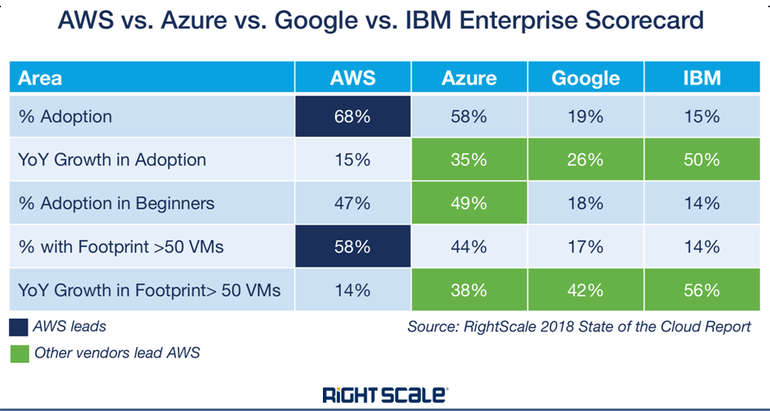
 

Image Source: RightScale


On the digital side, Microsoft recently announced an exclusive partnership deal with TomTom, Dutch mapping company. According to the agreement the companies reached, TomTom will become Microsoft’s leading location data provider for Microsoft Azure, putting TomTom’s maps and traffic data onto Microsoft’s cloud. Meanwhile, TomTom is picking Microsoft Azure as its preferred cloud provider.


AWS on the other hand mostly targets product makers and start ups who continue to be its main target segment. If an organization wants to build a new product on cloud, AWS is the way to go. If an organization runs an enterprise and / or has any kind of sensitive data, then Azure is your natural choice because chances are they have already made some investment in Microsoft as part of their IT strategy.
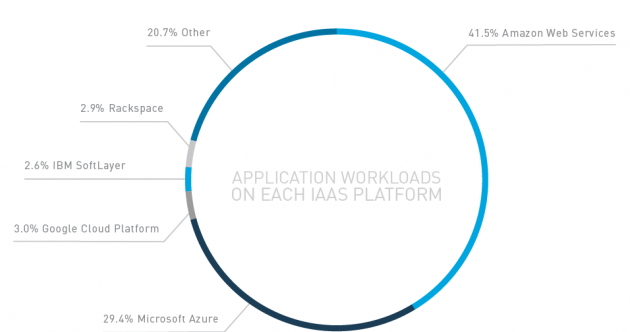
 

Image Credit: CSA


Make vs Buy

In his first year as CEO, Nadella hired Peggy Johnson from Qualcomm in 2014 as executive VP of business development, giving her specific mandate to strengthen Microsoft’s ties with Silicon Valley and pursue deals with companies it once solely considered rivals, such as Box and Dropbox.


In order to give the entire grand strategy push even more impetus, Nadella ordered his team to go on a buying spree. Over the last 2 years, Microsoft’s most prolific buys include scooping up LinkedIn in 2016 for $26 billion and GitHub in 2018 for $7.5 billion. Beyond the much hyped take-over of LinkedIn and GitHub, Nadella’s Microsoft has been on a quiet spree of acquiring niche firms which have added tremendous value. The below table represents how many companies has Microsoft acquired since 2014.


In 2017, Microsoft acquired Cloudyn, an innovative company that helped organizations track their cloud investments. Cloudyn gives enterprise customers tools to identify, measure and analyze consumption, enable accountability and forecast future cloud spending.


Most of Microsoft’s buys are centered around AI, Mixed Reality, Networked communities and cloud assets. “For the past five years, we’ve been incredibly consistent — buy communities, look for networked assets, look for growing markets, and look for where we’re a better owner,” Microsoft CFO Amy Hood said during a conversation with Fortune senior writer Michal Lev-Ram at the 2018 Fortune Most Powerful Women Summit in Laguna Niguel, California.


Microsoft’s most recently released quarterly statement displays stronger than before performance. Currently, Xbox Live is used by 400 million gaming devices and it has the potential to multiply its success to reach many more users across the base of 2 billion users on Nintendo Switch, Android and iOS screens. This means cross-platform play can become a big segment and that users cannot be just limited by just community features like achievements and clubs. LinkedIn now has 610 million users. And LinkedIn sessions grew 30% year-over-year driven by higher levels of engagement in the feed. And Xbox Live now has 64 million monthly active users, up from 59 million a year ago.


If one graph could say it all about Microsoft’s resurgence under Satya Nadella, the one below would be top contender. The Wall Street has rewarded Nadella’s vision and breathtaking finesse the only way it knows – through an increase in the share price, thereby increasing market capitalization.
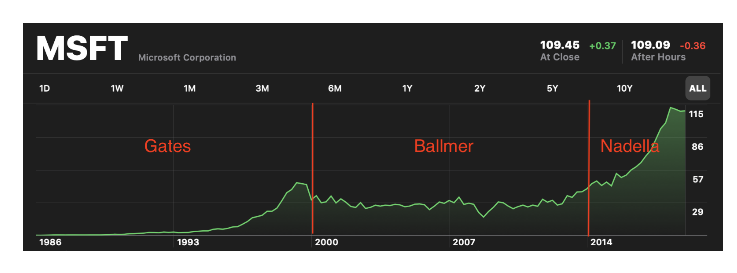
 

Image Source: 500ish


The Push Forward!

Nadella’s unrelenting focus was to Identify channels to ensure sustainable growth. Nadella is a firm believer that the key to Microsoft’s future is presence across entire ecosystem, offering an entire assortment consisting of hardware and software combined with cloud computing.


In the words of one analyst, “Microsoft was a very monolithic and slow moving beast. However, four or five years ago, Microsoft completely changed. Now, it doesn’t look so much like one giant company as a weird conglomerate of thousands of little startups. They’re moving fast and nimble, trying things out and iterating very quickly.” Powered by this change in atmosphere, many of Microsoft’s erstwhile talent who left for greener pastures have been returning home. According to one report, more than 2,200 employees have returned to Microsoft after exiting once.


During the last season of Super Bowl, Microsoft aired a commercial with focus on accessibility. Specifically, the ad features the Xbox Adaptive Controller, designed primarily to meet the needs of gamers with limited mobility. In the ad, it shows several young kids sharing stories about using the Xbox Adaptive Controller. “When everybody plays, we all win,” says the tagline of the ad.

]]>

https://1earthtech.com/microsoft-way-transform-leading/feed/ 0 734
Agile Testing – A real world outlook https://1earthtech.com/agile-testing/ https://1earthtech.com/agile-testing/#respond Thu, 02 Jan 2020 02:20:05 +0000 https://1earthtech.com/?p=709 How does Agile testing work as an integrated component of development journeys


When working on an Agile project, there is continuous discussion about development processes and timely, iterative delivery to customers. For the most part, Testing is construed, without much thought, to be an ‘included’ part of Agile Development process, just as design and requirements analysis are. Yet the domain of software testing is often ignored, or at the least not paid an equal attention.


There are multiple approaches or frameworks within Agile like SCRUM, Scaled Scrum, Kanban, XP and others. As the complexity of software development processes is increasing continuously, the software testing processes also need to evolve and mature to keep up with the development approaches. Agile testing is a relatively newer approach which focuses on testing smarter rather than investing considerable efforts, all the while delivering high-quality results.


The testers and developers are required to put in higher level of collaboration in Agile Testing. Agile testing is all about seamless integration between development and testing processes; the testers provide corrective feedback to the development team during the development cycle, while the development team reduces probability of high number of defects. Agile testing is a continuous process rather than being sequential. The testing begins at the start of the project and there is ongoing integration between testing and development.  The common objective of agile development and testing is to achieve higher quality product, free of defects and errors.


Agile Testing explained: What IS NOT Agile Testing?

Agile methods have been growing in popularity since the first formal adaptations in late 1990s to early 2000s. Agile has its own fan clubs and is fragmented in to practice areas, from simple, single team based Agile Scrum to complex models like SAFe Agile. Besides the more popular Agile methods, there are relatively lesser known yet equally effective methods like Crystal, DSDM and Feature Driven methodology.  Regardless of the method, all Agile methodologies share much of the same philosophy and features – regular feedback loops, speed, flexibility, and above all, regular communication and interactions between stakeholders, whose roles have been clearly defined and limited in all Agile methodologies.


Image Source: Clarion Technologies


Traditional testing practices have taken their lead from the Waterfall model of software development, where requirements gathering, software design, and implementation follow a deliberate and often lengthy path. Waterfall methodology has fallen out of favor recently, as Agile is becoming increasingly popular. Despite the tide of time in favor of Agile methods, waterfall testing still exists and in many cases is seen as flourishing. The ‘waterfall testing’ in an Agile implementation is particularly like an island in the middle of water which steadfastly holds its own.


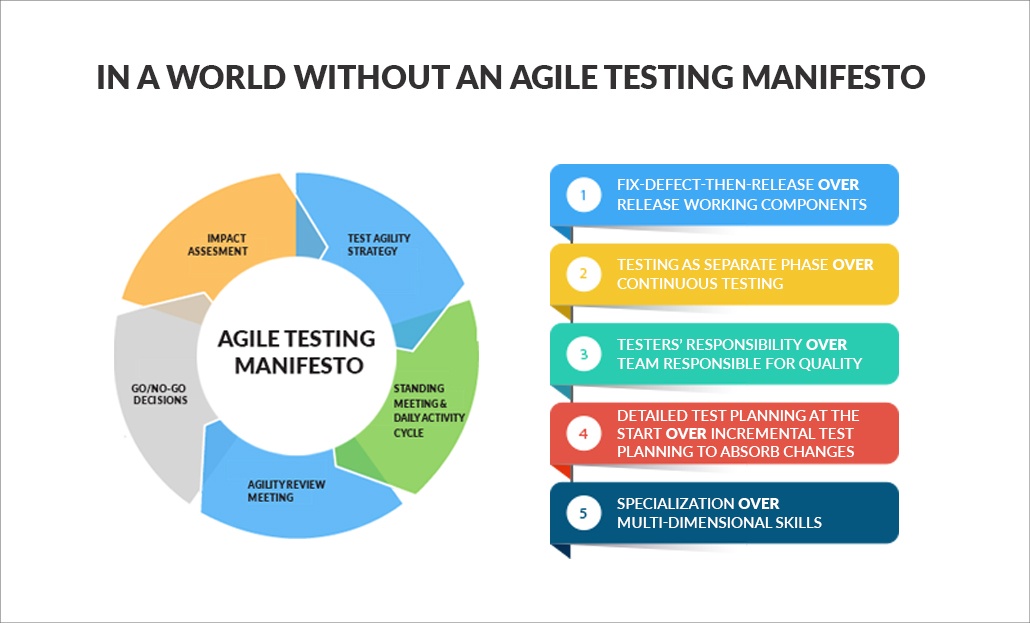
The lack of Agile testing strategy is particularly characterized by two kind of practices. First, reliance on testing as an end point to development. Many development teams still consider testing as a conclusion to development stage. This promotes the view that testing must test the entire user story or feature or MBI or increment produced in its entirety. Secondly, testing at the end of development cycle is seen as merely a rubber stamp activity. Development teams often give impression that they have coded what needs to be coded and testing is merely a formality.


Today as seen in many Agile implementations, development may have moved to Agile however ‘testing at the end of development cycle’ continues to exist in its previous avatar, clearly meaning that Testing has lagged. This kind of hybrid Agile is being followed everywhere, where development stages include everything from high level design to business analysis to client collaboration, only excluding testing. Reasons can be many, perhaps out of convenience and / or ignorance, or perhaps due to simplicity.  Perhaps the people did not understand the difference between Agile testing and Waterfall testing, hence just carried over many of the same documents and processes as used in Waterfall. In most cases, testing is simply seen as a control point, or check-gate, rather than treating it as it should be, a value addition activity.


Agile Testing explained: What IS Agile Testing?


So what is Agile testing again? For some reason, people often treat Agile testing as a black box, not knowing what to expect. Agile testing is not a ready made approach, or a set of pre-defined test cases, or pre-determined set of processes. What Agile testing is, like all other Agile processes, an adaptive approach depending on the project and the functionalities being delivered.


There is inbuilt uncertainty in an Agile project. When an Agile project starts, what the final shape of product or what will the system look like, is not known. Agile projects begin with requirements which continue to change till the time product meets acceptance.  As a project moves forward, the risk profile of the project changes. At the beginning of a project, the risk profile is higher and as the project moves forward the risk profile grows conservative as there is more at stake during later stages. As the team learns to work together, the team and project dynamics change over time. The timescales change over time; WIP inventory and backlog continues to change over time. Similarly, Agile testing approach also must undergo a change to meet the changing, adaptive requirements of the Agile project. Whatever is the approach being adapted for development processes, testing should follow the same approach.


Image Source: Medium


The below are some rules that may be followed to define Agile Testing approach for the project or the function:


  • An iterative approach to test software or product being built to aid meeting project goals
  • Less focus on framework and rigid structure; higher focus on adapting to project requirements
  • Risk profile -: Agile testing process must adapt to changing project risk profile. Test cases need to build in the amount of risk as per the risk profile at different stages of the project.
  • # Defects -: Amount of testing work can change over time as the knowledge of developers increases with time. This may require changes to the testing approach.
  • Systems architecture -: may change over time as project moves along. Testing team needs to build or import capabilities to meet this changing profile.
  • Timescales -: The timescales themselves change over time. During certain stages in a project, a feature may span multiple sprints, while in other stages there may be multiple features delivered in a single sprint.
  • Extra reporting -: another aspect of testing is the usual practice of publishing reports, test plans, templates, processes, etc. The reporting output must adapt to the project and its environment. If the project is unique, documentation may be more than other projects.
  • Documentation -: By nature, testing is a process heavily reliant on documentation. This doesn’t mean however that documentation should be a rigid requirement. Changing documentation approach to adapt to project is a facet of Agile testing. For example, if the team uses JIRA or any other tools, then testing process needs to adapt to the same. If the team is using github to upload the test cases, then that’s the approach testing should follow.
  • Communication -: there is greater responsibility to use variable communication as demanded by the project environment.


Agile test strategy Is a critical input for not only running effective Agile development processes but it provides excellent support to organization’s DevOps initiative, and the benefits of Agile testing extend beyond the immediate benefits of continuous testing. And continuous testing is vital to improving product quality.


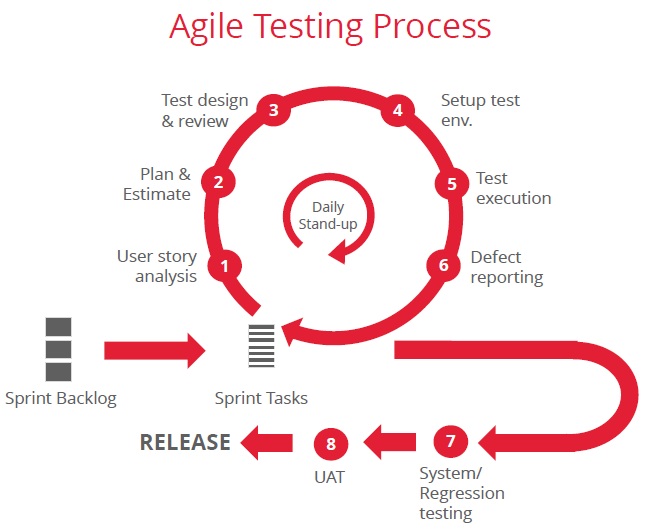
As compared to testing at the end of finishing development, Agile development stresses on early and frequent testing of finished and unfinished code changes. In the world of Agile, testing needs to happen early and often. So, instead of waiting for development to be finished before testing begins, testing happens continuously as components or tasks on a particular user story or feature are completed.


Agile Testing Methodologies


Image Source: Infobeans


Test-Driven Development (TDD) − Test-Driven Development (TDD) is based on coding guided by tests. The word “test” in Test Driven Development may be misleading. The primary goal of Test-Driven Development is to make the code clearer, simple and bug-free. Test-Driven Development starts with designing and developing tests for every small functionality of an application. In TDD approach, first, the test is developed which specifies and validates the intended function of the code being written.


Acceptance Test-Driven Development (ATDD) − Acceptance Test-Driven Development (ATDD) is based on regular communications between end users or customers, developers and testers and driven by pre-defined Acceptance Criteria and Acceptance Test Cases. The thought behind Acceptance-test-driven-development is that user or customer perception of the system or product is just as important as its functionalities, so this perception is ideal to drive performance in order to help increase chances of adoption. To give this idea life, ATDD collects input from end users / customers, uses those input points to develop acceptance criteria, translates that criteria into manual and / or automated acceptance tests and then writes code against those tests. Like TDD and BDD, ATDD is a test-first methodology, not a requirements driven process. Acceptance-test-driven-development generally goes a step further than the regular Test-driven-development or Behavior-driven-development approaches, as it directly goes to the source or – end users and / or customers, to understand the rationale behind the product and how it will be used.


Behavior-Driven Development (BDD) − Behavior-Driven Development (BDD) testing is based on the expected behavior of the software envisaged by the project team. BDD approach is based on same principles as Test Driven Development approach, but instead of unit tests, it calls for testing at higher level, usually at business level. Instead of starting with a technical-facing unit test as in the case of Test driven development, BDD starts with an initial requirement based on end user or customer behavior and calls for tests that are “human readable” and can even replace some requirements documentation. This requirement is based on behaviors that the product should exhibit, creating an airtight guide for engineers to use as they develop tests.


Exploratory Testing -: Exploratory testing gives the testing team and testers an ownership over the code to test it in an organized, yet chaotic way. In exploratory testing, testers are not following documented test steps, but rather exploring the vulnerabilities in the software in imaginable and clever ways to try to break it. Testers document defects as usual, but detailed documentation of what and how the application was tested may not be always provided.

Exploratory testing doesn’t follow a set script or test cases. Rather, it’s about developing the most intuitive tests based on each unique functionality of the software. Because of its unconventional approach, exploratory testing often mimics how users or end customers will interact with the software in real world.


Session Based Testing – Session based testing is a step further than exploratory testing. Session based testing develops on the exploratory testing approach by providing more structure. As exploratory testing is completely unscripted, it relies heavily on the skills and experience of the testing team and testers involved, which is not the best fit always. Session based testing provides structure and accountability by developing a charter for testing and running testing in time-boxed intervals. Additionally, testers are required to report on the testing that took place during each session.


Conclusion

The test process is not a separate process that can be outsourced or left alone, it is merged with the development processes. The true benefits of Agile testing are revealed when it is used as part of Agile development and accorded an equal importance. The sooner testing team and testers get involved, better it is for the project. Ideally, testers should be part of the overall scheme of things from day one, simply because giving testers a seat at the table from the start provides a higher level of insight into requirements and goals, encourages collaboration and helps hammer home the need to conduct frequent, continuous testing.


]]>
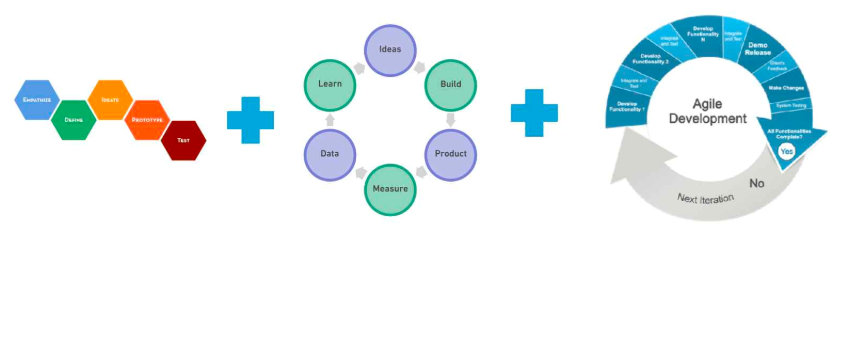
https://1earthtech.com/agile-testing/feed/ 0 709
Agile Mindset https://1earthtech.com/agile-principles-mindset/ https://1earthtech.com/agile-principles-mindset/#respond Thu, 02 Jan 2020 01:46:02 +0000 https://1earthtech.com/?p=704 Agile Mindset -: Understanding principles before leading


Introduction

A mindset, or state of mind, is a set of beliefs, thoughts, biases, assumptions and values held by an individual or a group of individuals that leads the individual or the group respectively towards the choices they make. The Humans are most comfortable in choosing paths or making decisions that confirm with their beliefs, assumptions, biases and values. The existing mindset is made up of all these and rewards itself through positive reinforcement by guiding the individual or the group, in case of shared mindset, towards the path of least struggle. In other words, towards the path that is in conformance with the existing set of beliefs, thoughts, biases, assumptions and values. Simply put, it is a way of thinking about things and making decisions that those in a group share to the point that it becomes a way of life.


Flowing from the above definition, an Agile mindset can be defined as set of beliefs, thoughts, biases, assumptions and values that guide individuals and group members to make each decision to support an Agile way of working, or Agile work environment. Agile work environment at a broad level is made up of focus on collaboration, team work, flexibility to change, respect, communication, client-partnership, continuous feedback loop, learning cycle and fearlessness towards failures.


Lets not be fooled by the simplicity of the above terms. It is easier to define mindset and then attach Agile to it, or better still, define Agile terms around what should be done, or the ideal way.  In real world however, most people and teams practicing Agile struggle to understand or explain to others what constitutes an Agile mindset. Most of the times people hide behind thinly veiled excuses like, ‘Oh, I get it, but cannot explain it to others.’


Drivers of Agile mindset

The Agile mindset is the environment within which agile teams have their brightest chance to flourish. It is not laid out anywhere. It isn’t a prerequisite for an agile adoption, nor is it a standard which can be adapted for a functional agile team. This mindset is simply the best foundation on which Agile teams can propel themselves to success.


Specifically, an agile mindset is powered by 3 primary measures. First, an agile mindset always encourages early adaptation of Agile principles. Second step is continuous reinforcement and retention, while the third step is measuring metrics and driving compliance in day to day working environment and fine tuning approach as necessary. These three practices – adaptation, continuous reinforcement and retention and measurement of metrics are the key in any organization’s Agile journey.


Many enterprises begin their Agile journey with noble intentions. They want to improve their product offering to customers, improve their go-to-market or turnaround times, bring in internal efficiencies, reduce time between deployments, or all of these. However it’s quite common for many of Agile adapters to discover that they are not fully prepared for the Agile journey. This could happen due to one or combination of many factors. They may discover that employees do not fully understand Agile and any efforts to have them adapt Agile have not been fully successful. Or that the internal environment is not conducive for Agile way of working. This would primarily happen if one or more of key stakeholders or top level management is not a believer of benefits of Agile. In most cases however Agile adaptions fail because the organization tries to do too much in too little time. One of the great failure points of Agile is that Agile is not a magic wand. One cannot hope to implement few Agile practices or principles and expect overnight improvement. And when the improvements don’t come about, blame it on Agile. Agile is not a magic cure for years of inefficiencies or layers of bureaucracy in the organization or half-hearted efforts at implementation. Above all, Agile requires discipline and effort to commit to Agile principles and stay committed even in the face of less than expected benefits. In order to reap true benefits of Agile, it takes sustained and repeated training, high management focus, reinforcements and continuous practice of Agile principles. Remember: Agile is only as good as the people implementing it. So if you notice Agile is failing in your organization, guess what! Chances are something else is failing too.


Adaption of Agile methods is perhaps the easiest step. All it takes is starting implementation of Agile principles and the practices as per the chosen method. However, this is an inherent weak point as the adaptation needs to be accompanied with strong commitment as any halfhearted attempt will lead to disappointment.


The second most important aspect is continuous reinforcement and retention of Agile principles. Adapting agile in a Big Bang manner or as a quiet change is not worth much if not followed up with regular reinforcements through trainings, refreshers, communications and word of mouth messages. The Agile principles and practices need to be driven deep down to the deepest layers through untiring, unrelenting efforts by professionals like Agile coaches and leaders. Agile roles need to be strengthened and given enough autonomy to run things on the ground. Agile coaches must drive and ensure adherence to all Agile practices and ceremonies as per the chosen method. Above all, Agile must be made a part of, promoted and practiced as a ‘way of working’ and not as a special endeavor or initiative.


Whatever is the chosen method of Agile implementation– Scrum, scaled scrum, kanban, Lean or any other, the Agile coaches need to take the mantle of driving Agile principles. Constant reiterating is just one part of the journey. Teams and individuals must be constantly evaluated on their individual compliance with Agile principles and ceremonies depending on the chosen method. Individuals and teams lagging behind must be coached on the benefits of Agile and helped in order to bring them up to expectations. Remember: Agile adaptation is a disciplined team effort and reinforcement at individual and team level is necessary to enforce rigor.


And this brings us to the third part, specifically around measurement of metrics. Maintenance and adherence to product backlog, prioritizing sprint backlog, tracking efforts burned down and remaining during sprints, user stories closed and accepted by customer, are some of the metrics.

  1. Sprint burn-down -: The sprint burn-down chart visualizes how many story points have been completed during the sprint and how many remain, and helps forecast if the sprint scope will be completed on time.


  1. Lead time -: Lead time measures the total time from the moment a story enters the system (in the backlog), until it is completed as part of a sprint, or released to customers. It measures the total time for a requirement to be realized and start earning value – the speed of your value chain.


  1. Agile velocity-: Velocity measures how many story points were completed by a team, on average, over the past few sprints. It can be used to predict the team’s output in the upcoming sprints.


  1. Code coverage -: Code coverage measures the percentage of your code which is covered by unit tests. It can be measured by the number of methods, statements, branches or conditions which are executed as part of a unit test suite.


  1. Cumulative flow -: Cumulative flow is a kanban metric which shows the status of tasks – in a sprint, a release or across software teams. It can visualize bottlenecks in the process – a disproportionately large number of tasks in any of the workflow stages indicates a problem. For example, a big “bubble” in the chart in a verification or testing stage indicates this stage has insufficient resources.


Image credit : Microtools


  1. Failed deployments -: Measures the number of deployments (either to test, production environments, or both). Can help understand how solid environments are and whether teams are really building potentially shippable software.


Conclusion

Perhaps, what makes Agile difficult for lot of managers to grasp is that it’s not just a technology, methodology or process that gets implemented within an enterprise’s current culture and assumptions. The Agile way of running an organization seeks to fundamentally redefine the very concept of an enterprise which has prevailed for the last one hundred years.

Instead of an enterprise being conceived as an efficient, profitable steady-state machine aimed at exploiting its environment and existing business model and the industry its part of, the Agile organization is a growing, learning, adapting living organism that is in constant flux to exploit new opportunities and add new value for customers.

]]>
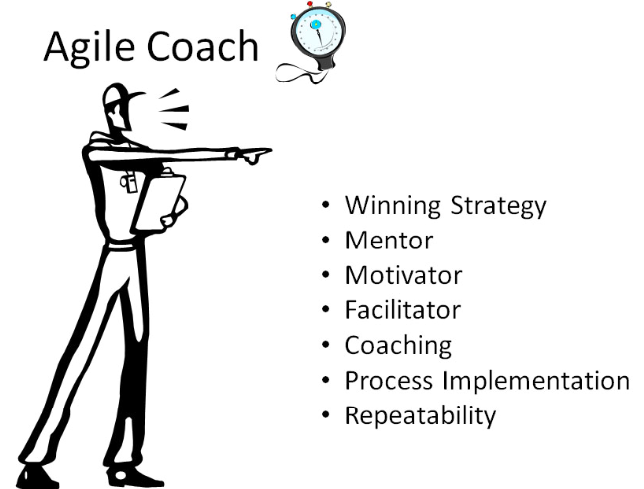
https://1earthtech.com/agile-principles-mindset/feed/ 0 704
Agile, Lean and Design Thinking https://1earthtech.com/agile-lean-design-thinking/ https://1earthtech.com/agile-lean-design-thinking/#respond Thu, 02 Jan 2020 00:11:28 +0000 https://1earthtech.com/?p=702 Erasing and drawing lines: Agile, Lean and Design thinking


Introduction

Agile and Lean are some of the most commonly used terms in SDLC lifecycle. Often these terms are used interchangeably or as complimentary to each other. There are similarities as well as points of divergence between these approaches, and it takes years of practical hands on work to sort out the nuances.


Agile software development framework refers to 12 principles and 4 values that were put forth in Agile Manifesto which became the basis for an alternate method of software development to replace the waterfall methodology. Agile was primarily a reaction by the software community of engineers and sponsors who wanted to see faster progress and cut any bureaucracy, red tapism or flab in the system. The existing heavy-lifting style of waterfall development caused as many troubles as it resolved through delivery of the software systems.  Disconnected teams, uninterested project sponsors, disappointed customers, cost and time overrun, and a software system in disarray and out of sync with customers’ needs were quite often the remnants of a waterfall implementation.


Agile gained traction as a better answer for delivering software while Lean was adapted and refined on product success in conventional manufacturing. Design thinking is a relatively abstract approach for exploring problems and solutions with customer in mind.


In any business or services enterprise, blindly committing any model, framework, or methodology seldom delivers a positive result, let alone the desired result. Different LOBs or departments may have their own unique problems which go against the grain of ‘one solution fit all approach’. The need is to marry available choices with the needs of an organization in a way that each option selected returns the best possible ROI with acceptable levels of risk.


The intersection of Agile way, Lean manufacturing and Design thinking presents an interesting combination of techniques to progressively achieve improvements in software delivery. An unbiased examination of all three techniques in detail, potential and scalability reveals interesting areas of coupling, while there also exist enough reasons to adapt adequate cautions.


“Be stubborn on the vision, but flexible on the details.”

—Jeff Bezos


Agile, Lean and Design Thinking examined

Agile is our ticket to scalable, collaborative and customer-centric software development; Lean is the framework for achieving efficiencies and applying learning to achieve process improvements, and Design Thinking is an innovative approach to attacking problems through iterative exploration and application of learnings.


Design thinking is a way of getting to the solution of a problem through continuously questioning the previous outcomes. Design thinking often advocates going where the rules don’t exist and where precedents are unknown. Design thinking is more to do with learning ability than following a set path. A cook conjures up new dishes and a designer comes up with a new dress line in much the similar fashion. It’s through thinking about the user of the product and coming up with attributes  that would deliver the most value that designers come up with the most effective design elements.


Design Thinking often focuses on the subtleties of how deep look in to problems can lead to ingenious solutions. Abstract attributes like experimentation, dealing with ambiguities, empathetic learning and above all, a designer’s ability to make meaning out of otherwise ignorable facts, hold special place in Design Thinking. Simply put, Design Thinking is a study in to how problems are framed and analyzed and how an empathetic approach of looking at problems from customers’ or users’ point of view can often bring out subtle hints towards solutions. Design Thinking challenges assumptions, encourages innovative ideas, prototyping and experimentation, and defining users’ needs and pain points. Much of the Design Thinking process is similar to Agile, insofar as iterations, late changes, customer centricity and flexibility are concerned.


The heart of Agile way, irrespective of the chosen Agile method is to react to change. Agile is a dynamic approach to delivering software of value to the customer where the customers and engineers became collaborators to produce the software. Agile is highly effective in uncertainty and is the perfect answer to many professionals and designers’ worst nightmare of not being able to change the product design during later stages of development. Scaling Agile is a critical part of Agile implementation helping organizations address changing requirements without raising everything to ground.


Lean approach developed in the manufacturing world primarily as a cost saving tool. Based on cold, hardcore scientific methods of reducing waste through processes, rules, procedures and value addition, Lean was primarily control oriented. While Agile and Design Thinking advocate flexibility, less reliance on processes and empathetic learning, Lean often runs in opposite direction. One of the major drawbacks of Lean is that conventionally it often ends at process optimization, waste, and quality, and misses so much of what the Lean mindset offers potentially. However, Lean deals with uncertainty and advocates an adaptive approach, changing according to results of experimentation and learning. Lean framework also advocates empowering those closest to the work to decide the best approach of doing work under strict supervision and control. Hence, there are ample synergies between the Agile and Lean approaches.


The lean startup methodology was invented in Silicon Valley in the 90s, powered by the dot com boom but the conventional Lean has its roots in Toyota’s production system. Toyota’s lean manufacturing system was used to build things efficiently, yet it doesn’t tell what should be built.


Using Hybrid mix of Agile, Lean and Design Thinking

Many projects can and do fail despite best intentions. According to various studies, anywhere between 30-50% of IT projects fail to achieve their objectives. A study by IDC points out that 30-35 percent of IT projects still fail. Other research puts the figure upwards of 50 percent. Regardless of the study, the main reason consistently cited for the failure of software development projects to deliver their intended outcomes is misalignment with user and business needs.


Agile, Lean and Design Thinking place high focus on close collaboration with users and people closest to the work being done. While Design Thinking focuses on finding the right problem through empathetic approach and listening to the users, Agile places emphasis on collaboration and feedback loop, while Lean advocates placing power in the hands of those doing the work. Just like design thinking, a key tenet of effective agile application, irrespective of the Agile framework chosen, is to seek frequent inputs from end users and incorporate the feedback in iterations to achieve the right outcomes. Doing this during early stages of projects includes establishing project goals, defining business increments, writing user stories and / or features, establishing success criteria through definition of done and creating product backlogs from which iteration backlogs follow. Throughout the development process, the inputs through feedback process manifests form a crucial part of delivering the ‘right’ product .


While design thinking and agile can be applied separately, benefits’ realization can be higher if the two approaches are applied together, creating an environment where both approaches benefit off each other. This environment fosters a ‘customer/user first’ attitude and equips employees with means and methods to focus on user-centricity and rapid iteration as a means of reaching optimal outcomes. Design thinking brings a strong user focus while agile is an excellent way to deliver product incrementally, ensuring customer / user needs are kept at top and center throughout entire design and development phases.


For teams looking to leverage agile and design thinking for the first time, here are few recommendations to keep in mind:


  • Fail early, fail often – No idea is a bad idea. During the brainstorming sessions or ideation phases, any criticism of any idea is simply not permissible. Each team member is free to put up their idea on the board so long as it’s a fair representation of users / customers’ needs. A critical part of Design Thinking is to come up with prototypes and working models, which are often very poor adaptation of users / customers’ needs however serve as a vital link.  The prototypes are shown to users / customers to get feedback and incorporate learnings. Poor prototypes have perhaps taught design teams more than any other source. The goal is to understand the needs of the users / customers empathetically.
  • Low hanging fruits – By starting small and focusing on high-value, yet low-risk opportunities, confidence and experience both grow in applying principals of using design thinking and agile together. Then, as the capability matures, teams can take on more challenging initiatives.
  • Create cross-functional teams – This is perhaps one of the easiest yet so-often-delivered-wrong concepts. By allowing team to leverage cross-functional viewpoints, for example, a developer may have critical feedback on UI, team leaders can tap in to experience from various domains. This not only fosters required creativity, but also creates a healthy understanding of each other’s challenges within the team. As far as possible, the team must be physically collocated with end users / customers to promote frequent collaboration.
  • Balance design and development – Agile teams are often groomed to go in to an iteration mode, basically an all-guns-blazing mindset. And that’s not wrong. Typically, Agile teams learn and implement on the fly. Agile teams are often instructed to “just start coding”, fixing problems as they come along and gathering user / customer feedback along the way. Care needs to be taken while mixing Agile and Design Thinking as this may create tensions about how much time to spend on resolving problems before starting development. The team must understand that this isn’t a pure-play Agile implementation, or a pure-play Design phase which can take ages. The team must understand the value of the empathy, definition, and ideation phases, and that Design Thinking is not leveraged only at the front, rather it can crop up during any phase. In fact, the team must be prepared and encouraged to get back to the beginning at any point during project to uncover new user insights and / or reframe the problem, and then continue development with a renewed sense of “why”.

Conclusion

At a simplistic level, Design Thinking can essentially be described as a process that leverages divergent thinking (to generate ideas and get out of the box solutions), followed by convergent, team thinking to select solutions to pursue, all the while getting user / customer feedback. Design thinking is a mindset towards solving problems from human needs perspective rather than from a business perspective.


]]>

https://1earthtech.com/agile-lean-design-thinking/feed/ 0 702
Agile Coach https://1earthtech.com/agile-coach/ https://1earthtech.com/agile-coach/#comments Mon, 25 Nov 2019 00:19:42 +0000 https://1earthtech.com/?p=522 Agile Coach


Introduction

For any team and in any team setting, the role of a coach assumes centerstage in addressing the grooming, training and teaching requirements. The coach must possess skills about the primary reason of assembly of team, and must possess deep understanding of the nuances of the game. An effective coach knows how to groom the talent available and make the best within the given constraints. A successful coach understands not only the game, and how to win the game, but also the reasons why teams fail. That last part is often the sole difference between a coach able to inspire the team to higher successes and others. Beyond the training and teaching ability, the most significant trait a coach must possess is how to ignite the hunger for learning and subsequently winning in the team.


Agile values and principles are a tectonic shift from downward flowing command and control management practices to collaborative, team centric environments. To nurture an organization through this shift towards becoming Agile requires someone with depth of agile experience, knowledge of human behavior and strong influencing skills.


With the above in mind, let’s see what’s an Agile coach. An Agile coach is someone who is tasked with teaching and training the teams within an organization on Agile methods and the Agile way in order to spread the benefits of Agile. The purpose is to make sure the organization and individual teams excel in delivering better value to its customers and stakeholders by gaining efficiencies in how everyone in the organization works. The organization aims at gaining an edge through increased inner efficiencies, better ROI and lower costs. An Agile coach, by grooming the teams, training and teaching the values of Agile and inspiring team to relentlessly implement the chosen Agile methods, plays a valuable part in this endeavor.


What makes an Agile coach

So what skills an Agile coach must possess? In order to fulfill the above objectives, an Agile coach is someone who is an expert in theory and practice of Agile values. An Agile coach is someone who is willing and able to communicate freely to be able to teach others. An Agile coach is also someone who is able to take an outsiders view, is an Agile promoter within the organization, has the ability to mediate in case of shared responsibilities between projects, and guide large teams towards Agile methods. Above all, an Agile coach is someone with ability to work with multiple teams, projects and portfolio owners to drive Agile adaption and implement improvement efforts.


In addition, each organization may have its own preference of what skills it considers more important. Organization have diverse needs and may come up with their own specific desirable traits.


Image Source: Internet


  1. Technical coaches: Agile coaches who are hired as technical coaches are primarily tasked with working closely with developers and typically have experience with coding and integration, since those are necessary skills when working with the dev teams.
  2. Process/management coaches: Agile coaches working as Process or management consultants / coaches focus more on working with leadership and portfolio owners to educate agile teams and to oversee successful adoption of the agile method across teams. These Agile coaches play a significant role in monitoring adherence to Agile practices as per the chosen Agile methodology.
  3. Non-directive coaches: Non-directive coaches offer selective, need-based, individualized support for people or organizations looking to solve specific agile-related problems. They are generally brought on for very short time periods with specific mandate.


Organizations choose their flavor of Agile coaching based on requirements, size of portfolios and / or projects, client demands, current state of Agile adaption and future desired state, as well as budget and other constraints.


Image Source: Internet


Responsibilities of an Agile Coach

An Agile Coach is typically a shared resource with multiple responsibilities on their agenda. Resolving roadblocks at an enterprise level or between projects, to coaching Scrum Masters and Agile teams, to custodian of portfolio level dependencies, risks and anything that may derail achievement of planned goals are the prime focus area. Most Agile coaches also track Agile metrics at team level and hygiene factors.


The roles played by an Agile coach vary from being a reflective observer: “You do it, I will just watch and tell you what to do”, to being a passive or an active partner: “I will show you once and then you can do it” or “We will do it together”.

Image Source: Credit Thinkstock

Organizational Responsibilities

  1. Become the facilitator for the organizational culture change necessary for sustained agile implementation and success.
  2. Helping the organization or Business Unit implement the chosen Agile methodology by working closely with teams and resources on the ground
  3. Presenting data points, reports and extracts to leadership to support implementation of chosen Agile methodology
  4. Becoming the bridge between leadership and Agile teams to enable communication and sharing of expectations, plans and goals.
  5. Integrate related methodologies within the company to have an unified approach


Technical

  1. Act as interlocutor to ensure right stakeholders are identified and issues are addressed with the right stakeholders
  2. Leveraging previous experience to teach the basics to bring people up to speed with an agile way of working; organize and lead trainings at ground level and periodic refreshers
  3. Guide scrum masters towards Agile implementation and coach on areas of weakness


Trains / Portfolio / Projects

  1. Work with portfolio and project leaders to develop standards and requirements for the agile process implementation
  2. Come up with plans and improvement measurement metrics and methodologies. For example, tracking of user stories, sprint burndown rate, etc.
  3. Work with Product owners to monitor movement of items through backlog
  4. Work with Product owners / project leaders / scrum masters to identify dependencies and risks and coordinate work towards resolution to ensure minimal impact
  5. Organize discussions and track progress on removal of roadblocks
  6. Help Scrum masters and projects to achieve goals together
  7. Track team level Agile implementation and metrics
  8. Bring all Agile teams under the same umbrella
  9. Ensure transparency and fairness while dealing with teams and resources


Conclusion

Over the years as sports have become more competitive, sporting teams have realized that one coach for all aspects of the game is not enough. For example in Cricket, teams employ separate coaches for bowling, batting and fielding. In football, teams employ goalkeeping coaches, striking coaches, defensive coaches and more. Similarly, many large organizations today employ multiple Agile coaches with varying and diverse skill-sets, experience and backgrounds so as to derive maximum benefit and ROI.


Adaption of Agile methods can have more than just tangible benefits. The benefits of Agile are not limited to the organization only. As an organization pursues it’s endeavors on the path of Agile journey, it contributes to its ecosystem and to the field of Agile teachings. By playing an instrumental role in an organization’s Agile journey, an Agile coach can have a lasting impact beyond their expected role.


]]>
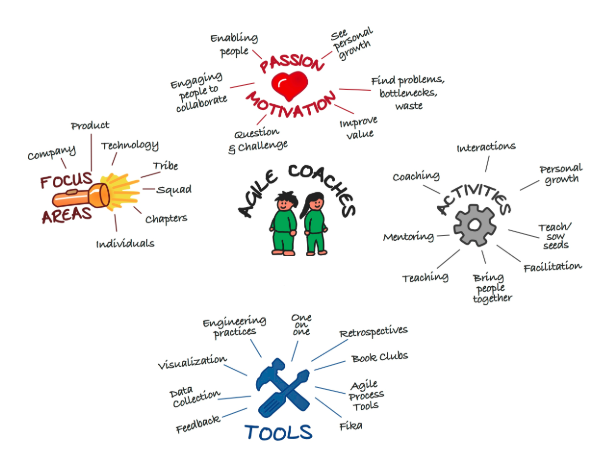
https://1earthtech.com/agile-coach/feed/ 1 522
Agile and Documentation – A real world outlook https://1earthtech.com/agile-documentation/ https://1earthtech.com/agile-documentation/#respond Mon, 25 Nov 2019 00:09:03 +0000 https://1earthtech.com/?p=518  

Agile Is Not Incomplete or No Documentation — Agile Means “Right” Documentation.


Introduction

Agile methods have been growing in popularity since the first formal adaptations in late 1990s to early 2000s. Agile has its own fan clubs and is fragmented in to practice areas, from simple, single team based Agile Scrum to complex models like SAFe Agile. Besides the more popular Agile methods, there are relatively lesser known yet equally effective methods like Crystal, DSDM and Feature Driven methodology.  Regardless of the method, all Agile methodologies share much of the same philosophy and features – regular feedback loops, speed, flexibility, and above all, regular communication and interactions between stakeholders, whose roles have been clearly defined and limited in all Agile methodologies.


As the focus has grown on speed, flexibility and continuous delivery, many Agile practitioners have come to regard Agile framework as highly flexible, evolving structure without rigid guidelines, rules, or methods. Agile teams have at times contended that documentation assumes lesser priority in Agile methods while some consider maintaining documentation a matter of convenience. Along with varying viewpoints, people have come up with their own adaptations of Agile practices and guidelines, merrily choosing one while ignoring other.


Why is documentation important?

All software systems are complex products developed and delivered through a series of steps and / or processes. Irrespective of the method used or the skillset involved, each software begins with an idea and translates into a product, prototype, document or piece of code to be used for the next project.  Whether a product, document, prototype, or working software, the artifact created in one step becomes the input to the next step.


The Agile Manifesto states as one of its core principals, “Working software over comprehensive documentation”, hence many people assume that Agile means little to no documentation. Nothing can be farther from the truth. In reality however, it is often a fallacy; and nothing more than a common misconception of those inexperienced with agile. Thinking that a project can be delivered more quickly and easily by avoiding documentation is often akin to not doing enough testing in order to save time.


Image Source: Mastering Business Analysis


Documentation serves an important purpose. In particular, project teams want to capture high-level information in documentation but not details, which is largely fine as long as documentation requirements are met. You will still need to capture important information permanently, and sometimes regulations require certain levels of documentation (yet another requirement)


  1. Documentation is integral -: Documentation is as much a part of the system as the source code. In addition to working software, Agile teams need to minimally deliver user manuals, support documentation, operations documentation, and system overview documentation.
  2. Initial stages and recording agreements -: Documentation plays very important part in recording understanding of everyone on the project team with regard to the overall scope of work and their individual wok areas and the points of integration. Documentation pertaining to requirements and recording definition of done, recording understanding of solution and design documents are integral part of project documentation. Without this documentation, most of the project work can come at risk and re-work can become the least of project team’s headaches.
  1. Inputs to next work effort -: Building high-quality working software which meets the needs of the stakeholders is important, yet its equally important to ensure that the software can be maintained and enhanced throughout its useful life. Documentation helps regular operation and support functions and without adequate documentation there are higher chances of wasted work efforts and re-work.
  1. Not all projects are created equal -: Projects vary in degree of complexity and time taken to complete. Complex projects demand more concise, well-detailed documentation than simpler projects. Similarly, working on new systems or new requirements means more documentation is needed as there is little pre-existing knowledge or resources to fall back upon. Working on complex and unknown systems means more documentation as interactions will need to be understood by the team.
  1. Maintain transparency and communicate better -: documentation helps teams communicate better as well as maintain transparency in to the team’s activities. It’s a fool’s world to think that project teams exist and act in isolation. In varying degrees, whatever happens on a project team, impacts other teams around.
  1. Ideas and tasks cannot just be all in people’s heads -: stuff that’s not documented is sometimes lost as soon as the project is over, and definitely lost over an extended period of time. Documentation however survives as long as it is considered relevant and maintained.


Image Source Scott W. Ambler


Agile Documentation

Unlike waterfall project management, where the focus is on clearly defined documentation, and documentation is a project phase unto itself, Agile views documentation effort as only what is bare minimum essential to the project.


Agile encourages “just enough” documentation as may be required for the project to meet the expectations of customers and stakeholders.  Among other things, the level of documentation needed for a particular project depends on newness of system and requirements, maturity of project teams, complexity and scale of the project, future needs, etc.


The documentation on an Agile project can be in the form of white boards or brain maps; or sticky notes or writing on flip-up chart papers. Pictures, rather than lengthy documents can be the flavor of the day. Similarly, videos can be created of project team members explaining requirements or detailing solution or just how any part of the solution would work. Agile does not believe or recommend in documentation just because some stakeholder feels that each and every detail of the project must be captured in writing to retain knowledge for future. The aim of Agile is release increments better and faster. “Just enough” documentation fits in the overall picture of efficiency.


While some information will always need to be captured in written form or documented clearly, there are techniques that may be used to reduce amount of writing, but will still give the customers and stakeholders what they want. One way to reduce the amount of writing is to create diagrams through brainstorming using a whiteboard and capturing those as images saved by individually or as part of a document.


Image 3: Source Internet


Agile – Documentation and changing requirements

The standard waterfall requirements documentation doesn’t hold much water in Agile world. First and foremost, for any medium to large project, obtaining stable requirements upfront is impossible. The business needs and customer preferences themselves change over time, and in many cases business  and customers aren’t even aware of what they want till they see a final working version of the product. In many cases customers realize they specified wrong requirements only when they see the final version of the product. The other problem with requirements identification is understanding the intent, or the unsaid needs of the customer. Perfectly well written, and word-by-word noted requirements turn out to be well short of the customers’ expectations because the team did not understand the unspoken requirements.


Image 4: Source Internet


The product backlog, where the requirement came from, and how it will be accepted by the customer (acceptance criteria or definition of done) are all various documentation that are essential and central to the success of the project. It cannot be optional, it cannot happen “whenever convenient.” It is a part of the development and acceptance process.


Documentation in and of itself doesn’t hold much value unless it is paired with an effective communication method. The focus in Agile world is, and should be, rightly on conversations first, and documentation later. In the above cases where traditional documentation of requirements will fail miserably, communicating frequently and holding conversations about product features regularly so that the customer and project team can build the product together holds the key to product acceptance.  The simple idea is to come to an agreement point at the end of discussion about each feature or story point (where features are broken in to story points) and documenting the same. Once again, remember! Conversation and agreement first, documentation later. The agreement between customer and business and project team centers on what is the acceptance criteria (definition, roles, acceptance tests), which is later documented and forms part of Agile project documentation. This final output, after the discussions are done and the dust is settled, is the key towards a successful project as without this final step, of documenting what’s agreed, months of work and planning can flow down the drain.


Acceptance criteria & acceptance test form the core of Agile requirements. These documented agreements – Acceptance criteria and acceptance tests – cut the ambiguity around the requirement as defined by the customer, thereby improving the chances that dev team/s build the right thing, that stakeholders will be happy with. Further, it affords developers some flexibility in how they implement or develop the requirements, as long as the final product meets the criteria/tests documented in previous steps.


Image 1: Credit SkepticalAgile


In addition, acceptance tests and acceptance criteria bring about an important change within the customer organization. In many cases there are more than one or two stakeholders. Entire customer teams from cross-functional areas can participate in requirement discussions and its very common to find divergent viewpoints among the same team. Discussing and documenting acceptance criteria lends a seriousness to the entire exercise and forces the entire customer team to come to shared understanding, which simply would not exist without documentation. Divergence among stakeholders is the single biggest pain point while working with medium to large projects and Agile documentation can very well nip the problem in the bud.


At implementation level, these criteria and tests become the common language between project team, developers and the stakeholders. Acceptance criteria and tests established earlier become the basis for discussing changes in requirements, as well as how progress is tracked. Of course the acceptance criteria and thereby the defined acceptance tests can themselves change if requirements change or even otherwise following the same original course of conversation and communication followed by agreement and documentation. Furthermore, these acceptance tests can be automated, using Acceptance Test Driven Development (ATDD) tools commonly available today.


Post the requirements’ documentation, another sticking point with many is the topic of Technical documentation. Technical documentation is meant to be a description of the software as it exists including all the changes to the original version thus far as on the date of recording. The purpose of technical documentation is to allow continuity, i.e. to allow a system to be maintained by future developers, long after the original team has left or as long as the system is deemed to be useful. In reality, however, technical documentation, such as UML diagrams, may not be very helpful in solving day-to-day development problems, and are often found to be out-of-sync with the actual behavior of the system.


At the core of Agile technical documentation is documentation through tests, in what is normally referred to as Test Driven Development. When the development team starts work on a story or feature, the testers and developers come together first to define and automate the acceptance tests. This helps on more than one front. First, this helps the team maintain their focus as they implement the acceptance criteria agreed earlier, by including only those factors that contribute towards meeting acceptance criteria and rejecting those that don’t. Second, this helps the team gain a common purpose and work towards the same goal in the most time efficient manner as the inconsistencies are resolved upfront. Thirdly, this acts as a final level of check to identify any tasks which can derail the entire project. Test driven development’s core feature is to only include the tests which are appreciated by the stakeholders, and which amply demonstrate the product features and acceptance of those features, rather than including mundane or repetitive tests.


Lastly, project teams’ maturity, whether it’s a new team or has worked on several projects in the past together, is an important consideration on the amount of documentation needed. It is extremely important to document, starting from requirements to acceptance tests, however the level of documentation needs to be managed at project level.


Image Source Dilbert


Conclusion

While it is true to a large extent that Agile methods advocate doing away with rigid guidelines, documentation and maintaining artifacts is not a rigid requirement to begin with.  Lets keep in mind, agile is first of all a set of values, not a settled and strict, rigid framework. All Agile practitioners should be confident on how to adjust these values to their environment. Remember that every company has its own pace, characteristics and values.


All Agile documentation must follow the same rule – it is not that agile eschews documentation, so much as it eschews up-front documentation.

]]>

https://1earthtech.com/agile-documentation/feed/ 0 518
Introduction to Microservices Architecture https://1earthtech.com/microservices-architecture/ https://1earthtech.com/microservices-architecture/#respond Sat, 16 Nov 2019 00:52:36 +0000 https://1earthtech.com/?p=480 Microservices Architecture

Originally Published July 21, 2018


Introduction

All software systems exist to serve a business need. However all software systems are not made in the same way or follow the same structure. Software systems vary in their complexity and size. There’s a an ecosystem that exists across a wide spectrum ranging from traditional software systems commonly called ‘monoliths’ (giant one-piece bundles of code) to ‘microservices’ (tiny single-function systems or apps communicating with each other).

Monoliths or conventional software systems are conceived, built and operated as a single unit.  Because of their size and complexity, even smallest changes in monolithic systems involve building and deploying the whole application. Flexibility is almost zero while the entire system requires huge efforts to just maintain and run day to day operations. Scaling monolithic applications is another challenge why organizations are seeing less and less benefits in operating such software systems.

On the other hand, microservices come in to picture as a combination of various small features where each feature serves only one distinct purpose of the system. Martin Fowler describes microservices as an approach to developing an application as a suite of small services.


Image Credit: Internet


Microservices Architecture – Explained

With microservices, modules or functionalities within an application can be independently produced, deployed and operated. Microservices architectures offers businesses an unique ability to build and operate only those functionalities which are required. Microservices architecture focuses on creating software as single-function components (microservices) with well-defined interfaces and operations that communicate via APIs.

As the microservices are independently deployable and scalable, each service exists within a firm boundary, even allowing for different services to be written in different programming languages and can also be managed by different teams.

The most important parameter to decide what and how many Microservices are needed is to identify business needs that need to be met. A functionality can be loosely defined as a purpose of the particular element – for example user getting authenticated through an username / password combination is a a functionality and authentication is the business feature. What counts is how various business features (functionalities) are categorized as business capabilities and then split, where required, as fully independent, fine-grained, and self-contained microservices. Hence, the Microservices architecture has certain distinctive features making it more desirable for some business cases than others.

Image Credit: Oracle


Benefits and Advantages of Microservices Architecture

The main concept behind microservices architecture is that most types of applications and business units structured around their IT portfolio become easier to build and maintain when they are broken down into smaller, composable pieces which work together. To put it differently, each module or component is developed and operated separately, and the application is then simply the sum of all its constituent components. In microservice architecture, each service runs a distinct and independent process and usually manages its own database. This provides development teams with a more decentralized approach to building software while also allowing each service to be deployed, rebuilt, redeployed and managed independently.

Image: Advantages of microservices architecture


1. Enabling Agile Development

  • Microservices architecture involves organizing services around business features. Each service is self-contained and generally implements a single business capability. Hence, value delivered to business is immediate rather than waiting for big bang value delivery as in case of monolithic applications.
  • Applications / software built on microservices model are broken down in to smaller, outcome driven components or services. Each of these components or services can be produced, deployed and redeployed independently throughout the lifecycle.
  • Developers and tech teams get the freedom to work on individual components or services and features delivering short increments of business value.
  • Testing cycles are quick and short; and complex, endless regression tests are eliminated as there are limited components to be tested. Defect fixing is vastly improved as well.
  • Customer feedback cycle is greatly helped as smaller microservices are easier to focus on and relevant feedback can be provided without confusing between complex features in case of monolithic applications.


2. Optimization / Flexibility

  • In the microservices architecture, each service is a separate codebase, generally managed by a small development team.
  • Services are responsible for persisting their own data or external state. This differs from the monolithic application model, where a separate data layer handles data persistence.
  • There are components or microservices which are better written in one language. Microservices architecture enables developers to write code for different services in different languages.


3. Operations / Fault tolerance

  • Microservices architecture leads to greater fault tolerance within an application or software. Since the application is a suite of multiple small microservices, it leads to better fault isolation as when one microservice fails, the others will largely continue to work.
  • Downtime is severely reduced as individual components are easier and quicker to fix, while the fixes themselves can be deployed quickly rather than bringing down whole application and repeating endless regression tests to ensure that fix implemented doesn’t break any other component in case of monolithic applications


4. CI / CD

  • By default, microservices architecture enables easy integration through quick deployments, many times using open-source continuous integration tools such as Jenkins, etc.
  • Services are deployed independently. A dev team can update an existing service without rebuilding and redeploying the entire application.
  • The microservice architecture enables continuous delivery. Microservices architecture works very well with containers, such as Docker.


5. Security

  • Microservices vastly simplifies security monitoring because various parts of an application or software are isolated, hence can be easily observed and managed.
  • Security threats once identified can be quickly isolated and thus prevented from spreading to other parts of the application or software.
  • Components or services can be spread across multiple data centers and / or environments and run on different systems to reduce risk and downtime while providing enhanced disaster recovery planning.


6. Scalability / Reusability 

  • Smaller pieces of functionality are better re-used; integration with third party services is quicker and less complex.
  • Microservices architecture gels very well with cloud infrastructure, thereby becoming highly scalable


7. Ease of operation

  • Components thus built are easy to understand since they each represent a small piece of functionality, and are easy to modify for developers, thus helping create resilience within the structure.
  • A new team member can become productive quickly by understanding and working on individual models instead of wasting time understanding the complete application and various interfaces.


Image Credit: Internet

Microservices Architecture – early adapters

As in case of any new technical offering, there are organizations which were quick to adapt to microservices, just as there are organizations who held out. Organizations like Netflix, eBay, Amazon, the UK Government Digital Service, Twitter, PayPal, The Guardian, and many other large-scale websites and applications have all gradually evolved from monolithic to microservices architecture.

In case of retail giant Walmart, IT department of Walmart Canada was plagued with problems arising out of working with an architecture for the internet of 2005, primarily designed around desktops, laptops and monoliths of a classic monolithic application. The problem was the IT infrastructure worked fine for 90% of the time and seemed to miserably fail during remaining 10% of times. The impact of this 10% failure rate was spectacular – at peak times, like during holiday season, major holidays and other events, the website couldn’t handle 6 million pageviews per minute and made any kind of positive customer experience impossible to achieve. Business impact – poor customer experience, lost revenue / sales to the tune of millions of dollars, losing market share, etc. Walmart Canada wanted to prepare for the world by 2020, with 4 billion people connected and 25+ million apps available. With this intent, Walmart changed its platform to microservices architecture. The impact of this change was immediate and as clear as day. Conversions were up by 20% literally overnight, mobile orders went up by 98% instantly, no downtime on major events like Black Friday or Boxing Day, operational savings were significant since they moved off expensive hardware onto commodity hardware and saved 40% of the computing power and experienced 20-50% cost savings overall.


Image: an example of Microsoft Azure

Image Credit: Microsoft blog


Image: an example of microservices architecture on AWS

Image Credit: Amazon AWS Blog


In 2000, Amazon faced a similar challenge with its primary business, the retail business website Amazon.com being managed as a single monolithic application. The complex scale and size of the application meant that Amazon had to maintain teams of engineers just to support very mundane tasks of pushing new fixes and releases through its production environment. The process of adding a new feature, or changing an existing one, or a simple bugfix was extremely complex and inefficient. Each change needed to be coordinated across a wide spectrum of stakeholders and technical teams to ensure the new changes do not break anything in the existing code. If the development team wanted to roll out a feature, the schedule needed to be coordinated very closely with other stakeholders.

Amazon soon chose to implement a services oriented architecture and proceeded to break down their one, central, hierarchical product development team into small, “two-pizza teams.” They wanted teams so small that they could feed them with just two pizzas. These smaller teams were given clear mandate and operating boundaries and were put in charge of one or few microservices so they were defining their own feature roadmap, designing their features, implementing their features, then testing, deploying and operating them. The results were simply too good. Amazon dramatically improved its front-end development lifecycle, with the product teams enabled to quickly make decisions and crank out new features for their microservices. Now the company makes 50 million deployments a year, thanks to the microservice architecture and their continuous delivery processes.

Breaking your applications into microservices isn’t always easy or enough — once done, someone has to manage, orchestrate them and deal with the new stack. The biggest mistake organizations make when moving to microservices architecture model is underestimating how it’s going to change the way they to think about applications and especially the way they think about teams developing those applications. Here are few points to be careful of while deciding path to microservices adaption.

  • Implementing Microservices without making changes to the development culture
  • Implementing Microservices without the prerequisites
  • Moving too fast and moving too much
  • Unrealistic expectations from microservices architecture, something on the lines of magic pills!
  • Selecting wrong applications to promote to microservices model


Microservices Architecture – Final word

The philosophy of the microservices architecture is: “Do one thing and do it well.” Services might run within the same process, but they should be independently deployable and easy to replace. They can be implemented using different programming languages, databases, and software environment. The services are small and fine-grained to perform a single function. They embrace automation of testing and deployment, continuous delivery software development process, failure and faults, similar to anti-fragile systems. Each service is elastic, resilient, composable, minimal, and complete.

Image Credit: RisingStack

]]>
https://1earthtech.com/microservices-architecture/feed/ 0 480