
All companies, from one-person proprietorship to those employing hundreds of thousands of people, established firms or start-ups, are equally struggling in these trying times. One can surely, and perhaps effectively argue about the impact which may vary on a case to case basis, however generally speaking, the newer a company, the bigger the battle in front of it.
Startups are going through a tough time during this pandemic situation. India has the third highest number of startups next to U.S. and China. Quite obviously, the country is highly affected by the downturn of startups. Especially, during a time when the government has placed more emphasis in the development of startups for economic growth. But the Covid pandemic seem to thwart the plans of Government to nurture more startups for their economic growth. During this pandemic crisis, it is reported that most startups have failed, and only a few seem to be in the curve of progression.
Covid hampers Startups
Covid has had a devastating impact on almost every business in the world. The most affected industries include travel, hospitality and education among others. The social distancing behavior has restricted people from attending offices. These issues have caused the businesses to struggle in running their day to day operations. In many cases it is reported that the work productivity has been highly hit during the pandemic.
Although, many firms are managing through remote work, the effectiveness in terms of productivity, communication and collaborative work is a big question. Apart from it, many businesses are disrupted and new opportunities seem to arise. Experts estimate that the impact of Covid is believed to last for many months, and we can expect a recession hit economy for the next several years.
As per a nationwide survey on the ‘Impact of COVID-19 on Indian Start-ups’ conducted by Federation of Indian Chambers of Commerce and Industry (FICCI), jointly with the Indian Angel Network (IAN) with 250 start-ups, 70% of start-ups stated that their businesses have impacted by Covid-19. About 12% of the start-ups have shut operations and 60% are operating with disruptions.
The survey depicts that only 22% of the start-ups have cash reserves to meet the fixed cost expenses of their companies over the next 3-6 months.
The findings show that 68% of the start-ups are majorly cutting down their operational and administrative expenses.
Close to 30% of the companies stated that they will lay off employees if the lockdown was extended too long.
About 43% of the start-ups have already started salary cuts in the range of 20-40% over the period of April-June 2020.
On the investment front, 33% start-ups said that the investors have put the investment decision on hold and 10% stated that the deals have been called off.
Fragile nature of startups makes things worse
Startups in general are very fragile considering the constraints they operate in. Many startups may have very little funding to bootstrap their process. We understand how hard it takes for a startup to be successful under normal circumstances. Finding the right product fit for the market and acquiring customers are among the factors that determine the success and growth of a startup. The Corona pandemic makes it difficult for startups, since the world undergoes unpredictable changes and business is hard to get. The startups need more incubation and support during their initial years to be more productive in the future. These factors that make startups more fragile in nature make them vulnerable and difficult to survive.
In this Corona pandemic situation, the startup firms are affected badly. It is believed that about 90% of the startups have failed in India. There is another report that the startups have cash reserves to last only for the next 3 months. These are bad news for the startups in our economy. The fragile nature of startups and the inexperience of entrepreneurs can very well be the cause for such failures.
A quarter of India’s startups would be in serious trouble if adverse consequences of the COVID-19 pandemic persist for long, according to information technology industry veteran Senapathy (Kris) Gopalakrishnan. “There will be more failures, unless they get additional funding from existing investors or support from banks on working capital or support from government for some form of debt or grants. We will see more companies get hurt as this prolongs,” said the Chairman of early stage startup accelerator and venture fund, Axilor Ventures.
A comparison of priority investment sectors pre and during COVID-19 shows that 35% of the investors are now looking at investments in healthcare start-ups, followed by EdTech, AI/Deep Tech, FinTech and Agri. Meanwhile, 44% of the incubators surveyed highlighted that their day-to-day operations have been considerably impacted by the COVID-19.

How should startups respond to the Corona crisis
However, there is a silver-lining amidst all the gloom of Corona pandemic. We will take a look at some of the brave startups who have looked up-to new opportunities for growth. Indian startups have ground-breaking ideas and are hard-working people, and success is just around the corner. A few startups are adapting to the present situation and meeting the needs of current market conditions. These are certain aspects that can help startups to survive during the pandemic.
New Opportunities Arise amidst Corona
It is time for startups to look beyond the ordinary to be successful. Relying on traditional mode of business may not yield good results. That may be the reason for failure of many startups. Successful startups have capitalized on the new opportunities that are presenting itself in the society. To make this understand better, people are looking for safety during this time, and providing ways for safe products and services can help startups to stay afloat. Startups should keep looking for those new opportunities that are opening up, and make plans to meet those opportunities. After all this is not the end of the world and keeping your company alive for the next several months can be crucial for their success in the long run.

Rapid Innovation
Rapid innovation is another startup thing that’s caught the eye of business community. Think of startups like Uber, Airbnb and many others, they all brought an innovative idea to the table. The world is a different place because of these firms. These rapid innovative ideas are the prime reason for the success of these next generation technology firms. They saw a unique need in the society and countered it with smart tech solutions that solved people’s problems. Uber has solved the cab problem in providing a hassle-free cab riding experience in the city. Take Aribnb, they provide an innovative concept in accommodating people in shared spaces, which is a big hit and has grown to become a multi-million dollar company. Likewise, many startups today are coming with rapid innovation ideas to fight the Corona pandemic. It is a noble effort by the startups to endeavor in such activities through their ideas and technology. I personally know of an Artificial Intelligence startup that lends its AI search technology for free to the medical community to find vaccine for Corona. The AI start up firm found their technology suitable for medical research community and tailor made their AI product to be useful for medical research purpose.
Government initiative to sustain Startups
The Government has a huge role to play to support startup firms in this pandemic. The Indian government has come up with many initiatives to support startups in the country. The business community can take advantage of these government initiatives and make the best out of it. The government has announced new plans to mentor startups, regulatory reforms in favor of startups, funding sources and investor engagement facility to name a few. It is indeed difficult for startups to survive without favorable government initiatives. It is imperative that Government looks keenly into the affairs of startup development and does the needful. These initiatives can meet the financial deficit of startups. The mentorship programs provided by the Government can be handy to get business insights for experienced campaigners. They can provide valuable advice to steer the startups in the right direction nullifying the Covid impact.
Stakeholder support is essential for Startup growth
The support of stakeholder can go a long way in sustaining the Startups. During these tough times, sometimes startups may need additional funding or much needed morale boost from the stakeholders. It is vital for Stakeholder to have confidence on the ambitions of startups. These are little things that can fetch a long distance. Encourage and support from the stakeholder can keep the morale of the team to achieve their goals.
Success stories of Startups and coping mechanism
Some startups are doing a great job in adapting to the present circumstance. For instance, Zomato has been hit badly as customers have grown skeptical about buying food online. The firm went ahead to establish measures to comfort its clients about the safety of their food, and found a vast opportunity. Zomato has made good business strategic moves in finding big opportunities opposed to smaller ones to be able to survive. They have founded a new segment called Zomato Market where groceries are delivered to home residents, which adds great value to customers during this pandemic. The success of the Zomato Market has led them to launch their extended service in countries like UAE and Lebanon. In an interesting equation, Zomato is ready to deliver alcohol to home residents.
While the travel industry has taken a heavy beating, firms like MakeMyTrip have to be on the edge to add tremendous value to the present scenario to stay afloat. In a strategic move, MakeMyTrip realized the present travel equation and is offering a platform for short stays for their customers. They have piloted a short stay program for travelers wanting to visit Tirupathi in collaboration with Goibibo and Redbus. MakeMyTrip is keen to provide a great experience for its customers even during this pandemic situation, and their co-branded cards with leading banks like ICICI provide a rewarding travel experience.
A popular gym and fitness joint called Curefit in the country has succumbed to the pressures of Covid. The firm has taken to online classes to keep their gym facility running. They have created a subscription model, so the fitness enthusiasts can still keep the ball rolling and maintain their perfect physique. The virtual classes will help them to stay connected with their instructors, and continue their exercise routine.
What we can perceive from these interesting stories is there are ways to keep a business going. Zomato, Makemytrip and Curefit are good examples on how startups are coping during this pandemic. The entrepreneurs who have put their thinking cap on to assess the situation and do the right thing have found the big advantage.
It is tough, but not impossible
Startups can leverage the government support, policies, stakeholder support, rapid innovation to come successfully out of this Covid crisis. It can be tough, but it is not impossible. We should appreciate the noble efforts of some startups who have geared up in fighting the Corona spread. Seeing the new opportunities and adapting to the disruptive world is key to surviving in this pandemic. Taking the right initiatives at the right time and having the belief to succeed will help startups to see through this massive storm.
“Startups must use their strengths in innovation to re-strategize and re-think their business,” said Ganesh Raju, Co-Chair, FICCI Start-up Committee and Founder, TurboStart.
]]>
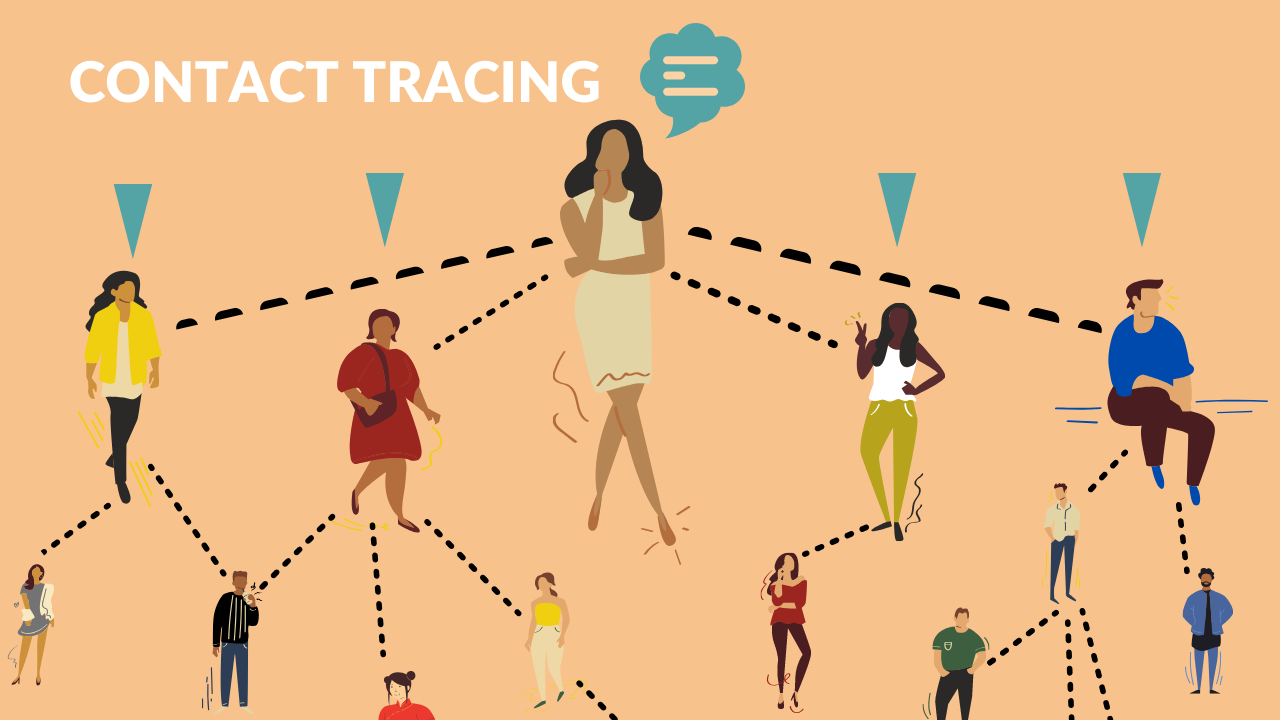
Image Credit: University of South Florida
Exposure notification and Contact Tracing: Essential tools
As the Novel Coronavirus or COVID-19 pandemic has gripped the world, Governments, Organizations and People all over the World are trying desperately to break the vice like grip of this deadly pandemic. With more than 830,000 people dead and 25 million directly infected, and the disease showing little signs of slowing down, the nature of the crisis is unprecedented and unmitigated.
The software development communities across the World have contributed since the start of the pandemic in 2019 by developing apps, data collection programs and frameworks to assist the medical communities and local, state and national or federal governments in their attempt to fight against this pandemic. The indefatigable spirit of doctors and nurses across the world required a solid backing and the tech community came forward unselfishly.
According to Wikipedia, the Exposure Notifications System, originally known as the Privacy-Preserving Contact Tracing Project, is a framework and specification developed by Apple Inc. and Google to facilitate digital contact tracing during the COVID-19 pandemic. Contact tracing is a technique used by public health authorities to contact and give guidance to anyone who may have been exposed to a person who has contracted COVID-19. The project’s aim was to produce a framework to do a digital trace of COVID-19 cases so if one happens to be near someone or in contact with someone who is later diagnosed with COVID-19, one can get a notification and take the appropriate steps to self isolate and get medical help if necessary. Think of it as an Early Warning System for those who came in contact with known or unknown COVID-19 positive people. The reason behind this close collaboration is evident – just like the Novel Corona-virus doesn’t differentiate between people, any efforts to digitally trace the spread of infection must transcend the very human boundaries of technology, software and hardware.
The announcement of this unprecedented collaboration project, a first of its kind among two arch rivals, immediately stoked fears of unreserved data collection and many people started voicing their concerns and feedback started flowing in. The people at large had genuine cause to worry. Tech companies after all have a less than acceptable track record of masking data collection activities while aggressively repudiating any efforts to control their massive arsenal of data-collecting apps.
Exposure Notification makes it possible to combat the spread of the coronavirus — the pathogen that causes COVID-19 — by alerting participants about possible exposure to someone they have recently been in contact with, who has subsequently been positively diagnosed as having the virus. There are three broad parts to this COVID-19 Exposure Notification system. The first part is defining the users. The second part is the feature of communication standard used to communicate between devices. And the third and final part is the contact tracing app developed by the local or state health agencies.
They process of Exposure Notification System woks through sharing anonymous Bluetooth beacons with nearby devices running the same software, tagging those that suggest extended and close contact associated with coronavirus spread, and saving the last 14 days of these records.
The first contact tracing app, Virginia’s COVIDWISE, debuted Aug. 5. North Dakota and Wyoming shipped their Care19 Alert Aug. 13, Alabama launched its GuideSafe app Aug. 17, and Nevada introduced COVID Trace on Monday. The University of Arizona is testing Covid Watch Arizona, with a statewide release expected soon.
So now lets look at the first part. According to Apple, there are two primary user roles identified within the Exposure Notification framework.
So who are the Users?
Affected user -: When a user has a confirmed or probable diagnosis of COVID-19 (as defined by the Health Authority), the framework identifies them as affected and shares their diagnosis keys to alert other users to potential exposure.
Potentially exposed user -: To assign a user the potentially exposed role, use the framework to determine whether a set of temporary exposure keys indicate proximity to an affected user. If so, the app can retrieve additional information such as date and duration from the framework.
How does the Exposure Notifications System work?
The second part of the project concerns with the actual working of the feature and communication. The Exposure Notification Service is the vehicle for implementing exposure notification and uses the Bluetooth Low Energy wireless technology for proximity detection of nearby smartphones, and for the data exchange mechanism.
The Exposure Notification system is made up of few components, namely Bluetooth keys, an API to communicate, and an app typically distributed by the local public health authorities.
First up, an API or Application Programming Interface is a software intermediary or bridge that allows two applications to talk to each other. Each time some uses an app like Facebook, or sends an instant message, or check the weather on phone, the application is using an API to fetch and display the data.
Apple and Google developed the underlying APIs and Bluetooth functionality, but they are not developing the apps that use those APIs. Instead, the technology is being incorporated into apps designed by public health authorities worldwide, which can use the tracking information to send notifications on exposure and follow up with recommended next steps.
- Contact tracing app download by users – Users download the contact tracing app provided by local public health authorities that are compatible with ENS (Exposure Notification System)

- User opts in to the ENS (Exposure Notification System)
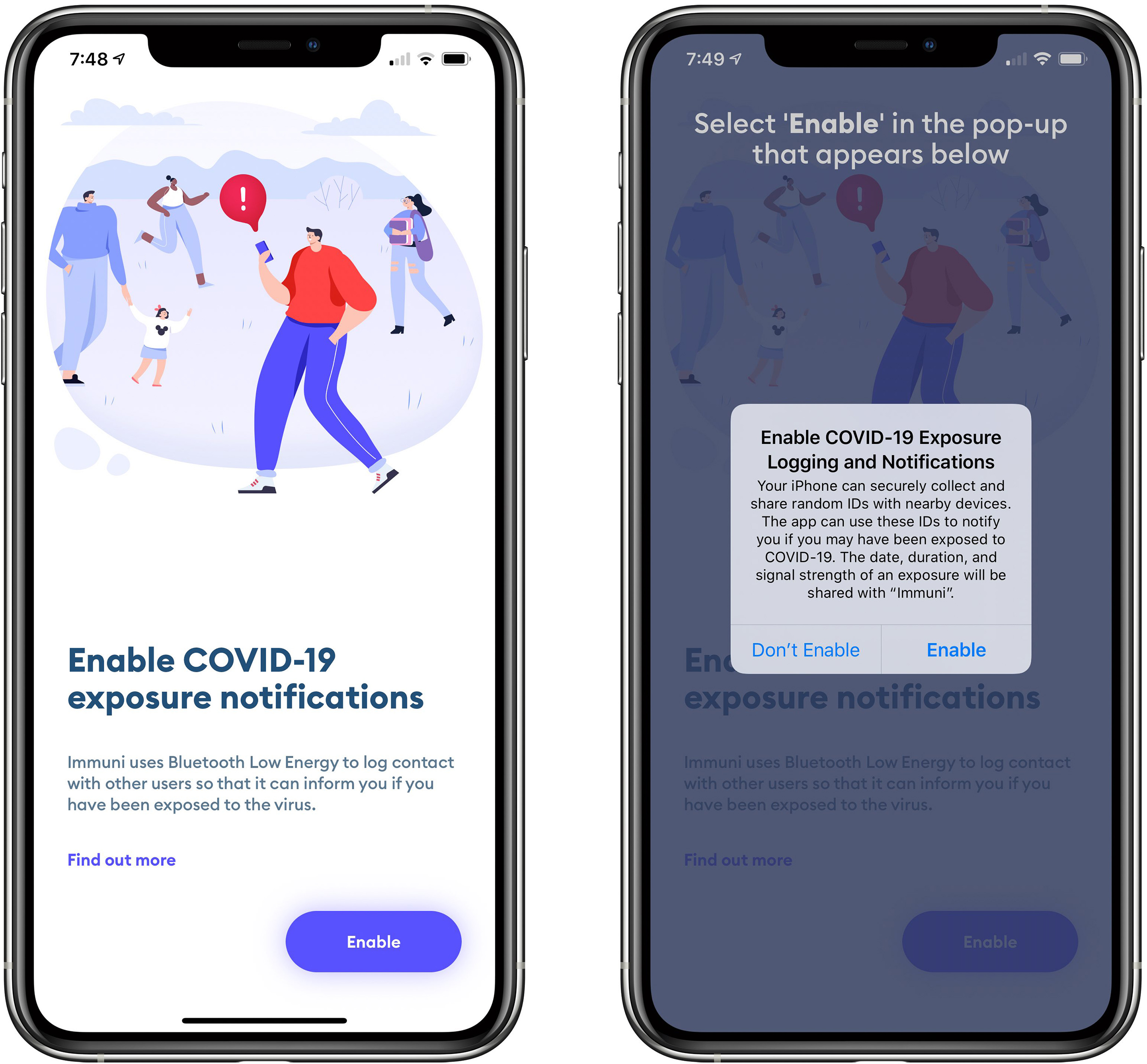
Image Credit: Macrumors
- ENS (Exposure notification system) generates a random ID for user’s device. To help ensure these random IDs can’t be used to identify the user or user’s location, they change every 10-20 minutes.

Image Credit: Nevada Health Response
- The user’s phone and the phones around user work in the background to exchange these privacy-preserving random IDs via Bluetooth. The users do not need to have any app open or opt-in or opt-out for this process to take place.
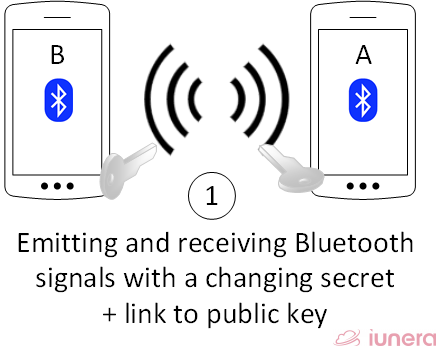
Image Credit: iunera
- User’s phone periodically checks all the random IDs associated with positive COVID-19 cases against its own list.

- If there’s a match, the app will notify the user with further instructions from their public health authority on how to keep user and the people around them safe.

Image Credit: CGTN
Finally, what about Privacy
The Exposure Notifications System was designed with users’ privacy and security at the center and essentially everything else floating around the need to keep contact’s identity secure. An user’s identity is not shared with other users, Google, or Apple. Even a cursory read of the document produced by Apple and Google detailing the specifications and working details of the program reveal that the concerns around privacy may afford to be relaxed at least in the case of this feature. Here’s a look at the top privacy concerns.
- The APIs have been created with privacy and security in mind, and app usage is opt in rather than mandatory.
- User decides whether they want to use Exposure Notifications—it’s off unless user turns it on.
- ENS doesn’t use location data from your device.
- User’s identity is not shared with Google, Apple or other users.
- Only public health authorities can use this system.
Phase 1 of Exposure Notification System
The first phase, released by Apple through iOS version 13.5 on 20 May, 2020 required that users first download an app from their public health authority to opt-in to Exposure Notifications.
iOS 13.7 lets you opt-in to the COVID-19 Exposure Notifications system without the need to download an app. System availability depends on support from your local public health authority. For more information see covid19.apple.com/contacttracing. This release also includes other bug fixes for your iPhone.
This method makes contact tracing significantly easier for public health authorities who won’t have to waste critical time or spend valuable money on developing an app.
So What’s coming
The Exposure Notification System or ENS allows public health authorities to develop apps that augment manual contact tracing efforts while preserving the privacy of their citizens. As of today, public health authorities have used ENS to launch in 16 countries and regions across Africa, Asia, Europe, North America and South America, with more apps currently under development.
Apple likely made the change to use Exposure Notification service without the need for a contact tracing app to quietly encourage more public health departments to use its service. Only a handful of states in the United States and a few countries worldwide are using Google and Apple’s mobile technology. Most health departments still use an old fashioned contact tracing method that relies on in-person interviews and phone calls to locate those individuals who came in contact with an infected person.
Recently, Nevada Department of Health and Human Services started offering its own contact tracing app to use the ENS (Exposure Notification Service) to keep people safe.
]]>

Image Credit: Adweek
All content platforms and social media companies must keep the content flowing because that is the business model: Content captures attention, provides viewership and generates data (users’ statistics). Content is the starting and the end point of consumers’ journeys on social media. A video, an information post, a tweet, blog post, picture, public service advisories, are all types of content. The platforms then sell that attention (read: viewership), enriched by that data (read: customized ads). But how do you deal with the objectionable, disgusting, pornographic, illegal, or otherwise verboten content uploaded alongside legitimate content?
How do Facebook and other tech and social media companies ensure integrity of content on their networks? And how do these companies work to curb misinformation on their platforms about the Coronavirus pandemic or the 2020 elections or any other global or regional event. We have seen state and non-state sponsored actors with nefarious intent take advantage of lax content posting norms.
Dangerous fake news has spread on platforms like Facebook in Myanmar, where the Rohingya ethnic minority are persecuted. United Nations has clearly blamed the role of social media in spreading the persecution and this is not the only example of its kind.
Misinformation campaigns (aka “fake news”) on Facebook have interfered with democratic elections around the world. After a man used Facebook to live stream his attack on two New Zealand mosques in March 2019, the video quickly spread. YouTube Moderators fought back hard taking down the video as newer versions kept popping up seemingly beating the controls that YouTube has in place to immediately flag already removed material. The uploaders were able to sneak past by using a loophole – exact re-uploads of the video are banned by YouTube, however videos that contain clips of the original footage must be sent to human moderators for review, thereby delaying the process. And again this loophole existed for a purely legitimate reason – to ensure that news videos that use a portion of the video for their segments aren’t removed in the process.
In 2017, a live stream on Facebook showed the fatal shooting of a 74 year old retiree in Cleveland, while also showing a man murdering his own child in Thailand. Both videos remained online for hours and racked up hundreds of thousands of views.
In a December 2017 report, ProPublica took a revealing look at content moderation. ProPublica gathered from its users 900 examples of where users believed that Facebook content moderation was incorrectly applied. ProPublica then selected 49 of such posts and asked Facebook to explain. Rather shockingly, yet unsurprisingly, Facebook admitted to an error by its moderators in 22 out of 49 posts. Just imagine, 22 out of 49 means approximately 45% or half of all posts in the sample had moderation applied incorrectly. No amount of explaining can explain that.
Social media is good, right!

Image Credit: Internet
Facebook serves as a platform for its billions of regular users to post, view and offer feedback about the content hosted on its servers. But when that content is more “terrorist propaganda” than “brunch photo,” or when it becomes “porn” than “essential context” to an image, the company has struggled to determine the right approach to removing it in time. The traditional methods of company moderators reviewing user-reported infractions is too time consuming, while the AI powered algorithms are too imprecise.
With the COVID-19 risk content moderators were sent home, and without proper technology, connectivity, and safety requirements met, Facebook’s automated system took full control. That was an unmitigated disaster, leading to widespread blocking or deleting of posts mentioning Coronavirus from reputable sources such as The Independent and the Dallas Morning News, not to mention millions of individual Facebook users. Those automated systems still have problems.
Content from legitimate sources, verified fact-checked sources, and sources with history of posting appropriate and trust worthy content is suddenly being targeted. While there were always instances of some posts getting tagged erroneously, there is an order of magnitude increase in such instances in the post-covid world. Clearly the strategy to have AI and ML based programs call the shots hasn’t worked.
“Facebook is blocking COVID-19 posts from fact based sources,” a Facebook source says. On March 17th 2020, according to an Yahoo news article, Facebook suffered from a massive bug in its News Feed spam filter, causing URLs to legitimate websites including Medium, Buzzfeed, and USA Today to be blocked from being shared as posts or comments. The issue blocked shares of some but not all coronavirus-related content, while some unrelated links are allowed through and others are not. Facebook has been trying to fight back against misinformation related to the outbreak, but may have gotten overzealous or experienced a technical error.
According to a just released report by NYU Stern, Facebook content moderators review posts, pictures, and videos that have been flagged by AI or reported by users about 3 million times a day. So that is 3 million pieces of content just flagged for review out of possibly billions and billions of content posts. And since CEO Mark Zuckerberg admitted in a white paper that moderators “make the wrong call in more than one out of every 10 cases,” that means 300,000 times a day, mistakes happen.
So, is it all an experiment gone wrong? Did the novel coronavirus catch the social media content moderation framework at the worst time?

Image Credit: Webhelp
The one thing we know for sure is that you can’t control the beast that is Social Media. Generally, the response by firms to incidents and critiques of the social media platforms is primarily ‘We’re going to put more computational power on it,’ or ‘We’re going to put more human eyeballs on it.’” And that is generally fine. For it attempts to resolve the problem, or at least is seen as an attempt to resolve the problem, with or without adequate results. The focus is not on the results, rather on the proclivity to be seen as doing something.
Facebook uses more than 70 external partners and fact-checking firms. According to Facebook, it has over 30,000 people working on safety and security — about half of them are content reviewers working out of 20 offices around the world. Facebook employs almost all of these 15,000 content moderators indirectly, mostly outsourced workers. In similar context, YouTube today employs an expected 10 – 12,000 people to patrol al of Youtube and Google’s content. Similarly, Twitter employees close to 2,000 people in its content review team.
Generally speaking, content management or content review falls in to two main buckets. The first is content moderation, where content moderators, mostly contractors working on behalf of lets say Facebook or Twitter, check the content for violations like nudity, sexual content, racism, hate speech, acts of violence or promoting violence, violating laws and community standards, child pornography, and like. Moderators are responsible for reviewing flagged content, and removing it in accordance with the policies of the social media platform. The second bucket is third party fact checking, where Facebook employs more than 70 third party organizations, primarily, news outlets and prominent individuals to check a particular content as True or False. Based on the result then, any one of the many actions can be taken. Either the content is either left up or demoted, or additional labels are added, or additional constraints are placed including monetary impacts or all of the foregoing in extreme cases.
According to content management and comprehensive community standards page on Facebook directly, the efforts to moderate and regulate content have three stages. First, is the Policy development process. The content policy team at Facebook is responsible for developing our Community Standards. We have people in 11 offices around the world, including subject matter experts on issues such as hate speech, child safety and terrorism. Many of us have worked on the issues of expression and safety long before coming to Facebook. Second is Enforcement of policies developed previously through its global content moderator workforce. Facebook uses a combination of artificial intelligence and reports from people to identify posts, pictures or other content that likely violates our Community Standards. These reports are reviewed by our Community Operations team, who work 24/7 in over 40 languages. Facebook’s fact-checking rules dictate that pages can have their reach and advertising limited on the platform if they repeatedly spread information deemed inaccurate by its fact-checking partners. The company operates on a “strike” basis, meaning a page can post inaccurate information and receive a one-strike warning before the platform takes action. Two strikes in 90 days places an account into “repeat offender” status, which can lead to a reduction in distribution of the account’s content and a temporary block on advertising on the platform. And finaly, Facebook launched a review process last year. A news organization or politician can appeal the decision to attach a label to one of its posts. Facebook employees who work with content partners then decide if an appeal is a high-priority issue or PR risk, in which case they log it in an internal task management system as a misinformation “escalation.” Marking something as an “escalation” means that senior leadership is notified so they can review the situation and quickly — often within 24 hours — make a decision about how to proceed.
If Facebook’s content moderators have three million posts to moderate each day, that’s 200 per person: 25 each and every hour in an eight-hour shift. That’s under 150 seconds to decide if a post meets or violates community standards.

Image Credit: TELUS International
According the NYU Stern report, and according to some recent investigations by Buzzfeed and news articles by NBC, Forbes and others, the problem of content reviews – whether its content moderation by moderators or third party fact-checking by independent news organizations and individuals is more structural and institutional in nature. The novel coronavirus just exposed a side of it and perhaps aggravated the outcomes.
According to a NBC news article, Facebook has allowed conservative news outlets and personalities to repeatedly spread false information without facing any of the company’s stated penalties, according to leaked materials reviewed by NBC News. According to internal discussions from the last six months, Facebook has relaxed its rules so that conservative pages, including those run by Breitbart, former Fox News personalities Diamond and Silk, the nonprofit media outlet PragerU and the pundit Charlie Kirk, were not penalized for violations of the company’s misinformation policies.
The list and descriptions of the escalations, leaked to NBC News, showed that Facebook employees in the misinformation escalations team, with direct oversight from company leadership, deleted strikes during the review process that were issued to some conservative partners for posting misinformation over the last six months. The discussions of the reviews showed that Facebook employees were worried that complaints about Facebook’s fact-checking could go public and fuel allegations that the social network was biased against conservatives.
“This supposed goal of this process is to prevent embarrassing false positives against respectable content partners, but the data shows that this is instead being used primarily to shield conservative fake news from the consequences,” said one former employee.
In a recent case at Facebook, related to appeals process, a Facebook employee filed a misinformation escalation for PragerU, after a series of fact-checking labels were applied to PragerU posts. A Facebook employee escalated the issue because of “partner sensitivity” and mentioned within that the repeat offender status was “especially worrisome due to PragerU having 500 active ads on our platform,” according to the discussion contained within the task management system and leaked to NBC News. After some back and forth between employees, the fact check label was left on the posts, but the strikes that could have jeopardized the advertising campaign were removed from PragerU’s pages.
In another case, a senior engineer at one of the top social media giants collected internal evidence that showed the company was giving preferential treatment to prominent conservative accounts to help them remove fact-checks from their content, according to Buzzfeed. The company responded by removing his post and restricting internal access to the information he cited. A week later the engineer was fired, according to internal posts seen by BuzzFeed News.
Many employees at top social media companies like Facebook, Twitter and others have expressed deep anguish on their internal inter-company platforms , amid growing internal concerns about the company’s competence in handling misinformation, and the precautions it is taking to ensure its platform isn’t used to disrupt or mislead ahead of the US presidential election.
Third party fact checking also suffers from severe debilitating factors severely limiting its outreach. Scale becomes an issue for the fact checkers as most organizations Facebook contracts work of fact checking to, typically only allocates handful of people to the task of fact-checking. Coupled with an impossible amount of fact-checking requests coming in, that means the people are constantly backlogged.
According to Sarah Roberts, a pioneering scholar of content moderation, and an information studies expert at the UCLA, the social media companies handle the activities of content moderation in a fashion that diminishes its importance and obscures how the activities of content moderation work. The idea is simple: make it obscure and muddy the waters, to achieve plausible deniability. Something straight out of the play book of top politicians and business executives – plausible deniability. Content moderation is a mission critical activity, yet most social media companies fulfill it with their most precarious employees mostly by just outsourcing the entire journey of content moderation.
Just as companies save significant amount of money by outsourcing transport logistics, janitorial and food services, outsourcing content moderation saves these social media giants tons of money. Just as we pointed out earlier, between Facebook, Twitter and Youtube there are close to 40 – 50,000 content moderators. And the number is only growing. Even at conservative estimate of 40,000 people, that is outsourcing work equivalent to 100% of work performed at 4 medium sized outsourcing services providers.
The lack of access and the lack of willingness by social media companies to allow any kind of scrutiny of their moderation practices has made content moderation a kind of black box ops where only few people know what takes place. This is certainly by design and it is no accident that the top social media companies choose the convenience of maintaining plausible deniability and the wait and watch approach while incendiary content burns and lights fire to everything around it.
What about human content moderators?

Image Credit: tampabay.com
According to Guy Rosen, VP of Integrity at Facebook, content moderation is a really arduous job. Numerous people have brought this issue to the fore. Watching countless hours of sadistic, violent, disturbing and purely horrific content day in and day out takes its toll. How do you get those hours of visions and thoughts out of your head when you head home? You cannot. Those sights and sounds stay with you. As a content moderator, its really hard to live a normal life after watching 8 hours of non-stop disturbing content.
In the recent past, a former Facebook moderator sued, accusing the platform of psychological harm. Former Microsoft employees sued Microsoft for similar reasons after the alleged trauma from reviewing child porn. In a more recent report, The Verge carried out a scathing review of the job conditions for content moderators at Facebook and the harrowing conditions surrounding the job in general. As one employee interviewed in the report put it: “We were doing something that was darkening our soul — or whatever you call it,” he says. “What else do you do at that point? The one thing that makes us laugh is actually damaging us. I had to watch myself when I was joking around in public. I would accidentally say [offensive] things all the time — and then be like, Oh shit, I’m at the grocery store. I cannot be talking like this.”
Accenture which performs content moderation for social media companies, has its employees sign a form that directly acknowledges that reviewing such content may be harmful to mental health and could even lead to PTSD.
So, is it purely an evil design at play at Social Media giants when it comes to moderating?

Image Credit: VICE
To be fair to all, Facebook and other Social media giants do face somewhat of an uphill battle in their efforts of moderating the content. The moment any post, video, or content gets tagged or labeled as requiring fact-checking or misleading or inappropriate, the authors or posters are quick to raise hell about dictatorship, suppression of free speech and infringement of people’s inalienable right of expression.
There is always a debate between balancing free speech versus freedom from cruelty and hatred. Or debate between balancing freedom of expression versus right to speak against bullies. A recent attempt by Twitter to mark certain tweets from the President caused a storm and PR crisis. A similar attempt from Facebook recently drew ire of conservatives and put certain ad revenue under threat.
Aside from the morals and ethics, at the heart of the debate is a purely financial question: content attracts viewers. More viewers equals more content and vice versa. Any attempt to reduce content, even the borderline inappropriate content will reduce viewers hence impacts revenue. The business models chosen by Facebook, Twitter and Google favor an unremitting, unrelenting drive to add more users and demonstrate growth to investors. More users and more content means more content to moderate and more nuances, but all of that is secondary, a kind of an afterthought.
The debate on the usage of internet and governing content uploads is not new. The debate has been going on for some time now and is just about reaching peak interest levels around the world, with many governments promising action like EU and UK; few governments, like China, in fact taking strong action; and few just watching how the entire debate pans out and what, if any, changes come out as result.
The big tech players around the world have realized one thing – it’s a tough tight rope walk to control or govern the internet. If a platform puts in too strict controls, through user-reporting mechanism, AI backed algorithms and human monitors flagging and removing content, it will get labeled as ‘dictatorship’ and against free speech. If a platform puts in too few controls, hosting content freely and with little censorship, its going to get run over by activists from all ends of the spectrum, from left to right. It’s quite like an overflowing pot left simmering for long. The only difference is no one can lift the pot and no matter which way its tilted, boiling hot contents are sure to leave scalding marks.
With that, lets take a look at The role of Regulators in the efforts to moderate content.
When Mark Zuckerberg wrote the oped in WAPO in March 2019 asking for government and regulators to step in more aggressively to police the internet, he may have elaborated what many insiders feel regarding governing internet, and specifically what content is uploaded for viewers to view, download and use. Yet, not everything seems above board here as the challenges that Mark Zuckerberg cited so eloquently in his oped are the same challenges that have plagued tech industry for years. What has changed recently that governments are being called in to action, while so far the tech industry has fought tooth and nail for freedom of expression and freedom of speech?
As the efforts to govern the internet continue, many who are fighting the battle daily are coming to realize the magnitude of difficulty this seemingly simple question of ‘what content to be allowed’ poses. Lets face it: Internet was never known to be deferential to peoples’ preferences. The advocates of freedom of expression and free speech, often big tech companies themselves, fought for as little government control as possible, decrying every move made by governments or regulators around the world.
Technology experts, including big tech companies themselves believe that for Zuckerberg and other big tech companies, “regulation” isn’t an uncouth word anymore. As with changing times, the big tech is now embracing regulations, not because of any newfound respect for regulations but purely as a business measure. From early days when big tech companies projected all regulations as reprehensible and fought any and all regulations tooth and nail, to the current day where they are welcoming regulations, the transformation cannot be more melodramatic.
Most of big tech today sees regulations as a set of common rules enforced by governments and regulators that’ll allow them to further cement their dominance of the internet. And if anything goes wrong, they always have the comfort of pointing the finger to the” Regulator” big brother.
So what is the Way forward to moderate content and to maintain integrity of platforms
According the NYU Stern report, the solution is straight-forward, and calls for increased investment, focus and commitment. The solution is a multi-pronged approach. The first step of this approach begins with Ending outsourcing: to ensure all content moderators are official Facebook or Twitter or employees of the Social media company, with adequate salaries. Increasing the number of moderators significantly is another, as well as placing content moderation under the dedicated oversight of a senior executive.
Facebook or Twitter or other Social media companies should also expand oversight in underserved countries, the report suggests. In addition, the health and well being of content moderators employees should come first. The company should sponsor research into the mental health impacts of moderating the world’s content. And the company should expand fact-checking to curb the spread of misinformation.
]]>
Image Credit: Techcrunch
In an industry which is not limited by any conventional restraints, Apple® has once again proven to the thought and market leader in promoting what it’s users want. It is not however what Apple® has promised to do, as its customer and user-centricity is quite legendary, rather it’s the timing of the changes that is quite interesting.
During the Worldwide Developers Conference (WWDC) held remotely for the first time, Apple® announced some new privacy and security features for iOS. Apple®’s 31st Worldwide Developers Conference 2020 was a digital-only event kicked off June 22. WWDC is Apple®’s annual Worldwide Developers Conference where developers can attend sessions and meet with Apple® engineers and this year’s event witnessed Apple® debut iOS 14, iPadOS 14, macOS Big Sur, tvOS 14, and watchOS 7. The online event typically allows millions of developers worldwide to get close proximity access to future versions of iOS, iPadOS, macOS, watchOS, and tvOS, as well as engage and network with Apple® engineers and community through engineering sessions, one-on-one lab appointments, and the revamped Apple® Developer Forums. The event for the first time had no physical gathering in California due to the ongoing global health crisis, making everyone sorely miss the Networking and touch and feel of events like this.
During this year’s event, Apple® provided a full digital WWDC experience with online keynote, a Platforms State of the Union for developers, technical and design-focused engineering sessions, Apple® Developer Forums with Apple® engineer participation, and one-on-one developer labs. Apple® also hosted a Swift Student challenge, though winners received a jacket, pins, and virtual one-on-one lab sessions with Apple® engineers rather than free admission to WWDC.
Image Credit: appleinsider
With the new changes Apple® announced, publishers need to quite very much overhaul their entire value offering to stay compliant. As compared to the earlier practice of virtual free for all, publishers will now be required to provide information about their app’s data collection practices while explicitly seeking permission from their users to track the users’ shadow across apps and websites owned by other companies. This is a major change for the industry players, since thus far, users were required to opt-out if they wanted from sharing their data and identifiers with third party networks. To aggravate the matters, the opt-out process itself in most cases was not straightforward, with self-regulation and delayed actions in most cases giving no real out to the users. This gave the publishers of the app a virtual free rein to use the users’ implied consent in any way the publishers deemed fit. That all is set to change as now with the new changes, users will have to explicitly opt-in within their apps to allow tracking or sharing of their data.
The updates mean that you can limit how much location information is shared with apps — only allowing it approximate data rather than your precise whereabouts. Apple® also introduced recording indicators through an orange dot on your status bar that will tell you when your camera or microphone is activated. Apple® also introduced labels for app permissions to inform people how much data an app requests before they download them. The feature will show people those labels in two categories, on “Data Linked To You” and “Data Used to Track You.”
The last few years have seen an entire new industry segment open up which specializes in driving users to download an app, accessing user information, sometimes with consent, sometimes without, then tracking users across apps, collecting data and then selling the data, a process leading to shortcut of app monetization. Instead of charging user to use the app, the app pays itself through tracking, collecting and selling user data. While users complained, and while the more privacy minded users combed through the fine print of legal agreements and terms of conditions or terms of services for each app they installed, most users even those who were concerned, just shrugged and moved on. Most users just took it as the cost of using apps.
An important point to note here is that apps don’t exist in isolation or in silos. There is almost a complete app ecosystem, and as with any ecosystem, the app ecosystem requires continuous sustenance. From App development to app launch and promotion, to making the app stick with target audience, then capturing and tracking of data, and finally utilizing the data, are key parts of the ecosystem. On the technical side, or for the more technically minded, Apple® uses something called an IDFA, the Identifier for Advertisers (IDFA), which is a random device identifier assigned by Apple® to a user’s device. Advertisers use this to track data so they can deliver customized advertising. Each IDFA contains no personal identifying information, or PII, instead serving to measure and identify user interactions with ad campaigns, installs, and in-app activity. Some industry insiders put the value of app driven advertisements in iOS in excess of $45 billion dollars.
Just looking at the app development itself, unarguably the first step towards launching an app, there can be no mistake in gauging the potential of the industry. Skipping all the factors in cost breakdown, a median price to create an app by specialist agencies was found to be $171,450, while many online app cost calculators provide a price tag between $200,000 and $350,000 for an app with dozens of features. Small apps generally cost much less – apps with few basic features could cost between $10,000 and $50,000, indicating there’s an opportunity for any type of business to make a decent ROI. Needless to say, this potential saw anyone and everyone jump headfirst in to the fray.
Aided with technological advancements like microservices and APIs, it is no surprise that making, launching and monetizing apps has become big business. For a while, it really seemed to be the Wild, Wild West, with no real control, oversight or accountability.
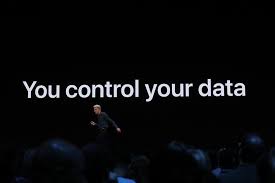
Image Credit: cnet
The above is however set to change in a big, yet unprecedented way in near future. The upcoming changes will make it harder for app publishers, advertisers and marketers to track and target users across apps, creating a level of uncertainty on how that industry will work from now on. The changes are expected to improve transparency on users’ privacy, but they will also have an impact on the current app’s economy and how apps monetize. Some of the most important players in that space such as ad networks and attribution networks will be immediately affected.
According to a recent survey of iOS and Android users, 68.3% of iOS and 67.5% of Android users will likely deny tracking permissions if they are requested in-app to opt-in. With Android sure to follow, this is definitely good news for privacy minded and not-so-privacy-minded users alike as the move spearheaded by Apple® will strengthen the privacy laws in the entire marketplace.
Some critics do feel that it’s not big tech or app developers pushing back, it’s the GDPR in Europe that is forcing companies like Apple® to announce such measures. Coupled with an increasing awareness of the privacy violations that have been suffered by average consumer over the last decade or more, firms are bound to act sooner than later. While this may be partially true, there is no denying that the end result is what privacy advocates have always wanted.
To summarize, the upcoming privacy changes in iOS as announced in WWDC are forecasted to have a significant impact not only on how apps monetize their audience and how advertising and attribution networks work, but also the entire app ecosystem. The study showed that a large proportion of the users will not allow themselves to be tracked, a crucial step in effectively running and attributing ad campaigns in the apps space at the moment. Similar findings were also revealed with Android users. Privacy seems to be a key concern among users in the mobile space and providing them with more transparency and choices seems to change the current app landscape dramatically.
]]>
Microsoft has mostly been recognized as the industry leader in technology and innovation. Having cornered 90% of world personal computer market and having massively popular enterprise services as a cash cow meant that Microsoft always carried significant advantage over its competitors and peers. It could literally burn few billions in cash and not break sweat over it. Or acquire couple of companies for few billions and choose to write the investment off as an unsuccessful bet. Microsoft had been the favorite of most of its critics at some point, and has been at loggerheads with various governments, domestically and overseas, and yet survived without breaking the bank. Employing more than 100,000 people since forever and leading the way in consumer and enterprise computing, Microsoft was easily considered too big to fail.
Yet during the late 2000s, trouble was brewing at Microsoft. The years leading up to 2014 were very difficult as Microsoft was seen struggling on various fronts. Part of the reason was internal while a big part of it lay outside Microsoft. Externally, technology itself was shifting along with user preferences and increasing complexity was no longer feared by most IT organizations. The focus was to move away from large, one vendor solution to having multi-vendor stack of products which gave the organization flexibility to choose the best providers. All these changes meant that Microsoft’s model was coming under increasing pressure.
Mobile platform was considered Microsoft’s biggest, most glaring shortcoming. At the start of 2014, Microsoft’s mobile market share amounted to just 3.5 percent. That was a dismal number, compared with Apple’s 15% and Android’s 80% market share. Additionally, its Surface tablet was struggling with less than 3% of the tablet market. This made Microsoft’s Windows the only major operating system that didn’t have a viable mobile component. The personal computer sales were declining at the same time, as shipments slowed down by more than 10% for the first time.
Apart from the above hardware troubles, Microsoft was coming under intense heat on the software and ecosystem side as well. Customers were growingly seeking a seamless, integrated user experience across devices and Microsoft was nowhere close to providing that. Bing remained a distant second to Google Search (18.7 percent versus 67.6 percent, respectively), and Microsoft had just released a free online version of Office — Microsoft Office Online — in response to Google Drive. Apps available on windows store numbered 1/5th of those available in App store and Google Play.
Further in the years leading to 2014, Microsoft was increasingly coming across as an organization happy to rest on its past laurels. Pace of innovation was slowing down, confidence in the organization was at an all time low, its products were seen as out of touch from market realities while the product pricing model was considered by many as greedy or obscene, or at best, overpriced. Microsoft was late to launch its smartphone, Windows phone, and the market was already in love with iPhones by the time first Windows phone came out – more than 3.5 years after the launch of first iPhone. Its new operating system, Windows 8, touted to provide seamless experience across devices was considered a market dud, while offerings such as Xbox gaming system lost out purely due to poor pricing strategy.
Dawn of an Era
When Nadella took over as Microsoft’s CEO in Feb 2014, his challenges were immediate and spotlight was always on, as is expected in case of world’s 4th largest corporation.
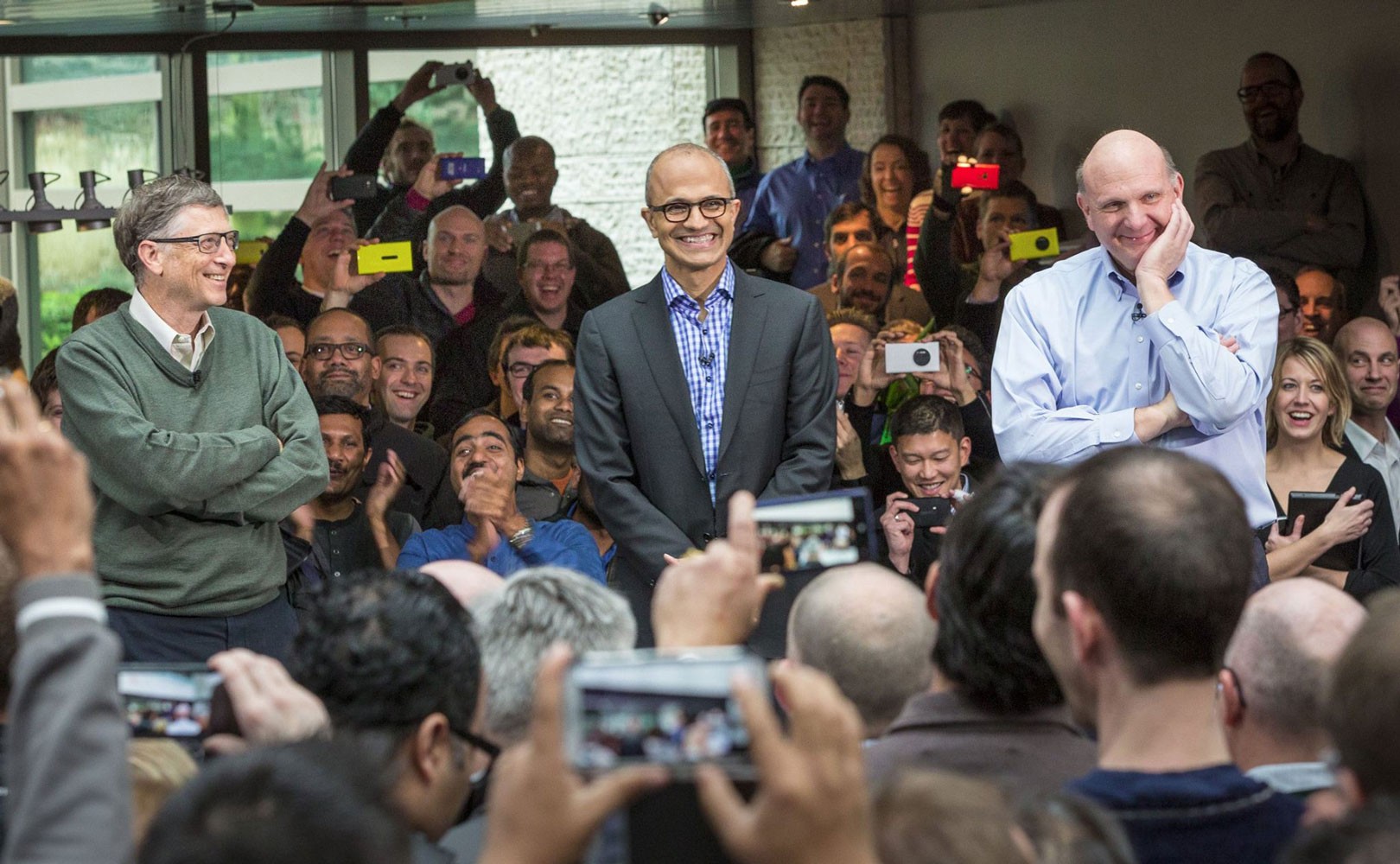
When Nadella came on to take the charge at Microsoft, both analysts and Wall Street agreed that the organization was fading to irrelevance. Over the next 6 years, Nadella set out on an inspiring journey, one that would see Microsoft make radical changes, charting out its course amidst uncertainty. This journey would see Microsoft change its business structure, breaking new frontiers and boundaries, launch new products and repackage old products and forge new partnerships on the road to regain its lost charm. Nadella began this journey humbly and quietly, two attributes which have become his hallmark and an unmistakable part of his legacy. Looking back, his first decisions during his first year were the hardest any CEO can be expected to make anytime during their stint as CEO, yet the finesse and calmness displayed by Nadella is worthy of unparalleled praise.
In the almost 6 years since Nadella has taken over, Microsoft’s market cap has risen from $315 billion to $830 billion. Considering that Nadella came in when Microsoft was under pressure from all fronts, and then managing to turn around the ship completely is just incredible.
2014 and Beyond: Grand Strategy, the Nadella way!
Image Source: zdnet
Nadella’s grand strategy for Microsoft covered 4 essential elements. First, to make any long lasting changes, he needed to fix the culture and maintain the improvements made in the short run. Second, products and services, across the domains of hardware and software need to reflect the changing customer outlook. Third, Microsoft needed to re-launch itself with unparalleled cooperation and collaboration, forging previously unthinkable partnerships. And fourth, in all its products and service offerings Microsoft needed to make a ruthless self-evaluation of Make vs Buy and proceed to acquire firms and businesses where it sees value.
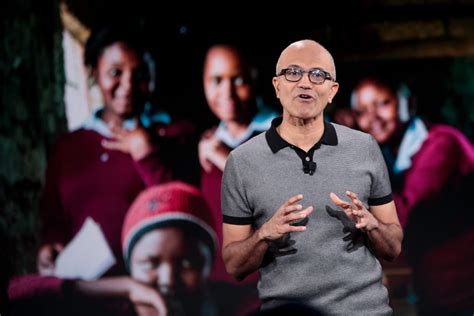
Image Credit: Microsoft
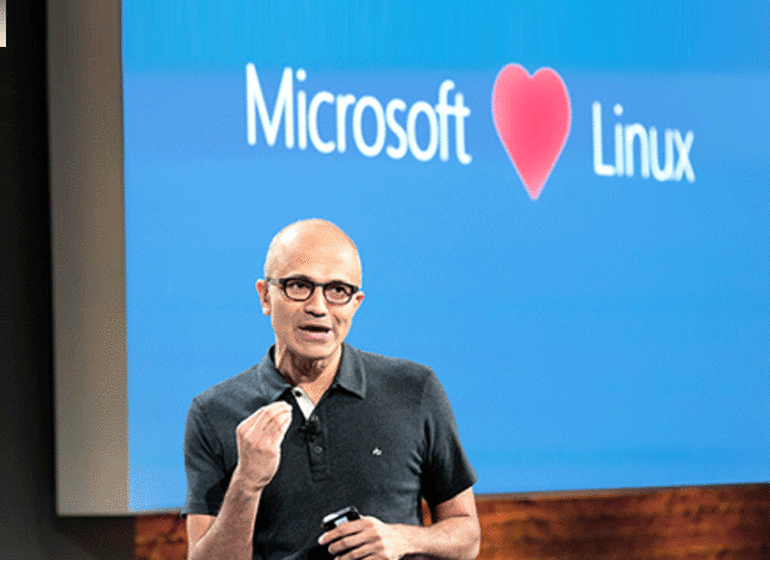
Image Credit: Microsoft
Fixing Culture
Nadella immediately started working to create an outward focused, critique-hungry organization where formal power structures fade away to make way for productive partnerships; where direct communications are more important than showmanship; where tradition and hierarchy do not stand in way of pragmatism; and where ‘getting things done’ is more important than who does them. From his very first public appearance where he gave the impression of being directly approachable and responsible, to his first actions where he took decision to ramp down windows phone product line, Nadella meant change.
He fixed the culture through direct communication and leadership. He focused the company on cloud, winding down Windows Phone, de-emphasizing Windows as a whole, and turning Office and XBox into cloud-centric products. Back in the day, partners, vendors and developers alike talked about a much hostile environment, where it was difficult to get things done, or to get the needed resources, and the whole attitude was not geared towards cooperation. This attitude changed a great deal under Nadella and its clear that this change has a lot to do with ‘the buck stops here’ culture Nadella introduced. Not all of this worked perfectly every time, but by maintaining a growth mindset, they learned and improved. As a result, the company is the clear #2 cloud provider and occasionally the most valuable company in the US.
Windows run with everything, not just Windows run everywhere!
Nadella quickly made an impression and emphasized on Microsoft being a cloud-first and mobile-first company, moving away from a Windows-first company. The aim was to have Windows run with everything, not just having Windows run everywhere. Nadella knew that the latter goal was self-limiting and almost non-achievable whereas the former goal can lead to Microsoft becoming the number 1 and the most relevant technology company for decades to come. The world was increasingly becoming a cloud and mobile-first environment and for Microsoft to grown and remain relevant, they would need to adapt rather than resist. He laid down the entire roadmap of moving from a Windows-first company to a Cloud-first company. They underwent a huge engineering reorganization where he asked then Windows chief Terry Myerson (Microsoft Executive Vice President, former head of Windows) to step down. To speed up matters, he focused on inorganic growth, by acquiring Minecraft, LinkedIn, and Github in quick succession enabling the focus to shift towards the cloud.
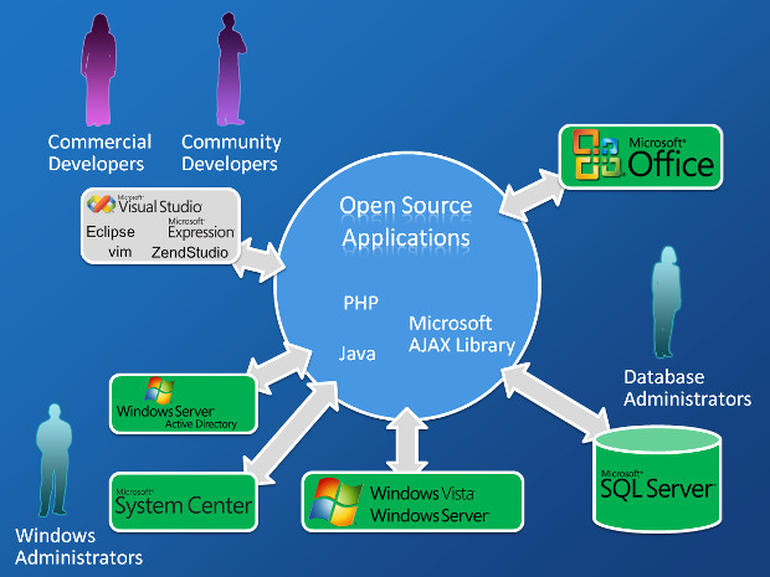
Moving Office and Windows to a SAS model, dimming the gap between platforms by not only releasing popular products cross-platform but also allowing developers to use proprietary tools to build product across any platform, open sourcing .Net, making Visual Studio Community free, releasing products like Visual Studio Code for OSX and Linux, HoloLens, round the clock feature addition to Azure cloud services, are all great examples that indicate Microsoft’s shift towards openness and rapid development/innovation.
Shortly after taking over, Nadella wrote off Ballmer’s $7 billion acquisition of Nokia’s mobile phone business as a loss, eliminating more than 20,000 jobs in rather muted acknowledgment that Windows was not going to catch the iPhone and Android anytime. Microsoft was better off placing its bets elsewhere and that’s exactly what Nadella did, without remorse. Microsoft then went on to extend its collaborative approach to release more than 100 iOS apps and even embraced Linux (described later), the open-source Windows rival.
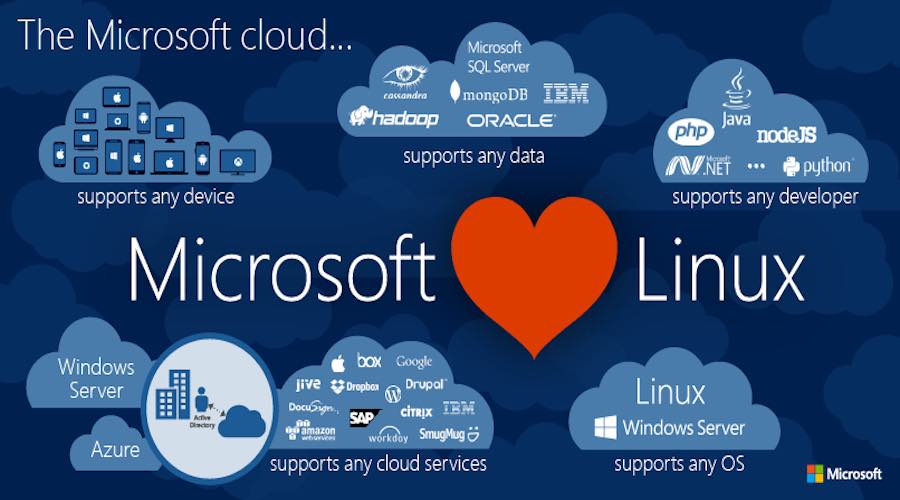
Image Source: Microsoft
With Microsoft revolutionizing its flagship MS-office suite and Windows OS through launch of Microsoft 365 Enterprise, which combines Office 365 Enterprise, Windows 10 Enterprise, and Microsoft’s Enterprise Mobility and Security features into a single subscription Office365.
Nadella is not just content with taking down barriers. He is equally keen to invest greatly in research around Mixed Reality, Artificial Intelligence and Quantum computing. Nadella reportedly believes these three to be the next key growth areas for them.
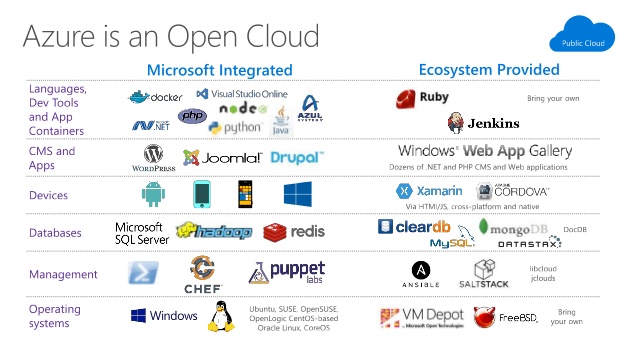
Image Credit: CSA
Cooperation and collaboration to keep customer first
Nadella seemed to be happy working on multiple fronts at the same time. From trying to shift culture at Microsoft to working with partners and collaborating across competitors, he made a point to keep customers first. Under Nadella, Microsoft went from a company trying to make customers buy Windows all the time to a company that recognized customers want solutions that Nadella laid out his new vision of cooperation through a quote which has been quoted multiple time, “It is incumbent upon us, especially those of us who are platform vendors to partner broadly to solve real pain points our customers have.”
To show his seriousness, Nadella attended Dreamforce in 2015, setting aside his personal differences with Salesforce management. In the backdrop of lawsuits both companies had filed, Nadella extended a hand of cooperation and collaboration. In the year prior, launching MS Office for iPad was Nadellas first major announcement immediately after his becoming CEO.
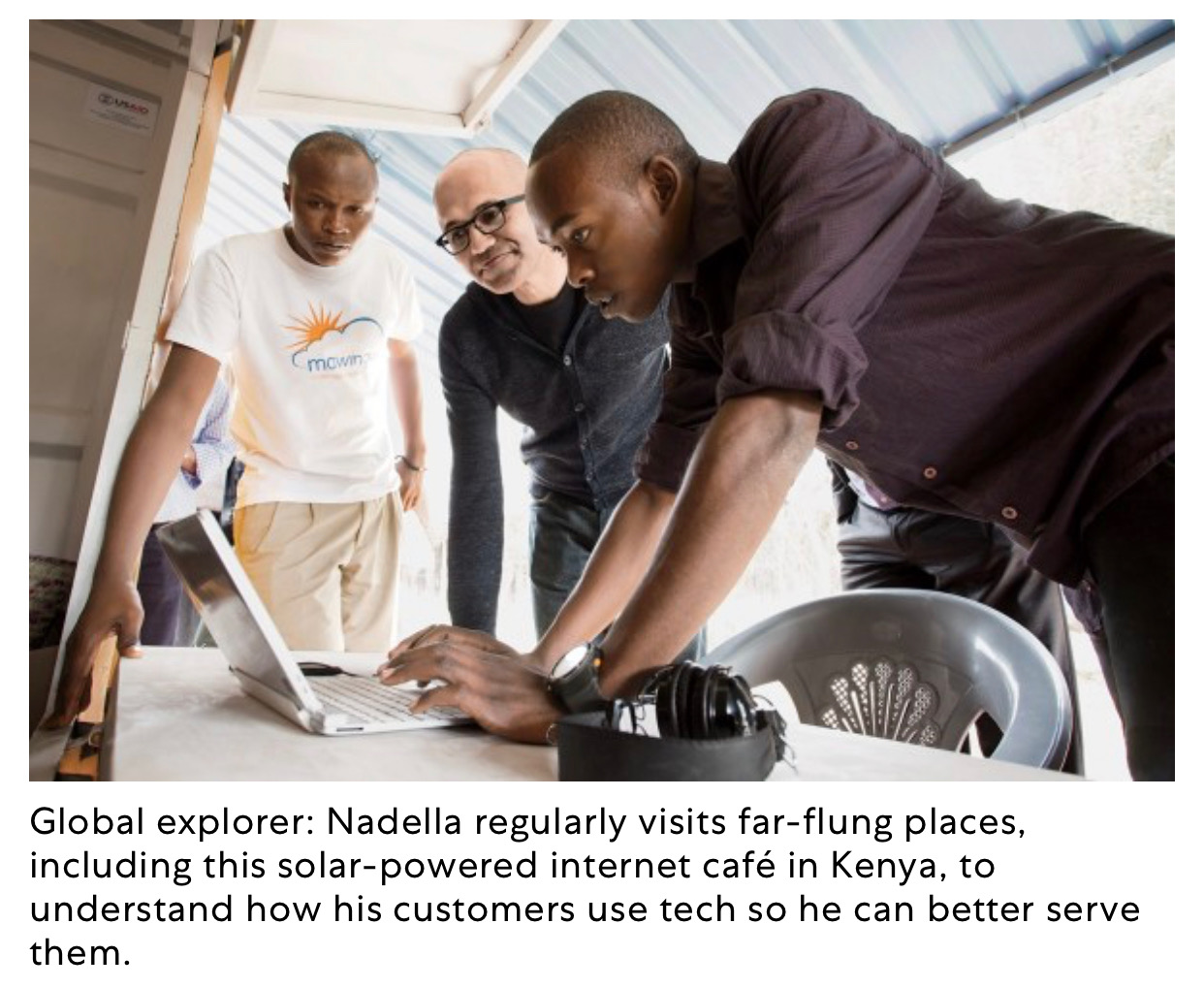
Image Source: Microsoft
Nadella’s acute business acumen and willingness to break traditional structures led to a truly path-breaking partnership with Linux. Azure was at a crossroads when Nadella took over. It was built to challenge Amazon’s market-leading AWS cloud service, launched several years earlier. Azure was also supposed to entice customers into meeting the bulk of their computing needs with other Microsoft products. If a client wanted Azure to run a Windows operating system, Microsoft was proud to take their business. Yet, if the client preferred the rival Linux approach (which Ballmer once dubbed a “cancer”), it was out of luck as Microsoft couldn’t offer a matching product. During a visit to a small start up called Okta Inc., based in San Francisco, to see how small start ups are using cloud, Nadella came up with Microsoft’s path-breaking move. Todd McKinnon, CEO and co-founder of Okta Inc., remembers telling Nadella, “We’re not using Azure, we use AWS.” Nadella shrugged. This wasn’t a sales call. It was somewhere between fact-finding and espionage. At the end of the hour-long visit Nadella had drawn out a detailed map of what startups like Okta wanted from the cloud. Over the next few months he met with at least seven other startups in similar settings. Those talks inspired Nadella to offer Linux at a special, lower price on Azure–forgoing Windows licensing fees to keep customers happy. The decision was so at odds with Microsoft’s usual lockstep methods that it later became the subject of a Harvard Business Review case study. Azure now is the fastest-growing of the five major cloud infrastructure services.
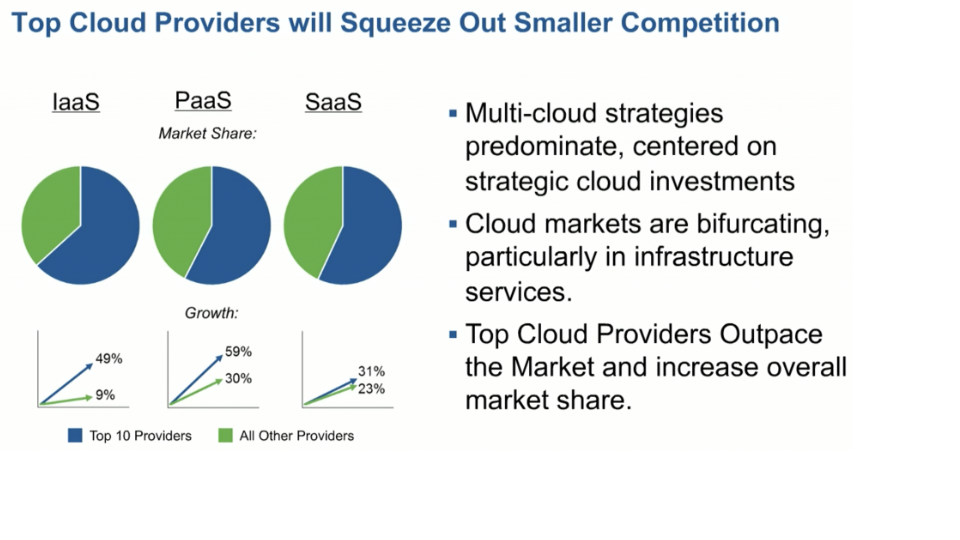
Image Credit: Microsoft
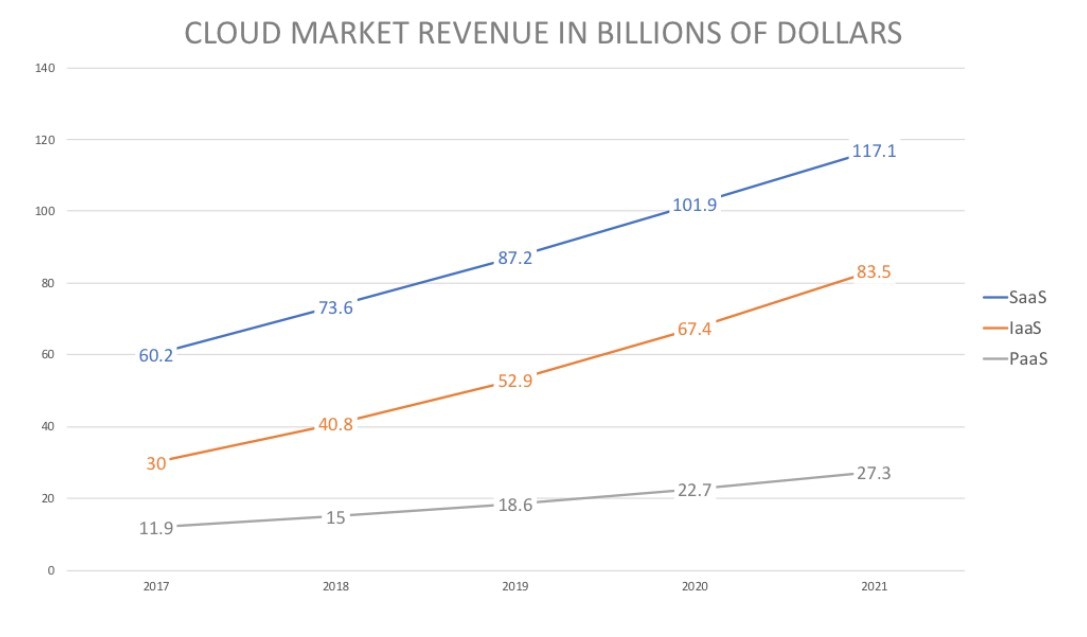
AWS started in 2006 while Microsoft launched Azure in 2010. Despite getting a significant early start and cornering substantial market share, AWS has been steadily losing ground to Azure. And for good reason. Microsoft has been very successful in signing on enterprise customers to Azure. Most large enterprises, especially those in financial services and those with any kind of sensitive data find better value proposition in Azure due to Azure’s substantial support for hybrid cloud applications. Azure helps companies protect the information that they deem particularly delicate or sensitive. Microsoft developed this hybrid approach by tapping in to its considerable background and experience with enterprise-level solutions and that has paid huge dividends.
Some of Azure’s products offer a sliding scale of hybrid cloud platform functionality, with one of their newest products providing almost all of the functionality of Azure on client’s own on-site data centers, with the payment and maintenance equal to the public cloud equivalent.
Azure supports the broadest selection of operating systems, programming languages, frameworks, tools, databases and devices. Run Linux containers with Docker integration; build apps with JavaScript, Python, .NET, PHP, Java and Node.js; build back-ends for iOS, Android and Windows devices. Azure supports the same technologies millions of developers and IT professionals already rely on and trust. Any developer or IT professional can be productive with Azure. The integrated tools, pre-built templates and managed services make it easier to build and manage enterprise, mobile, Web and Internet of Things (IoT) apps.
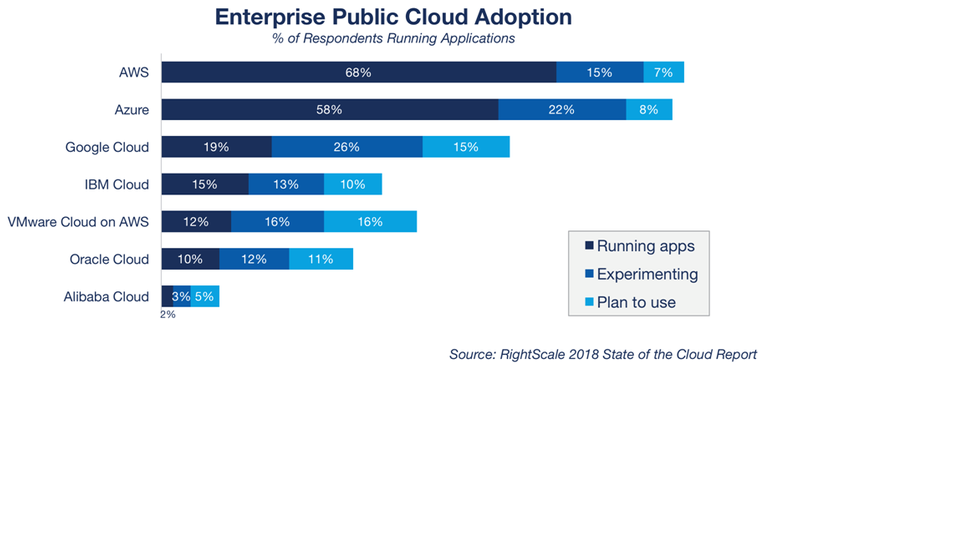
Image Credit: Right Scale
Amazon Web Services is the most popular public cloud infrastructure platform, comprising 41.5% of application workloads in the public cloud. While Amazon has long been viewed as the dominant provider of public cloud infrastructure, Microsoft Azure is gaining ground quickly in application workload. Azure currently holds 29.4% of the installed base, measured by application workloads. Google Cloud Platform trails with 3.0% of application workloads
Announced just last week, Microsoft Azure has been partnering with retail industry through its tie-ups with grocery store chain, Kroger and Walgreen Boots Alliance, the parent company of Walgreens. According to analysts, the partnership with Walgreens, which aims to develop new healthcare delivery models, technology and retail innovations to advance and improve the future of healthcare, is akin to the model Amazon has launched with Whole Foods. With Kroger, Microsoft offers retail-as-a-service, allowing Kroger to use Azure’s artificial intelligence and cloud infrastructure.
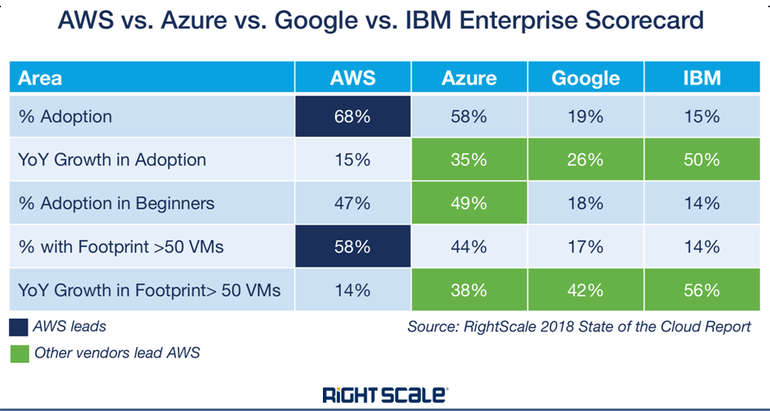
Image Source: RightScale
On the digital side, Microsoft recently announced an exclusive partnership deal with TomTom, Dutch mapping company. According to the agreement the companies reached, TomTom will become Microsoft’s leading location data provider for Microsoft Azure, putting TomTom’s maps and traffic data onto Microsoft’s cloud. Meanwhile, TomTom is picking Microsoft Azure as its preferred cloud provider.
AWS on the other hand mostly targets product makers and start ups who continue to be its main target segment. If an organization wants to build a new product on cloud, AWS is the way to go. If an organization runs an enterprise and / or has any kind of sensitive data, then Azure is your natural choice because chances are they have already made some investment in Microsoft as part of their IT strategy.
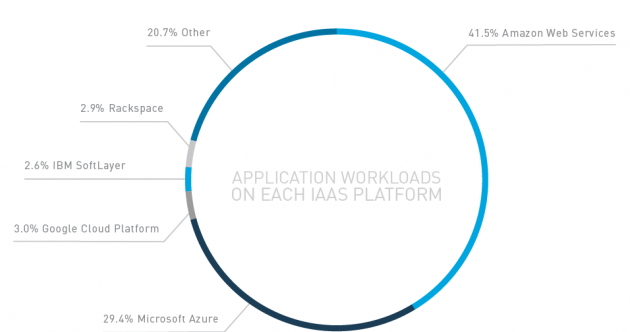
Image Credit: CSA
Make vs Buy
In his first year as CEO, Nadella hired Peggy Johnson from Qualcomm in 2014 as executive VP of business development, giving her specific mandate to strengthen Microsoft’s ties with Silicon Valley and pursue deals with companies it once solely considered rivals, such as Box and Dropbox.
In order to give the entire grand strategy push even more impetus, Nadella ordered his team to go on a buying spree. Over the last 2 years, Microsoft’s most prolific buys include scooping up LinkedIn in 2016 for $26 billion and GitHub in 2018 for $7.5 billion. Beyond the much hyped take-over of LinkedIn and GitHub, Nadella’s Microsoft has been on a quiet spree of acquiring niche firms which have added tremendous value. The below table represents how many companies has Microsoft acquired since 2014.
In 2017, Microsoft acquired Cloudyn, an innovative company that helped organizations track their cloud investments. Cloudyn gives enterprise customers tools to identify, measure and analyze consumption, enable accountability and forecast future cloud spending.
Most of Microsoft’s buys are centered around AI, Mixed Reality, Networked communities and cloud assets. “For the past five years, we’ve been incredibly consistent — buy communities, look for networked assets, look for growing markets, and look for where we’re a better owner,” Microsoft CFO Amy Hood said during a conversation with Fortune senior writer Michal Lev-Ram at the 2018 Fortune Most Powerful Women Summit in Laguna Niguel, California.
Microsoft’s most recently released quarterly statement displays stronger than before performance. Currently, Xbox Live is used by 400 million gaming devices and it has the potential to multiply its success to reach many more users across the base of 2 billion users on Nintendo Switch, Android and iOS screens. This means cross-platform play can become a big segment and that users cannot be just limited by just community features like achievements and clubs. LinkedIn now has 610 million users. And LinkedIn sessions grew 30% year-over-year driven by higher levels of engagement in the feed. And Xbox Live now has 64 million monthly active users, up from 59 million a year ago.
If one graph could say it all about Microsoft’s resurgence under Satya Nadella, the one below would be top contender. The Wall Street has rewarded Nadella’s vision and breathtaking finesse the only way it knows – through an increase in the share price, thereby increasing market capitalization.
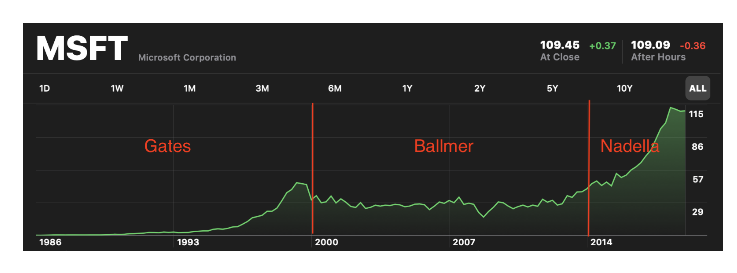
Image Source: 500ish
The Push Forward!
Nadella’s unrelenting focus was to Identify channels to ensure sustainable growth. Nadella is a firm believer that the key to Microsoft’s future is presence across entire ecosystem, offering an entire assortment consisting of hardware and software combined with cloud computing.
In the words of one analyst, “Microsoft was a very monolithic and slow moving beast. However, four or five years ago, Microsoft completely changed. Now, it doesn’t look so much like one giant company as a weird conglomerate of thousands of little startups. They’re moving fast and nimble, trying things out and iterating very quickly.” Powered by this change in atmosphere, many of Microsoft’s erstwhile talent who left for greener pastures have been returning home. According to one report, more than 2,200 employees have returned to Microsoft after exiting once.
During the last season of Super Bowl, Microsoft aired a commercial with focus on accessibility. Specifically, the ad features the Xbox Adaptive Controller, designed primarily to meet the needs of gamers with limited mobility. In the ad, it shows several young kids sharing stories about using the Xbox Adaptive Controller. “When everybody plays, we all win,” says the tagline of the ad.
]]>