Notice: Function _load_textdomain_just_in_time was called incorrectly. Translation loading for the boldgrid-inspirations domain was triggered too early. This is usually an indicator for some code in the plugin or theme running too early. Translations should be loaded at the init action or later. Please see Debugging in WordPress for more information. (This message was added in version 6.7.0.) in /home/nearth9/public_html/wp-includes/functions.php on line 6170

Notice: Function _load_textdomain_just_in_time was called incorrectly. Translation loading for the heartbeat-control domain was triggered too early. This is usually an indicator for some code in the plugin or theme running too early. Translations should be loaded at the init action or later. Please see Debugging in WordPress for more information. (This message was added in version 6.7.0.) in /home/nearth9/public_html/wp-includes/functions.php on line 6170

Notice: Function _load_textdomain_just_in_time was called incorrectly. Translation loading for the nginx-helper domain was triggered too early. This is usually an indicator for some code in the plugin or theme running too early. Translations should be loaded at the init action or later. Please see Debugging in WordPress for more information. (This message was added in version 6.7.0.) in /home/nearth9/public_html/wp-includes/functions.php on line 6170

Notice: Function _load_textdomain_just_in_time was called incorrectly. Translation loading for the ninja-forms domain was triggered too early. This is usually an indicator for some code in the plugin or theme running too early. Translations should be loaded at the init action or later. Please see Debugging in WordPress for more information. (This message was added in version 6.7.0.) in /home/nearth9/public_html/wp-includes/functions.php on line 6170
Digital – Earthtech https://1earthtech.com Wed, 14 Oct 2020 20:45:38 +0000 en-US hourly 1 https://wordpress.org/?v=7.0.9 146148357 How Indian start-ups are coping during Covid-19 https://1earthtech.com/how-indian-start-ups-are-coping-during-covid-19/ https://1earthtech.com/how-indian-start-ups-are-coping-during-covid-19/#respond Wed, 14 Oct 2020 20:35:33 +0000 https://1earthtech.com/?p=1133 Impact of Coronavirus is causing startups to struggle!


All companies, from one-person proprietorship to those employing hundreds of thousands of people, established firms or start-ups, are equally struggling in these trying times. One can surely, and perhaps effectively argue about the impact which may vary on a case to case basis, however generally speaking, the newer a company, the bigger the battle in front of it.

Startups are going through a tough time during this pandemic situation. India has the third highest number of startups next to U.S. and China. Quite obviously, the country is highly affected by the downturn of startups. Especially, during a time when the government has placed more emphasis in the development of startups for economic growth. But the Covid pandemic seem to thwart the plans of Government to nurture more startups for their economic growth. During this pandemic crisis, it is reported that most startups have failed, and only a few seem to be in the curve of progression.


Covid hampers Startups

Covid has had a devastating impact on almost every business in the world. The most affected industries include travel, hospitality and education among others. The social distancing behavior has restricted people from attending offices. These issues have caused the businesses to struggle in running their day to day operations. In many cases it is reported that the work productivity has been highly hit during the pandemic.

Although, many firms are managing through remote work, the effectiveness in terms of productivity, communication and collaborative work is a big question. Apart from it, many businesses are disrupted and new opportunities seem to arise. Experts estimate that the impact of Covid is believed to last for many months, and we can expect a recession hit economy for the next several years.

As per a nationwide survey on the ‘Impact of COVID-19 on Indian Start-ups’ conducted by Federation of Indian Chambers of Commerce and Industry (FICCI), jointly with the Indian Angel Network (IAN) with 250 start-ups, 70% of start-ups stated that their businesses have impacted by Covid-19. About 12% of the start-ups have shut operations and 60% are operating with disruptions.

The survey depicts that only 22% of the start-ups have cash reserves to meet the fixed cost expenses of their companies over the next 3-6 months.

The findings show that 68% of the start-ups are majorly cutting down their operational and administrative expenses.

Close to 30% of the companies stated that they will lay off employees if the lockdown was extended too long.

About 43% of the start-ups have already started salary cuts in the range of 20-40% over the period of April-June 2020.

On the investment front, 33% start-ups said that the investors have put the investment decision on hold and 10% stated that the deals have been called off.


Fragile nature of startups makes things worse

Startups in general are very fragile considering the constraints they operate in. Many startups may have very little funding to bootstrap their process. We understand how hard it takes for a startup to be successful under normal circumstances. Finding the right product fit for the market and acquiring customers are among the factors that determine the success and growth of a startup. The Corona pandemic makes it difficult for startups, since the world undergoes unpredictable changes and business is hard to get. The startups need more incubation and support during their initial years to be more productive in the future. These factors that make startups more fragile in nature make them vulnerable and difficult to survive.

In this Corona pandemic situation, the startup firms are affected badly. It is believed that about 90% of the startups have failed in India. There is another report that the startups have cash reserves to last only for the next 3 months. These are bad news for the startups in our economy. The fragile nature of startups and the inexperience of entrepreneurs can very well be the cause for such failures.

A quarter of India’s startups would be in serious trouble if adverse consequences of the COVID-19 pandemic persist for long, according to information technology industry veteran Senapathy (Kris) Gopalakrishnan.  “There will be more failures, unless they get additional funding from existing investors or support from banks on working capital or support from government for some form of debt or grants. We will see more companies get hurt as this prolongs,” said the Chairman of early stage startup accelerator and venture fund, Axilor Ventures.

A comparison of priority investment sectors pre and during COVID-19 shows that 35% of the investors are now looking at investments in healthcare start-ups, followed by EdTech, AI/Deep Tech, FinTech and Agri. Meanwhile, 44% of the incubators surveyed highlighted that their day-to-day operations have been considerably impacted by the COVID-19.


How should startups respond to the Corona crisis

However, there is a silver-lining amidst all the gloom of Corona pandemic. We will take a look at some of the brave startups who have looked up-to new opportunities for growth. Indian startups have ground-breaking ideas and are hard-working people, and success is just around the corner. A few startups are adapting to the present situation and meeting the needs of current market conditions. These are certain aspects that can help startups to survive during the pandemic.


New Opportunities Arise amidst Corona

It is time for startups to look beyond the ordinary to be successful. Relying on traditional mode of business may not yield good results. That may be the reason for failure of many startups. Successful startups have capitalized on the new opportunities that are presenting itself in the society. To make this understand better, people are looking for safety during this time, and providing ways for safe products and services can help startups to stay afloat. Startups should keep looking for those new opportunities that are opening up, and make plans to meet those opportunities. After all this is not the end of the world and keeping your company alive for the next several months can be crucial for their success in the long run.


Rapid Innovation

Rapid innovation is another startup thing that’s caught the eye of business community. Think of startups like Uber, Airbnb and many others, they all brought an innovative idea to the table. The world is a different place because of these firms. These rapid innovative ideas are the prime reason for the success of these next generation technology firms. They saw a unique need in the society and countered it with smart tech solutions that solved people’s problems. Uber has solved the cab problem in providing a hassle-free cab riding experience in the city. Take Aribnb, they provide an innovative concept in accommodating people in shared spaces, which is a big hit and has grown to become a multi-million dollar company. Likewise, many startups today are coming with rapid innovation ideas to fight the Corona pandemic. It is a noble effort by the startups to endeavor in such activities through their ideas and technology. I personally know of an Artificial Intelligence startup that lends its AI search technology for free to the medical community to find vaccine for Corona. The AI start up firm found their technology suitable for medical research community and tailor made their AI product to be useful for medical research purpose.


Government initiative to sustain Startups

The Government has a huge role to play to support startup firms in this pandemic. The Indian government has come up with many initiatives to support startups in the country. The business community can take advantage of these government initiatives and make the best out of it. The government has announced new plans to mentor startups, regulatory reforms in favor of startups, funding sources and investor engagement facility to name a few. It is indeed difficult for startups to survive without favorable government initiatives. It is imperative that Government looks keenly into the affairs of startup development and does the needful. These initiatives can meet the financial deficit of startups. The mentorship programs provided by the Government can be handy to get business insights for experienced campaigners. They can provide valuable advice to steer the startups in the right direction nullifying the Covid impact.


Stakeholder support is essential for Startup growth

The support of stakeholder can go a long way in sustaining the Startups. During these tough times, sometimes startups may need additional funding or much needed morale boost from the stakeholders. It is vital for Stakeholder to have confidence on the ambitions of startups. These are little things that can fetch a long distance. Encourage and support from the stakeholder can keep the morale of the team to achieve their goals.


Success stories of Startups and coping mechanism

Some startups are doing a great job in adapting to the present circumstance. For instance, Zomato has been hit badly as customers have grown skeptical about buying food online. The firm went ahead to establish measures to comfort its clients about the safety of their food, and found a vast opportunity. Zomato has made good business strategic moves in finding big opportunities opposed to smaller ones to be able to survive. They have founded a new segment called Zomato Market where groceries are delivered to home residents, which adds great value to customers during this pandemic. The success of the Zomato Market has led them to launch their extended service in countries like UAE and Lebanon. In an interesting equation, Zomato is ready to deliver alcohol to home residents.

While the travel industry has taken a heavy beating, firms like MakeMyTrip have to be on the edge to add tremendous value to the present scenario to stay afloat. In a strategic move, MakeMyTrip realized the present travel equation and is offering a platform for short stays for their customers. They have piloted a short stay program for travelers wanting to visit Tirupathi in collaboration with Goibibo and Redbus. MakeMyTrip is keen to provide a great experience for its customers even during this pandemic situation, and their co-branded cards with leading banks like ICICI provide a rewarding travel experience.

A popular gym and fitness joint called Curefit in the country has succumbed to the pressures of Covid. The firm has taken to online classes to keep their gym facility running. They have created a subscription model, so the fitness enthusiasts can still keep the ball rolling and maintain their perfect physique. The virtual classes will help them to stay connected with their instructors, and continue their exercise routine.

What we can perceive from these interesting stories is there are ways to keep a business going. Zomato, Makemytrip and Curefit are good examples on how startups are coping during this pandemic. The entrepreneurs who have put their thinking cap on to assess the situation and do the right thing have found the big advantage.


It is tough, but not impossible

Startups can leverage the government support, policies, stakeholder support, rapid innovation to come successfully out of this Covid crisis. It can be tough, but it is not impossible. We should appreciate the noble efforts of some startups who have geared up in fighting the Corona spread. Seeing the new opportunities and adapting to the disruptive world is key to surviving in this pandemic. Taking the right initiatives at the right time and having the belief to succeed will help startups to see through this massive storm.


“Startups must use their strengths in innovation to re-strategize and re-think their business,” said Ganesh Raju, Co-Chair, FICCI Start-up Committee and Founder, TurboStart.  


]]>
https://1earthtech.com/how-indian-start-ups-are-coping-during-covid-19/feed/ 0 1133
Telecommunication in the age of Satellites https://1earthtech.com/spacex-satellites/ https://1earthtech.com/spacex-satellites/#respond Wed, 14 Oct 2020 03:40:37 +0000 https://1earthtech.com/?p=1128 December 2016 - Launchers: The Race to Orbit Tomorrow's Spacecraft | Via Satellite


Launching satellites in to space has always been a dream endeavor. A source of national pride as well as pinnacle of decades of human engineering, space journeys are nothing short of miracles. Ever since humans took to flying, nations have attempted to conquer the space and been in a race to launch new satellites, both looking inwards towards the Earth and those looking outwards towards the vast and immeasurable expanse of unknown Space. The space race has heated up with each breakthrough in technology and has transformed from monolithic government enterprises to an agile and cutting-edge private domain.


Since the start of the first space race, a cold-war era much celebrated source of national pride, countries have launched nearly 8,400 satellites in to space, of which roughly 2,800 are still in operation (data compiled through various sources, see here and here). According to Statista, of the 2,666 active artificial satellites orbiting the Earth as of March 31, 2020, 1,327 belong to the United States. This is by far the largest number of any single country, with their nearest competitor, China, accounting for only 363. During the last decade however, the space race has largely transformed to a private sector endeavor, with SpaceX transforming the dimensions of everything about launching satellites. The last two decades have been the most promising from the perspective of advancement in technology, as well as the advent of micro usage of satellites. The focus of the satellite launch missions is shifting away from traditional large satellites towards small satellites. Broadly speaking, there are 9 different kinds of satellites launched in to Space, depending on their function and the distance from Earth these satellites operate from. There are nine different types of satellites i.e. Communications Satellite, Remote Sensing Satellite, Navigation Satellite, LEO, MEO, HEO, GPS, GEOs, Drone Satellite, Ground Satellite, Polar Satellite.


During the 1950s and 60s important work like Orbital Radio Relay by American engineers John Pierce of American Telephone and Telegraph Company’s (AT&T’s) Bell Laboratories and spin-stabilization technology that provided stability to satellites orbiting in space by Harold Rosen of Hughes Aircraft Company helped in making commercial communication satellites possible. When the U.S. National Aeronautics and Space Administration (NASA) was established in 1958, it embarked on a program to develop satellite technology. Soon, this work was followed by Telstar1, launched on top of a Thor-Delta rocket on July 10, 1962, which successfully relayed through space the first television pictures, telephone calls, and telegraph images, and provided the first live transatlantic television feed followed by Telstar 2 which was launched May 7, 1963. Telstar1 transmitted the first phone call via satellite—a brief call from AT&T chairman Frederick Kappel transmitted from the ground station in Andover, Maine, to U.S. Pres. Lyndon Johnson in Washington, D.C. Following the success of Telstar, NASA soon started an experimental spacecraft program for active geosynchronous communication satellites, known as Syncom, all of which were developed and manufactured by Hughes Space and Communications. Syncom 2, launched in 1963, was the world’s first geosynchronous communications satellite. Syncom 3, launched in 1964, was the world’s first geostationary satellite.


One of the foremost and earliest uses of Satellites has been to create a blanket around the Earth to establish seamless and fast communication. According to Britannica, the idea of communicating through a satellite first appeared in the short story titled “The Brick Moon,” written by the American clergyman and author Edward Everett Hale and published in The Atlantic Monthly in 1869–70. The story describes the construction and launch into Earth orbit of a satellite 200 feet (60 metres) in diameter and made of bricks. The brick moon aided mariners in navigation, as people sent Morse code signals back to Earth by jumping up and down on the satellite’s surface. The first practical concept of satellite communication was proposed by 27-year-old Royal Air Force officer Arthur C. Clarke in a paper titled “Extra-Terrestrial Relays: Can Rocket Stations Give World-wide Radio Coverage?” published in the October 1945 issue of Wireless World. Clarke, who would later become an accomplished science fiction writer, proposed that a satellite at an altitude of 35,786 km (22,236 miles) above Earth’s surface would be moving at the same speed as Earth’s rotation. At this altitude the satellite would remain in a fixed position relative to a point on Earth. This orbit, now called a “geostationary orbit,” is ideal for satellite communications, since an antenna on the ground can be pointed to a satellite 24 hours a day without having to track its position. Clarke calculated in his paper that three satellites spaced equidistantly in geostationary orbit would be able to provide radio coverage that would be almost worldwide with the sole exception of some of the polar regions.


Telecommunications satellite are Earth-orbiting system capable of receiving a signal (e.g., data, voice, TV) and relaying it back to the ground. Communications satellites have been a significant part of domestic and global communications since the 1970s.  The use of satellite communication in telecommunications pertains essentially to the use of artificial satellites to provide communication links between various points on Earth. Satellite communications play a vital role in the global telecommunications system. Approximately 2,500 artificial satellites orbiting Earth relay analog and digital signals carrying voice, video, and data to and from one or many locations worldwide.


LEO, Low Earth Orbit, and MEO, Medium Earth Orbit, satellites come under the category of non-geostationary-orbit (NGSO) satellites. LEO satellites orbit at an altitude below 1,243 miles above mean sea level, while MEO satellites orbit in the region between LEO and GEO (geostationary) satellites – between 1,243 – 22,245 miles. Geostationary Satellite is an earth-orbiting satellite, placed at an altitude of approximately 22,300 miles (35,800 kilometers) directly over the equator, that revolves in the same direction the earth rotates (west to east). At this altitude, one orbit takes 24 hours, the same length of time as the earth requires to rotate once on its axis. LEOs or Low Earth Orbit satellites are being increasingly used in space since the 1990s. In the last decade, rapid advances in camera technology and computer miniaturization have allowed for reduction in payloads using advanced optical imaging or radar observations which in turn led to smaller and smaller satellites.


Image Source: Wikipedia


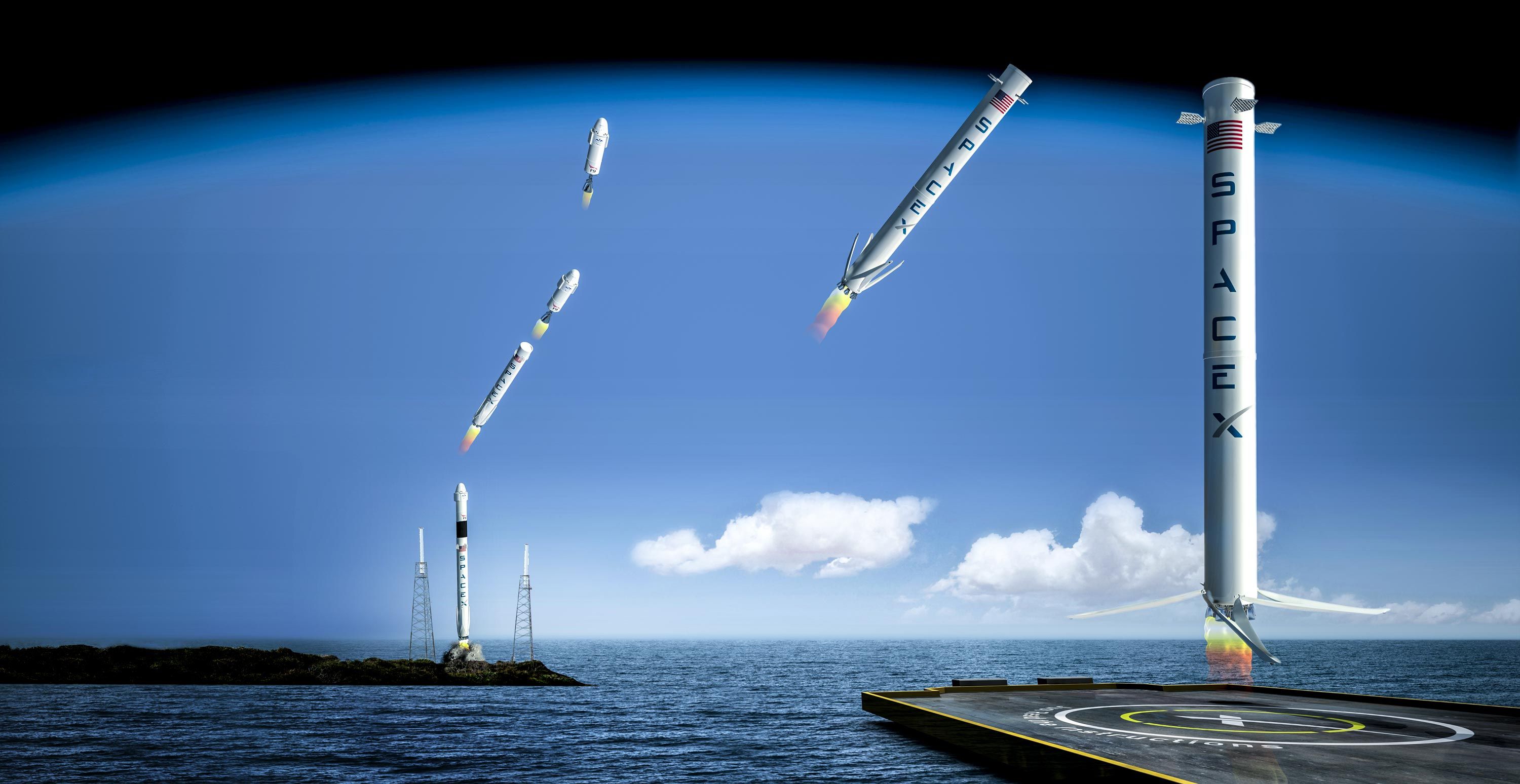
Furthermore, advances in technology have introduced many novel concepts that have revolutionized the race to launch satellites. First of these technological advances is that of re-use of hardware, a hitherto unheard of phenomena that has taken the entire satellite industry by storm and has now become the de-facto inspirational standard. While previous space missions did offer some re-usability, Falcon Heavy was the first to offer reusable launch vehicles, i.e. the hardware used to launch the actual space shuttle or satellites or other payload. The rocket boosters used on these missions now have a controlled and breathtakingly simultaneous landing onto the launch pad. This recovery massively reduces the launch cost for both exploration and scientific discovery. The Falcon Heavy has been promoted as providing a cost of roughly US$1,300 per kg of payload, while the space shuttle cost approximately US$60,000 per kg. Secondly, instead of producing a bunch of different engines with a bunch of different horsepower ratings, satellite launch companies are now focused on having just one first-stage engine, the Merlin. The more powerful a rocket has to be, the more first stage rockets, or Merlins in case of SpaceX, are bundled into its first stage. SpaceX’s initial test rockets flew on just one Merlin. The workhorse of the SpaceX fleet, Falcon 9 which used a single cluster comprised of nine engines, as implied by its name. The Falcon Heavy uses three of those clusters, utilizing 27 first stage engines in total. This fades in comparison to the Saturn V’s five, the SLS’s four and the Delta IV’s three. The Atlas V, which can be configured with different numbers of first stage engines, maxes out at six. Of course with the increase of multi-engine use, risk has increased of any one of them breaking down or blowing up and jeopardizing the whole mission, or in the worst case scenario, destroying the whole space ship and its payload and causing loss of human life. However, advances in technology and increased scientific knowledge on aerodynamics concepts and safety measures mean that actual chances of any untoward incident are minimal.


Companies ranging from OneWeb to SpaceX and Planet have been deploying large fleets of satellites (fleets that could eventually include thousands of individual satellites) for applications ranging from telecommunications to Earth observation. One of the reasons why the LEO sector has become a hotbed of investment in recent years is that space has become more commercially accessible. Launch costs which historically were prohibitive, have come down dramatically, particularly since SpaceX started an Uber-pool style service last year that allows small satellites to hitch a ride on its Falcon 9 rocket. The company’s ride-share program launches satellites into orbit for as little as US$1-million for 220 kilograms, according to Space X’s website. More than profit margins however, SpaceX should be identified with the disruption it is leading in the global space industry as we saw previously with SpaceX’s path breaking innovation of reusable hardware and simplistic design concepts.


If Starlink Succeeds Then SpaceX Revenue Will Be More Than Double NASA's Budget | NextBigFuture.com

Image Source: Starlink


Depending on the specific use, amount of latency expected and conditions of operations, LEO, Low Earth Orbit, and MEO, Medium Earth Orbit, and Geostationary satellites are deployed. Owing to their higher operating altitudes, geostationary satellites tend to gravitate towards higher latency with less spatial resolution of data when compared with non-geostationary orbit satellites or NGSO . However, in a maritime context for example, a delay of milliseconds has little impact upon the transmission of certain applications, eg, ship condition reports and live engine data. And for land stations, the main advantage of GEO satellites is that they are always in the same position relative to the earth, meaning that antennas require no reorientation. Coming to non-geostationary orbit satellites or NGSO, one of the main advantages of NGSO satellites over GEO satellites is considerably lower latency. Due to the operating distance over earth, GEO satellites have roughly 550 milliseconds of round-trip latency time, while LEO satellites boast a latency of 240 milliseconds, providing a distinct and significant advantage in the cutting age of real-time applications. For example, the combination of high bandwidth and low latency is a highly-prized aid in the implementation of telecommunications, videoconferencing, and so on.


The Illustrated Guide to SpaceX's Reusable Rocket Launch

Image Source: Popular Mechanics


In the recent years since the advent of Tesla’s SpaceX and its path-breaking new generation of rockets which offer re-use capabilities the space race has heated up attracting billions of dollars in investments and interests from the best and biggest organizations. Amazon’s project Kuiper recently got the green light from the U.S. Federal Communications Commission last month for a 3,236-satellite constellation, just as London-based OneWeb has emerged from bankruptcy proceedings with US$1-billion in fresh capital to restart its own project. Ottawa-based Telesat, meanwhile, has locked down spectrum – the radio frequencies used to transmit wireless signals – and secured millions in funding from the federal government as it looks to deploy a smaller, more efficient constellation of nearly 300 LEO satellites. SpaceX’s application for a Basic International Telecommunications Services licence in Canada garnered a number of supportive submissions to the regulator. More than 2,000 parties submitted responses to the Canadian Radio-television and Telecommunications Commission’s website, many of them from rural households and businesses cheering the initiative. Their plan is to offer high-end internet coverage for clients like governments, mining companies and shipping conglomerates, as well as extending internet coverage to regions too remote or too poor to make use of conventional ground based internet. As regards the future of satellite communications, network providers are looking towards the integration of new LEO and MEO solutions with existing, tried-and-tested GEO services so as to provide the most productive and cost-effective amalgamation of coverage and bandwidth usage.


OneWeb, recorded an average latency of 32 milliseconds in July 2019 on transmissions between space and South Korea. Musk, the founder of Space Exploration Technologies Corp., has said that his Starlink satellite system is aiming for a latency of 20 milliseconds initially, which he further hopes to cut in half gradually. By contrast, geostationary orbit systems have a median latency of nearly 600 milliseconds for a round trip.


With the growing digital divide fueled by lagging investment in rural communications infrastructure, which is exacerbated further by the COVID-19 pandemic, the opportunity is ripe for new age solutions providers to move in. Billions of dollars are pouring in to satisfy the world’s insatiable appetite for bandwidth, particularly in far-flung regions where laying fibre-optic cables is prohibitively expensive. The need to stay connected has moved workplaces, schools and even health care services online, further highlighting the digital divide between users who have access to affordable, high-speed internet and those who don’t. For the average user that relies on fast internet speeds for business, education and more, download speeds of 50 Mbps and upload speeds of 10 Mbps are required as the bare minimum to participate in those activities, while most users in rural areas actually get a fraction of that.


In a related development not so long ago, the Federation of Northern Ontario Municipalities (FONOM) and other Northern Ontario stakeholders has turned its attention skyward calling for better access to high-speed internet with the Municipal advocacy group calling on the Canadian government to allow Musk’s Starlink an operating licence. The announcement follows the passing of a resolution at its recent board meeting. FONOM, which represents 100 communities in northeastern Ontario, works to better municipal government in Northern Ontario and improve legislation respecting local government in the North.


Numerous government bodies, at local, state and national or Federal levels have expressed interest in public-private partnerships with the dual aim of providing connectivity to far-flung and difficult to reach areas, while also aiming to use private enterprise to speed up breakthroughs in the field of satellite communications.


The Canadian government has made investments in improving rural and remote broadband internet including funding to Telesat who want to build a satellite constellation in Low Earth Orbit (LEO) and has agreed to spend up to 600 million Canadian dollars ($456.6 million) more on capacity.


If Musk has his way, by 2025 no less than 11,943 of his satellites will circle the Earth, and if permission is granted, the ultimate result would be a staggering 42,000. SpaceX is planning to beam broadband directly to consumers; each home will be outfitted with a half-metre-wide circular antenna resembling a UFO on a stick. Telesat, meanwhile, is focused on enterprise clients such as the aerospace and maritime industries. It also plans to provide “backhaul” connectivity to telecom companies, which will then transmit the signal to customers’ homes via ground-based networks. Amazon is aiming for a mix of residential customers and telecom carriers. For its part, the telecom companies do not view LEO companies as competitors, analysts say, because the new satellite providers are focused on areas where it’s impractical to build networks of fibre-optic cables.


SpaceX sends 60 more Starlink rockets to orbit, nails the landing - CNET

Image Source: Cnet


According to Lluc Palerm, a senior analyst at consultancy firm Northern Sky Research, the LEO industry is projected to expand as global demand for connectivity grows. Today, satellite communications generates about US$10-billion to US$15-billion in revenue annually, comprising about 1 per cent of the telecommunications market. That could grow to as much as 5 per cent of overall telecom industry revenues, Mr. Palerm says. Mr. Musk has said he believes the revenue opportunity for SpaceX’s Starlink constellation is around US$30-billion.


As satellites get smaller, they are getting easier to build and launch. All this may sound music to some ears, but for a section of experts, this is worrisome.


While neither Low Earth Orbit Satellites nor the use of Satellites for communication are new concepts, what is different is the sheer scale of recent proposals, with the big firms planning to launch satellites in the thousands. The new ventures are counting on savings from smaller, cheaper satellites and reusable rockets, along with more powerful software capable of tracking all those hand-offs.


But the costs of building LEO constellations are astronomical and technological hurdles remain. While LEO satellites operating in constellations, or groups of tens or hundreds of satellites, promise to solve the burning issue of latency encountered with the existing fleet of geostationary (GEO) satellites, they also come with a much higher price tag.  According to Telesat, In the world of telecommunications, LEO satellites which orbit the planet in a constellation formation, enable download speeds that are eight times faster than traditional satellite systems and on par with those offered by fibre-optic cable.


The high cost of LEO satellites owes to a mixture of high manufacturing and high operating costs. A typical communications satellite costs as much as US$60,000 a kilogram and with average weight around 300 to 400 kilograms for each satellite, and the need to operate in a group of satellites, the cost quickly climbs up. As Low Earth Orbit LEO and Medium Earth Orbit MEO satellites do not synchronise with the Earth’s rotation and orbit the earth more rapidly than GEO satellites – an orbital period of 128 minutes or less for LEO, and an average of between 2 and 8 hours for MEO – multiple satellites are required in order to achieve seamless coverage.


In addition, the primary difference between Geostationary satellites and LEOs is the need to have antennas which are constantly moving as the LEO satellite constellation moves meaning that ground equipment for LEO systems is much pricier. LEOs require electronically steerable antennas which are capable of tracking multiple satellites passing overhead at the same time across the sky. These antennas are more expensive, posing a challenge to SpaceX’s and other operators’ plans to target the consumer market.


Previous attempts to create these near Earth constellations of satellites operating in Low Earth Orbits have been met with lot of skepticism, fading interest from investors and scaling down of initial plans owing to commercial non-viability. The most notorious example of these is Iridium, a constellation of 66 satellites built by Motorola in the late 1990s that was rescued from the verge of collapse by a group of investors led by a former airline executive. The company had to drastically scale back its plans, restructure and shift gears to providing emergency communications. Iridium’s LEO constellation is one of a small handful of such systems currently in operation, generally focused on the enterprise market. More recently, British-based OneWeb filed for Chapter 11 restructuring in March after its backer, Japan’s SoftBank, declined to put up fresh capital. The company had put 74 of its planned 648 satellites into orbit before seeking bankruptcy protection, but has since found new owners – the British government and Indian telecom company Bharti Enterprises.


Further, on the technical side, many analysts caution that the potential market may not be large or lucrative enough for LEO companies to recoup their sizable investments. The U.S. telecom regulator FCC, said in a report it doubts satellite operators will be able to keep latency under 100 milliseconds, even with low-orbit satellites. That means SpaceX and other LEO companies could have a tough time getting access to an FCC fund aimed at supporting rural broadband projects. Analysts also doubt the commercial viability citing the low incomes in rural areas.


The low Earth orbit region is already heavily used by scientific, remote-sensing and telecom satellites as well as the International Space Station (ISS). A large scale increase in the number of satellites would increase the risk of space collisions and the ensuing multiplication of debris — in the worst-case scenario, it could render the LEO and near-space environment unusable.


How IT in the age of digital transformation is like the space race | Dynatrace blog


]]>
https://1earthtech.com/spacex-satellites/feed/ 0 1128
Exposure Notification Express https://1earthtech.com/exposure-notification-express/ https://1earthtech.com/exposure-notification-express/#respond Fri, 04 Sep 2020 17:01:18 +0000 https://1earthtech.com/?p=1111 Contact tracing with Exposure Notification Express


This is part II of our blog post on Exposure Notification. Our original blog on Exposure Notification was published August 30th.

Coronavirus: Apple iPhones can contact-trace without Covid app - BBC News


Let’s look at the Background

Public Health Agencies around the world and especially in US have had little success with using mobile phones based technology to monitor the spread of Coronavirus and to warn users proactively.


Some public health agencies in the United States and around the world wanted to build mobile apps that would help them track the spread of the virus, through a process known as “contact tracing.” Due to the slow moving government apparatus, legal and procedural requirements and the logistical challenges, few of such program could take off. The contact-tracing apps that were initially launched did not function properly because of certain limitations, primarily the concerns around privacy and collection of data.


Apple and Google announced a surprise partnership at the start of this pandemic in April. When Apple and Google announced their work together on the COVID-19 Exposure Notification API, the companies put behind years of rivalry to join hands to help people and Public Health Authorities fight this massive battle. Apple and Google announced two phases of the Contact Tracing project. During the first phase, which is what came with iOS 13.5, laid out that that users first download an app from their public health authority and then opt-in to Exposure Notifications. The process of Exposure Notification System works through sharing anonymous Bluetooth beacons with nearby devices running the same software, tagging those that suggest extended and close contact associated with coronavirus spread, and saving the last 14 days of these records.


At the same time, Apple and Google also indicated start of work on the second phase, which would reduce the reliance on contact tracing app from public health authorities while bringing the core functions of the COVID-19 Exposure Notification technology directly into iOS and Android. This is essentially what Apple and Google announced on Tuesday, 1st September.


List of countries using Google and Apple's COVID-19 Contact Tracing API


So what is new in the second phase of Exposure Notifications

Apple and Google announced on 01st September that their joint program, contact tracing Exposure Notifications System, can inform people of potential exposure to COVID-19 without a dedicated Exposure Notifications app. The second phase of this program, the companies announced, re-launches the warning software in a new and better Avatar, so that state public health agencies can participate without having to create customized apps. This app-less functionality is called Exposure Notifications Express and is only available when a Public Health Authority (PHA) supports it.


The two partners, Apple and Google are introducing new tools that benefit both the public and public health authorities, making it much easier for public health authorities to implement digital exposure notification, while reducing a step in the process for the general users. For public health authorities, now they do not need to worry about the need for developing and maintaining their own individual contact tracing application. Apple made this breakthrough via the iOS 13.7 system update, released 01st September to general public, while Google is implementing it with an automatically generated application on Android 6.0, upcoming later in September, taking a little longer because of the very different method through which it manages system services and OS updates.


For public health authorities, the new changes bring significant ease of operation as the process of adopting Exposure Notifications Express by users is significantly streamlined compared to adopting the existing Exposure Notification API where users first had to download the contact tracing application. Public health authorities simply provide a configuration file that includes their name, logo, criteria for triggering an exposure notification, and information and protocol that is displayed to users following an exposure. The existing way of Exposure Notification API demanded that users download the contact tracing application from their public health authority first before proceeding with other steps. This was a major headache for public health organizations who were required to maintain their own infrastructure and software application.  Further it was an additional and often confusing step for users. Now that part is completely eliminated benefiting both public health authorities and users.


Further Apple and Google say that they will use the information provided by the public health authorities to offer a fully operational Exposure Notification Systems on behalf of the public health authority directly integrated into their respective operating systems, in case of Apple this is iOS 13.7.


Crucially, Public health authorities still have full control over the system, though, and there are no additional privacy or data related concerns. The Public Health Authorities still dictate and control the process of triggering notifications, what is the language and structure of the advice, and guidance on the next course of action for exposed individuals.


I downloaded Covidwise, America's first Bluetooth exposure-notification app. You should, too. - The Washington Post


iOS 13.7 changes

With the new Exposure Notification Express, which forms the second phase of Exposure Notification System, the system removes one of the key barriers to adoption that led to a slow start to the software. Once users update iOS 13.7, users can now enable COVID-19 Exposure Notifications directly in the Settings app on their iPhone. This new process is called Exposure Notifications Express. The process is as simple as enabling user preferences in any other application and just takes a few taps, including agreeing to the public health agency terms and conditions of service. Additionally, users will also be able to opt-in to receive a push notification when their local public health authority adopts Exposure Notifications Express.


Once an user enables exposure notifications in the Settings, their iPhone will begin monitoring with Bluetooth to log possible exposures so the user can be notified of a potential COVID-19 exposure based on the guidelines set by the local public health authority. The process of monitoring and triggering Exposure Notification System works without any changes, through sharing anonymous Bluetooth beacons with nearby devices running the same software, tagging those that suggest extended and close contact associated with coronavirus spread, and saving the last 14 days of these records.


At least in the United States, many people haven’t had the option of participating, as states have been slow to create apps. Now, with “exposure notifications express,” states will have less work to participate. Through this simplification pf approach, Apple and Google hope that adaption rate of the Exposure Notifications Express system will dramatically increase, at both levels, from users and public health authorities. The first public health authorities in the United States to adopt the Exposure Notification Express system will be Maryland, Nevada, Virginia, and Washington, D.C.


Users who live in states that participate in the software may get a pop-up notification, prompting them to opt into the program. By following simple steps, they can share their Bluetooth data and receive notifications if they come in contact with another participant who has tested positive. For states that already have a contact tracing application standalone application using the COVID-19 Exposure Notification API, those apps can still exist and operate on their own. As of right now, Apple and Google say that 25 states and territories, representing more than 55% of the population, are exploring Exposure Notifications System solutions.


Finally, Apple and Google emphasize that all of the original privacy protections of the Exposure Notification API also extend to the Exposure Notifications Express. Users must explicitly enable exposure notifications, nothing is enabled by default. No location data is shared and the system does not share your identity with other users, Apple, or Google. All matching is done on-device and users have full control over whether they want to report a positive test.


“I would say this is an improvement,” said Jeffrey Kahn, director of the Johns Hopkins Berman Institute of Bioethics. Kahn, who has been studying the use of technology to fight the virus, said states have been hamstrung by indecision around which technology vendors they should use to build their apps, among other issues. He said this may help speed up adoption, but shouldn’t be considered a magic bullet.


“Public health agencies are carrying an extraordinary load in managing the novel coronavirus response,” said Scott J. Becker, head of the Association of Public Health Laboratories, in a statement provided by the companies. “The easier we make it for state and territorial public health agencies to develop and deploy, the sooner we can expand COVID-19 exposure notification in our communities and help end the pandemic.”


]]>
https://1earthtech.com/exposure-notification-express/feed/ 0 1111
Artificial Intelligence and Augmented Intelligence: A deeper look https://1earthtech.com/artificial-augmented-intelligence/ https://1earthtech.com/artificial-augmented-intelligence/#respond Fri, 28 Aug 2020 16:26:54 +0000 https://1earthtech.com/?p=1060  


Whenever there is a talk of infusing technology, automation and intelligence in to tasks or processes, the solutions proposed fall in to two broad buckets. The first is the conventional use of the term Artificial intelligence, machine learning, deep learning and cognitive learning, which typically work outside human intervention and are largely driven by some kind of an algorithm to achieve its goal. The handling of regular transactions as well as any exceptions are defined within the AI program and the machine doing the job in case of touch and feel jobs like manufacturing or the algorithm producing the result in case of purely online work. The second category is where Artificial Intelligence is applied to work in conjunction with the humans and human intervention and interaction is a critical part of the successful completion of the job. This second type is known as Augmented intelligence or Augmented reality.


Another way of looking at what happens with augmented and artificial intelligence is the degree to which algorithms and the programs running the physical machines are expected to make decisions on their own. Is the decision making assisted by humans, controlled by humans or completely out of control of humans?


It’s critical to note that while the technologies and fundamentals powering both Artificial intelligence and Augmented intelligence are largely the same, the applications, goals and objectives are objectively different. Simply put, AI creates a human less environment while Augmented Intelligence or Intelligence Augmented as it’s often called, seeks to create an environment for betterment of humans and human endeavors.


There’s virtually no major industry where modern AI — more specifically, “narrow AI,” which performs objective functions using data-trained models and often falls into the categories of deep learning or machine learning — hasn’t already affected. That’s especially true in the past few years, as data collection and analysis has ramped up considerably thanks to robust IoT connectivity, the proliferation of connected devices and ever-speedier computer processing.

  • In Manufacturing: AI powered robots work alongside humans to perform a limited range of tasks like assembly and stacking, and predictive analysis sensors keep equipment running smoothly.
  • Healthcare: In the comparatively AI-nascent field of healthcare, diseases are more quickly and accurately diagnosed, drug discovery is sped up and streamlined, virtual nursing assistants monitor patients and big data analysis helps to create a more personalized patient experience.
  • Education: Textbooks are digitized with the help of AI, early-stage virtual tutors assist human instructors and facial analysis gauges the emotions of students to help determine who’s struggling or bored and better tailor the experience to their individual needs.
  • Media: Journalism is harnessing AI, too, and will continue to benefit from it. Bloomberg uses Cyborg technology to help make quick sense of complex financial reports. The Associated Press employs the natural language abilities of Automated Insights to produce 3,700 earning reports stories per year — nearly four times more than in the recent past.
  • Customer Service: Last but hardly least, Google is working on an AI assistant that can place human-like calls to make appointments at, say, your neighborhood hair salon. In addition to words, the system understands context and nuance.


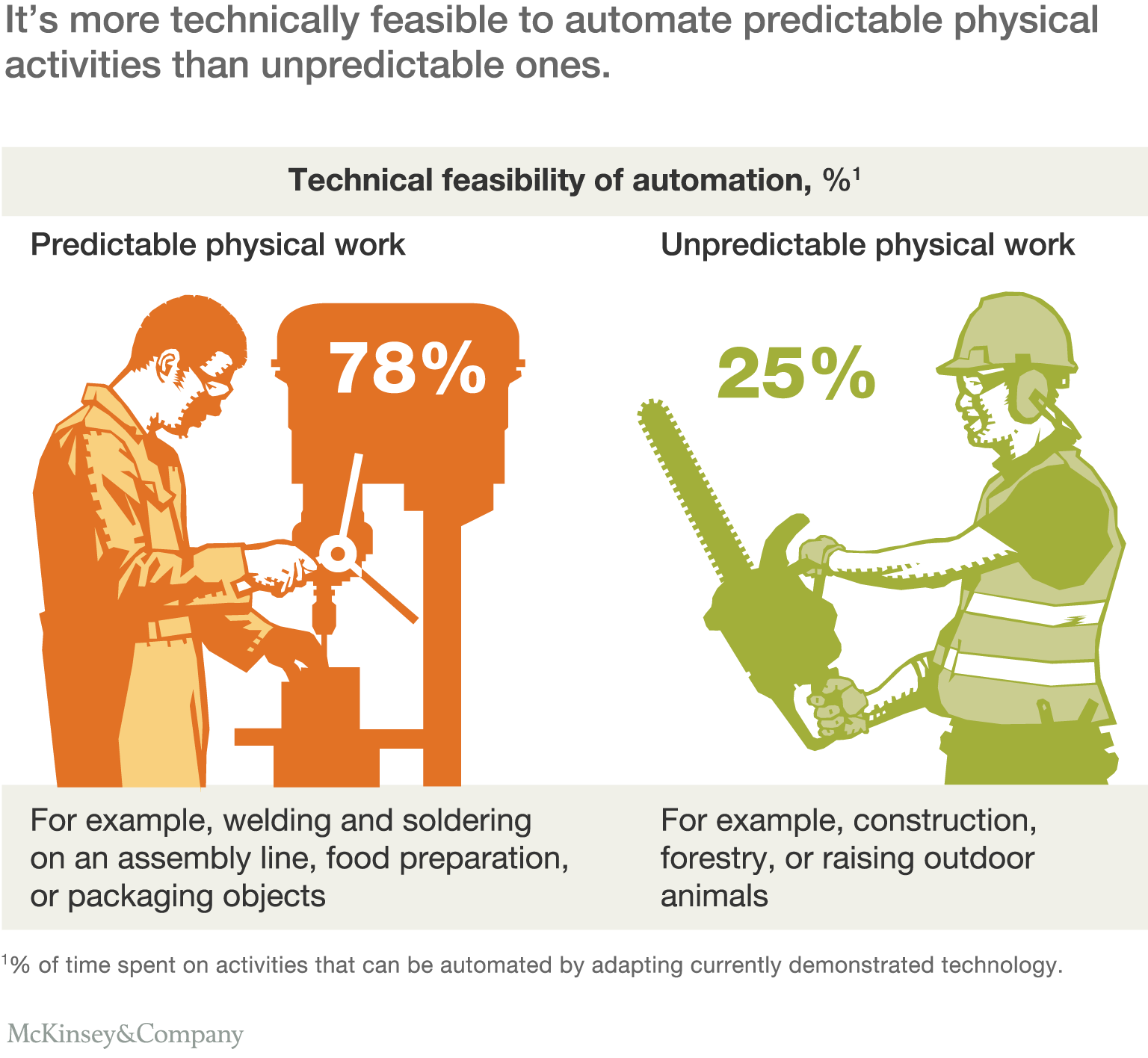
Source: McKinsey & Company


According to a recent publication, of the 9,100 patents received by IBM inventors in 2018, 1,600 (or nearly 18 percent) were AI-related. Here’s another: Tesla founder and tech titan Elon Musk recently donated $10 million to fund ongoing research at the non-profit research company OpenAI — a mere drop in the proverbial bucket if his $1 billion co-pledge in 2015 is any indication. And in 2017, Russian president Vladimir Putin told school children that “Whoever becomes the leader in this sphere [AI] will become the ruler of the world.” He then tossed his head back and laughed maniacally.


The single biggest strength of Artificial intelligence is the simple fact that it can do repetitive tasks better than anything else. And the more quantitative, the more objective the job is—separating things into bins, washing dishes, picking fruits and answering customer service calls—those are very much scripted tasks that are repetitive and routine in nature. In the matter of five, 10 or 15 years, they will be displaced by AI.


Yet even the most pragmatic AI scientists stress that today’s AI is useless in two significant ways: it has no creativity and no capacity for compassion or love. Rather, it’s “a tool to amplify human creativity.” In other words, sure you can teach AI to make strokes with a brush in a canvas, but an AI driven machine can never in a million years paint a Monalisa.


The most advanced robot costing many millions in research dollars and years of work, cannot pickup a tea cup like a 2 year old can. Or millions of sensors on a robot cannot feel taste and smell like humans do. Sure a robot Make millions of calculations in a second, which is many hundreds of times more than the most intelligent human can, sure a robot can discern each smell, or can break down each material in to its atoms and sub-atoms, but it cannot experience the same thoughts, emotions and feelings that human brain can.


The second biggest fear around AI stems from the AI and machine learning applications inheriting some of the human biases based on pre-disposed notions and behaviors that humans may code in to or indirectly influence the program.


Augmented Intelligence on the other hand doesn’t replace humans with technology rather uses Artificial intelligence to aid humans in doing a job.


In recent years, in AI technology rankings in terms of the value they create for businesses, Augmented Intelligence was ranked in second place, just below virtual agents. However, Gartner predicts that “Decision support and AI augmentation will surpass all other types of AI initiatives” creeping into first place this year and then exploding as we reach 2025 becoming around twice as valuable as virtual agents.


Just like regular project management work, any organization looking to employ AI needs to first define its use cases and requirements clearly and describe the Big Y, or the big problem it’s trying to solve. Then, they need to define the various aspects of business goals, or the product that they want to build. The next step is to outline data requirements and functionality to solve those business goals. And finally, what’s the ROI or returns the organizations expects. What makes AI and machine or cognitive learning projects unique is that they also need to consider the human-machine dynamic. For example, which part of the chain or which components of the product or solution do they want to hand over entirely to machines to execute, and which parts do they want to retain for their Human Resources? Where machine or a computer algorithm based program is making the decision, is it completely autonomous or is there a human there to monitor? Is The machine or computer program Only responsible to feed data, information or half finished product to human to make the final decisions?  In the scope of these decisions, then, it makes a lot more sense to create an AI role matrix which can evolve over time. This matrix Lays down specifically the kind of role AI or cognitive learning system will play for that particular function or process.

Source: USM Business Systems


Getting to true autonomous intelligence or fully independent, cognitive learning powered AI model is proving to be real difficult. Even one single instance of non-compliance or faulty decision making can throw the entire program off tracks.


During Tesla’s 2019 Autonomy Day, Tesla CEO Elon Musk said the company is expected to have one million vehicles on the road by the end of 2020 that could function as robotaxis. Though the semi-autonomous Autopilot and Full Self-Driving, or FSD, features are loved by some, others say Musk’s driverless dream is far from becoming a reality. Despite many hundreds of millions in investment and almost a decade of efforts, Tesla’s fully autonomous driving mode is not fully autonomous anymore rather in the best-case scenario is now only viewed as a partial augmented driving mode. In other words, human driver has to control the inputs. And while some of the Tesla’s self-driving features are loved by some, many still view it as unfit for our roads. While the hype around the autonomous driving mode was skyrocketing, and just as Tesla started charging a hefty premium for their self-driving feature, a handful of incidents and accidents changed all that. Scenarios of false-positives, or false-negatives, which are built in to the algorithms powering the programs behind the autonomous driving software, lead to further complications of their own, creating as many problems as they solve. In the best-case scenario, public confidence in self-driving technology is still many years if not decades away.


Source: ABC News


Watching the Youtube training sessions posted by Waymo, the Alphabet subsidiary in charge of self-driving cars, reveals the concerns with self-driving technology. One video shows a car that repeatedly and without reason stops in the middle of a street and then drives off again. The explanation came from a passer-by who was carrying a STOP sign sticking out of his bag, misleading the vehicle. In other words, the machine can drive itself, but it lacks the ability to differentiate ‘stop’ signal in different contexts and nuances of incidents on public roads.


The loan underwriters at top banks quickly realized that leaving decision making with a compute program is a recipe for disaster as the program has inbuilt biases and no amount of learning can make the program foolproof. Hence in most cases, AI programs are only limited to the first few stages in the process while the critics decision is made by a human.


Similarly, Apple credit cards have recently discriminated against women,giving them 50% less credit than men with the same income and profile.


Let’s use Netflix as an example. Say you recently watched “Orange is the New Black.” Netflix may then suggest other shows with prison themes, or documentaries about life behind bars, or shows with a strong female lead, etc.


Based on past data (your recently watched shows and movies), it’s able to make a prediction about what you will want to watch next. Once you make your latest selection, it will adjust its algorithm to further customize your experience.


According to a 2017 scholarly article on Augmented intelligence by Researchers Zheng and Wang, Within augmented intelligence, researchers Define models according to the varied degree of AI and human influence.


  • The first classification is called Human-in-the-loop hybrid-augmented intelligence) Human-in-the-loop (HITL) hybrid-augmented intelligence is defined as an intelligent model that requires human interaction. In this type of intelligent system, human is always part of the system and consequently influences the outcome in such a way that human gives further judgment if a low confident result is given by a computer. HITL hybrid-augmented intelligence also readily allows for addressing problems and requirements that may not be easily trained or classified by machine learning.


  • The second classification looks at (Cognitive computing based hybrid-augmented intelligence) In general, cognitive computing (CC) based hybrid-augmented intelligence refers to new software and/or hardware that mimics the function of the human brain and improves computer’s capabilities of perception, reasoning, and decision-making. In that sense, CC based hybrid-augmented intelligence is a new framework of computing with the goal of more accurate models of how the human brain/mind senses, reasons, and responds to stimulus, especially how to build causal models, intuitive reasoning models, and associative memories in an intelligent system.


Augmented intelligence follows a five-function cadence that allows it to learn with human influence. It repeats a cycle of understanding, interpretation, reasoning, learning, and assurance. Here’s how it works:

  • Understanding: Systems are fed data, which it breaks down and derives meaning from.
  • Interpretation: New data is inputted; the system then reflects on old data to interpret new data sets.
  • Reasoning: The system creates “output” or “results” for new data set.
  • Learn: Humans give feedback on output and the system adjusts accordingly.
  • Assure: Security and compliance are ensured using blockchain or AI technology.

Source: Global Data Magazine


It is clear and evident that AI is here to stay. Humans have a deep reliance on Artificial Intelligence which has been around for decades. Yet, the future of Artificial Intelligence is brightest with the humans, morphing in to Augmented Intelligence. Having humans and machines work hand-in-hand is a win-win for both parties.


Most scientists and researchers agree that its probably extremely implausible, if not impossible to imagine collective human failure to the extent that AI is allowed to grow unchecked, while simultaneously all other uses of AI beneficial to humankind are ignored.


One thing is certain though: despite the ominous predictions and warnings on doomsday scenarios, arising out of the impact of AI on humanity and society, AI will never take over the world or morph in to Terminator style Machines Or Will Smith’s I robot kind of intelligence.


]]>
https://1earthtech.com/artificial-augmented-intelligence/feed/ 0 1060
Content Moderation and Social Media https://1earthtech.com/content-moderation-and-social-media/ https://1earthtech.com/content-moderation-and-social-media/#respond Fri, 28 Aug 2020 03:56:26 +0000 https://1earthtech.com/?p=1045 Whats the problem!

Image Credit: Adweek


All content platforms and social media companies must keep the content flowing because that is the business model: Content captures attention, provides viewership and generates data (users’ statistics). Content is the starting and the end point of consumers’ journeys on social media. A video, an information post, a tweet, blog post, picture, public service advisories, are all types of content. The platforms then sell that attention (read: viewership), enriched by that data (read: customized ads). But how do you deal with the objectionable, disgusting, pornographic, illegal, or otherwise verboten content uploaded alongside legitimate content?


How do Facebook and other tech and social media companies ensure integrity of content on their networks? And how do these companies work to curb misinformation on their platforms about the Coronavirus pandemic or the 2020 elections or any other global or regional event. We have seen state and non-state sponsored actors with nefarious intent take advantage of lax content posting norms.


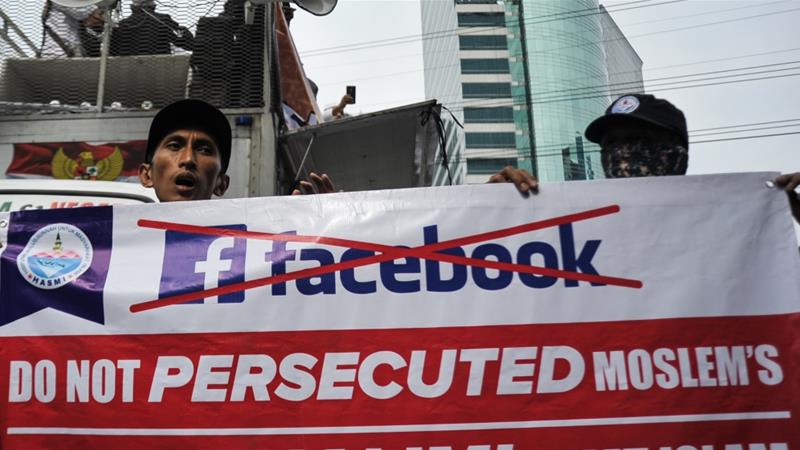
Dangerous fake news has spread on platforms like Facebook in Myanmar, where the Rohingya ethnic minority are persecuted. United Nations has clearly blamed the role of social media in spreading the persecution and this is not the only example of its kind.


Misinformation campaigns (aka “fake news”) on Facebook have interfered with democratic elections around the world. After a man used Facebook to live stream his attack on two New Zealand mosques in March 2019, the video quickly spread. YouTube Moderators fought back hard taking down the video as newer versions kept popping up seemingly beating the controls that YouTube has in place to immediately flag already removed material. The uploaders were able to sneak past by using a loophole – exact re-uploads of the video are banned by YouTube, however videos that contain clips of the original footage must be sent to human moderators for review, thereby delaying the process. And again this loophole existed for a purely legitimate reason – to ensure that news videos that use a portion of the video for their segments aren’t removed in the process.


In 2017, a live stream on Facebook showed the fatal shooting of a 74 year old retiree in Cleveland, while also showing a man murdering his own child in Thailand. Both videos remained online for hours and racked up hundreds of thousands of views.


In a December 2017 report, ProPublica took a revealing look at content moderation. ProPublica gathered from its users 900 examples of where users believed that Facebook content moderation was incorrectly applied. ProPublica then selected 49 of such posts and asked Facebook to explain. Rather shockingly, yet unsurprisingly, Facebook admitted to an error by its moderators in 22 out of 49 posts. Just imagine, 22 out of 49 means approximately 45% or half of all posts in the sample had moderation applied incorrectly. No amount of explaining can explain that.


Social media is good, right!

 

Image Credit: Internet


Facebook serves as a platform for its billions of regular users to post, view and offer feedback about the content hosted on its servers. But when that content is more “terrorist propaganda” than “brunch photo,” or when it becomes “porn” than “essential context” to an image, the company has struggled to determine the right approach to removing it in time. The traditional methods of company moderators reviewing user-reported infractions is too time consuming, while the AI powered algorithms are too imprecise.


With the COVID-19 risk content moderators were sent home, and without proper technology, connectivity, and safety requirements met, Facebook’s automated system took full control. That was an unmitigated disaster, leading to widespread blocking or deleting of posts mentioning Coronavirus from reputable sources such as The Independent and the Dallas Morning News, not to mention millions of individual Facebook users. Those automated systems still have problems.


Content from legitimate sources, verified fact-checked sources, and sources with history of posting appropriate and trust worthy content is suddenly being targeted. While there were always instances of some posts getting tagged erroneously, there is an order of magnitude increase in such instances in the post-covid world. Clearly the strategy to have AI and ML based programs call the shots hasn’t worked.


“Facebook is blocking COVID-19 posts from fact based sources,” a Facebook source says. On March 17th 2020, according to an Yahoo news article, Facebook suffered from a massive bug in its News Feed spam filter, causing URLs to legitimate websites including Medium, Buzzfeed, and USA Today to be blocked from being shared as posts or comments. The issue blocked shares of some but not all coronavirus-related content, while some unrelated links are allowed through and others are not. Facebook has been trying to fight back against misinformation related to the outbreak, but may have gotten overzealous or experienced a technical error.


According to a just released report by NYU Stern, Facebook content moderators review posts, pictures, and videos that have been flagged by AI or reported by users about 3 million times a day. So that is 3 million pieces of content just flagged for review out of possibly billions and billions of content posts. And since CEO Mark Zuckerberg admitted in a white paper that moderators “make the wrong call in more than one out of every 10 cases,” that means 300,000 times a day, mistakes happen.


So, is it all an experiment gone wrong? Did the novel coronavirus catch the social media content moderation framework at the worst time?
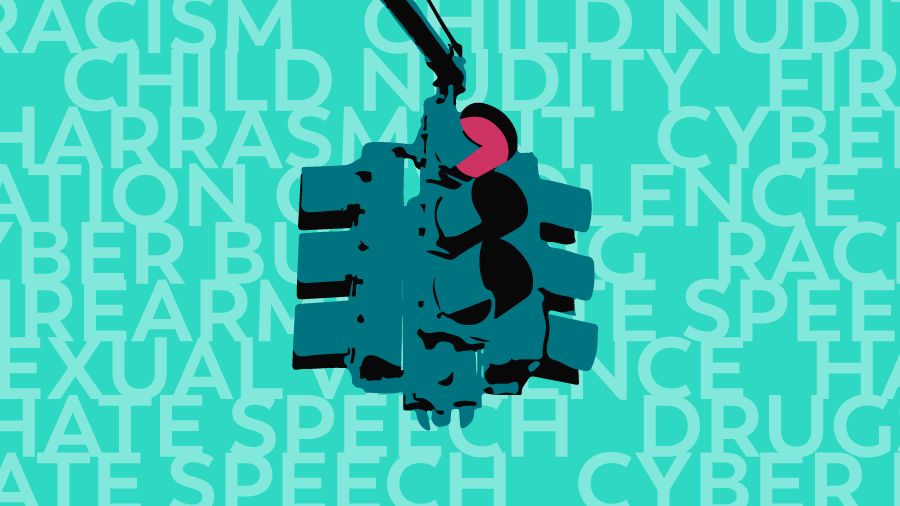
 

Image Credit: Webhelp


The one thing we know for sure is that you can’t control the beast that is Social Media. Generally, the response by firms to incidents and critiques of the social media platforms is primarily ‘We’re going to put more computational power on it,’ or ‘We’re going to put more human eyeballs on it.’” And that is generally fine. For it attempts to resolve the problem, or at least is seen as an attempt to resolve the problem, with or without adequate results. The focus is not on the results, rather on the proclivity to be seen as doing something.


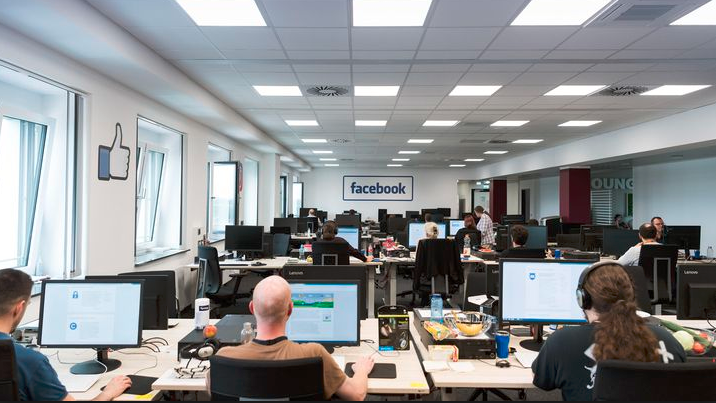
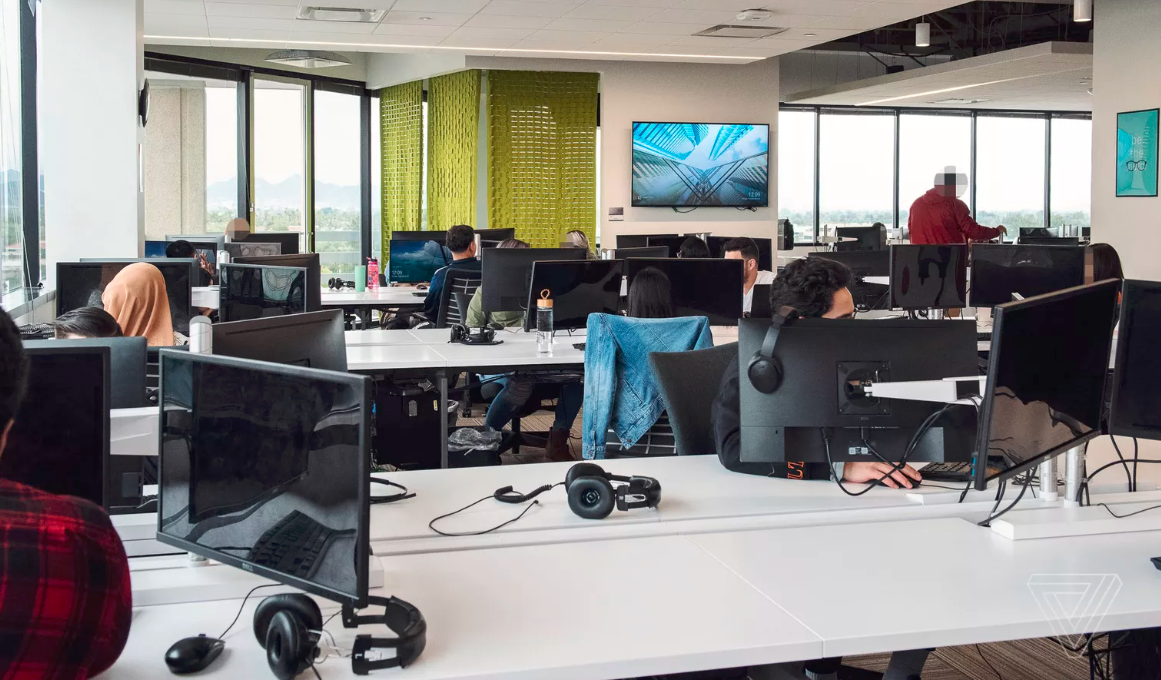
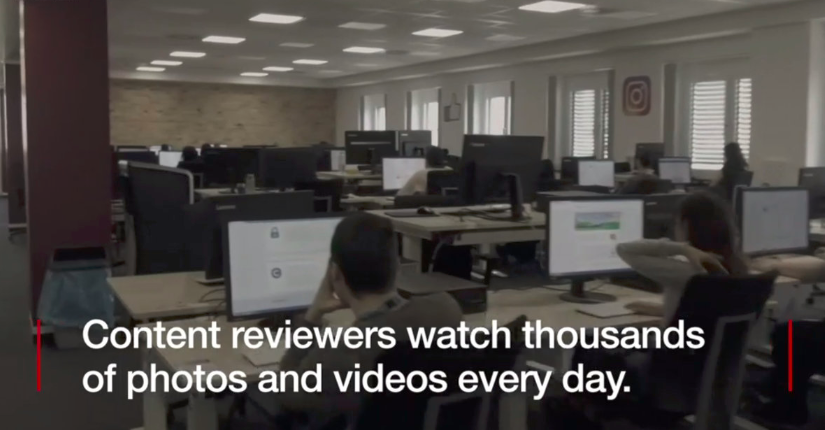
Facebook uses more than 70 external partners and fact-checking firms. According to Facebook, it has over 30,000 people working on safety and security — about half of them are content reviewers working out of 20 offices around the world. Facebook employs almost all of these 15,000 content moderators indirectly, mostly outsourced workers. In similar context, YouTube today employs an expected 10 – 12,000 people to patrol al of Youtube and Google’s content.  Similarly, Twitter employees close to 2,000 people in its content review team.


Generally speaking, content management or content review falls in to two main buckets. The first is content moderation, where content moderators, mostly contractors working on behalf of lets say Facebook or Twitter, check the content for violations like nudity, sexual content, racism, hate speech, acts of violence or promoting violence, violating laws and community standards, child pornography, and like. Moderators are responsible for reviewing flagged content, and removing it in accordance with the policies of the social media platform. The second bucket is third party fact checking, where Facebook employs more than 70 third party organizations, primarily, news outlets and prominent individuals to check a particular content as True or False. Based on the result then, any one of the many actions can be taken. Either the content is either left up or demoted, or additional labels are added, or additional constraints are placed including monetary impacts or all of the foregoing in extreme cases.


According to content management and comprehensive community standards page on Facebook directly, the efforts to moderate and regulate content have three stages. First, is the Policy development process. The content policy team at Facebook is responsible for developing our Community Standards. We have people in 11 offices around the world, including subject matter experts on issues such as hate speech, child safety and terrorism. Many of us have worked on the issues of expression and safety long before coming to Facebook. Second is Enforcement of policies developed previously through its global content moderator workforce. Facebook uses a combination of artificial intelligence and reports from people to identify posts, pictures or other content that likely violates our Community Standards. These reports are reviewed by our Community Operations team, who work 24/7 in over 40 languages. Facebook’s fact-checking rules dictate that pages can have their reach and advertising limited on the platform if they repeatedly spread information deemed inaccurate by its fact-checking partners. The company operates on a “strike” basis, meaning a page can post inaccurate information and receive a one-strike warning before the platform takes action. Two strikes in 90 days places an account into “repeat offender” status, which can lead to a reduction in distribution of the account’s content and a temporary block on advertising on the platform. And finaly, Facebook launched a review process last year. A news organization or politician can appeal the decision to attach a label to one of its posts. Facebook employees who work with content partners then decide if an appeal is a high-priority issue or PR risk, in which case they log it in an internal task management system as a misinformation “escalation.” Marking something as an “escalation” means that senior leadership is notified so they can review the situation and quickly — often within 24 hours — make a decision about how to proceed.


If Facebook’s content moderators have three million posts to moderate each day, that’s 200 per person: 25 each and every hour in an eight-hour shift. That’s under 150 seconds to decide if a post meets or violates community standards.

 

Image Credit: TELUS International


According the NYU Stern report, and according to some recent investigations by Buzzfeed and news articles by NBC, Forbes and others, the problem of content reviews – whether its content moderation by moderators or third party fact-checking by independent news organizations and individuals is more structural and institutional in nature. The novel coronavirus just exposed a side of it and perhaps aggravated the outcomes.


According to a NBC news article, Facebook has allowed conservative news outlets and personalities to repeatedly spread false information without facing any of the company’s stated penalties, according to leaked materials reviewed by NBC News. According to internal discussions from the last six months, Facebook has relaxed its rules so that conservative pages, including those run by Breitbart, former Fox News personalities Diamond and Silk, the nonprofit media outlet PragerU and the pundit Charlie Kirk, were not penalized for violations of the company’s misinformation policies.


The list and descriptions of the escalations, leaked to NBC News, showed that Facebook employees in the misinformation escalations team, with direct oversight from company leadership, deleted strikes during the review process that were issued to some conservative partners for posting misinformation over the last six months. The discussions of the reviews showed that Facebook employees were worried that complaints about Facebook’s fact-checking could go public and fuel allegations that the social network was biased against conservatives.


“This supposed goal of this process is to prevent embarrassing false positives against respectable content partners, but the data shows that this is instead being used primarily to shield conservative fake news from the consequences,” said one former employee.


In a recent case at Facebook, related to appeals process, a Facebook employee filed a misinformation escalation for PragerU, after a series of fact-checking labels were applied to PragerU posts. A Facebook employee escalated the issue because of “partner sensitivity” and mentioned within that the repeat offender status was “especially worrisome due to PragerU having 500 active ads on our platform,” according to the discussion contained within the task management system and leaked to NBC News. After some back and forth between employees, the fact check label was left on the posts, but the strikes that could have jeopardized the advertising campaign were removed from PragerU’s pages.


In another case, a senior engineer at one of the top social media giants collected internal evidence that showed the company was giving preferential treatment to prominent conservative accounts to help them remove fact-checks from their content, according to Buzzfeed. The company responded by removing his post and restricting internal access to the information he cited. A week later the engineer was fired, according to internal posts seen by BuzzFeed News.


Many employees at top social media companies like Facebook, Twitter and others have expressed deep anguish on their internal inter-company platforms , amid growing internal concerns about the company’s competence in handling misinformation, and the precautions it is taking to ensure its platform isn’t used to disrupt or mislead ahead of the US presidential election.


Third party fact checking also suffers from severe debilitating factors severely limiting its outreach. Scale becomes an issue for the fact checkers as most organizations Facebook contracts work of fact checking to, typically only allocates handful of people to the task of fact-checking. Coupled with an impossible amount of fact-checking requests coming in, that means the people are constantly backlogged.


According to Sarah Roberts, a pioneering scholar of content moderation, and an information studies expert at the UCLA, the social media companies handle the activities of content moderation in a fashion that diminishes its importance and obscures how the activities of content moderation work. The idea is simple: make it obscure and muddy the waters, to achieve plausible deniability. Something straight out of the play book of top politicians and business executives – plausible deniability. Content moderation is a mission critical activity, yet most social media companies fulfill it with their most precarious employees mostly by just outsourcing the entire journey of content moderation.


Just as companies save significant amount of money by outsourcing transport logistics, janitorial and food services, outsourcing content moderation saves these social media giants tons of money. Just as we pointed out earlier, between Facebook, Twitter and Youtube there are close to 40 – 50,000 content moderators. And the number is only growing. Even at conservative estimate of 40,000 people, that is outsourcing work equivalent to 100% of work performed at 4 medium sized outsourcing services providers.


The lack of access and the lack of willingness by social media companies to allow any kind of scrutiny of their moderation practices has made content moderation a kind of black box ops where only few people know what takes place. This is certainly by design and it is no accident that the top social media companies choose the convenience of maintaining plausible deniability and the wait and watch approach while incendiary content burns and lights fire to everything around it.


What about human content moderators?

 

Image Credit: tampabay.com


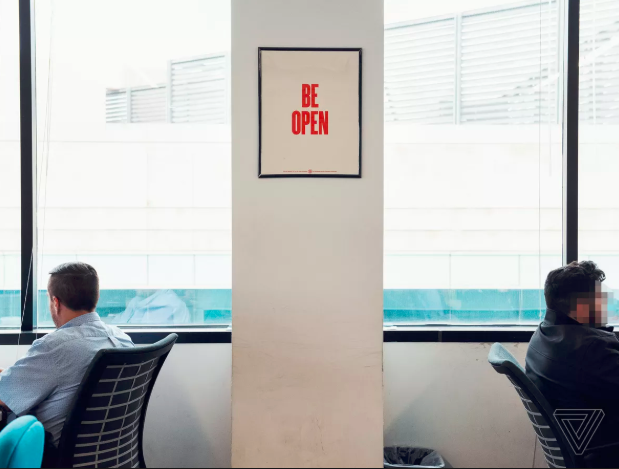
According to Guy Rosen, VP of Integrity at Facebook, content moderation is a really arduous job. Numerous people have brought this issue to the fore. Watching countless hours of sadistic, violent, disturbing and purely horrific content day in and day out takes its toll. How do you get those hours of visions and thoughts out of your head when you head home? You cannot. Those sights and sounds stay with you. As a content moderator, its really hard to live a normal life after watching 8 hours of non-stop disturbing content.


In the recent past, a former Facebook moderator sued, accusing the platform of psychological harm. Former Microsoft employees sued Microsoft for similar reasons after the alleged trauma from reviewing child porn. In a more recent report, The Verge carried out a scathing review of the job conditions for content moderators at Facebook and the harrowing conditions surrounding the job in general. As one employee interviewed in the report put it: “We were doing something that was darkening our soul — or whatever you call it,” he says. “What else do you do at that point? The one thing that makes us laugh is actually damaging us. I had to watch myself when I was joking around in public. I would accidentally say [offensive] things all the time — and then be like, Oh shit, I’m at the grocery store. I cannot be talking like this.”


Accenture which performs content moderation for social media companies, has its employees sign a form that directly acknowledges that reviewing such content may be harmful to mental health and could even lead to PTSD.


So, is it purely an evil design at play at Social Media giants when it comes to moderating?
Image Credit: VICE


To be fair to all, Facebook and other Social media giants do face somewhat of an uphill battle in their efforts of moderating the content. The moment any post, video, or content gets tagged or labeled as requiring fact-checking or misleading or inappropriate, the authors or posters are quick to raise hell about dictatorship, suppression of free speech and infringement of people’s inalienable right of expression.


There is always a debate between balancing free speech versus freedom from cruelty and hatred. Or debate between balancing freedom of expression versus right to speak against bullies. A recent attempt by Twitter to mark certain tweets from the President caused a storm and PR crisis. A similar attempt from Facebook recently drew ire of conservatives and put certain ad revenue under threat.


Aside from the morals and ethics, at the heart of the debate is a purely financial question: content attracts viewers. More viewers equals more content and vice versa. Any attempt to reduce content, even the borderline inappropriate content will reduce viewers hence impacts revenue. The business models chosen by Facebook, Twitter and Google favor an unremitting, unrelenting drive to add more users and demonstrate growth to investors. More users and more content means more content to moderate and more nuances, but all of that is secondary, a kind of an afterthought.


The debate on the usage of internet and governing content uploads is not new. The debate has been going on for some time now and is just about reaching peak interest levels around the world, with many governments promising action like EU and UK; few governments, like China, in fact taking strong action; and few just watching how the entire debate pans out and what, if any, changes come out as result.


The big tech players around the world have realized one thing – it’s a tough tight rope walk to control or govern the internet. If a platform puts in too strict controls, through user-reporting mechanism, AI backed algorithms and human monitors flagging and removing content, it will get labeled as ‘dictatorship’ and against free speech. If a platform puts in too few controls, hosting content freely and with little censorship, its going to get run over by activists from all ends of the spectrum, from left to right. It’s quite like an overflowing pot left simmering for long. The only difference is no one can lift the pot and no matter which way its tilted, boiling hot contents are sure to leave scalding marks.


With that, lets take a look at The role of Regulators in the efforts to moderate content.

When Mark Zuckerberg wrote the oped in WAPO in March 2019 asking for government and regulators to step in more aggressively to police the internet, he may have elaborated what many insiders feel regarding governing internet, and specifically what content is uploaded for viewers to view, download and use. Yet, not everything seems above board here as the challenges that Mark Zuckerberg cited so eloquently in his oped are the same challenges that have plagued tech industry for years. What has changed recently that governments are being called in to action, while so far the tech industry has fought tooth and nail for freedom of expression and freedom of speech?


As the efforts to govern the internet continue, many who are fighting the battle daily are coming to realize the magnitude of difficulty this seemingly simple question of ‘what content to be allowed’ poses. Lets face it: Internet was never known to be deferential to peoples’ preferences. The advocates of freedom of expression and free speech, often big tech companies themselves, fought for as little government control as possible, decrying every move made by governments or regulators around the world.


Technology experts, including big tech companies themselves believe that for Zuckerberg and other big tech companies, “regulation” isn’t an uncouth word anymore. As with changing times, the big tech is now embracing regulations, not because of any newfound respect for regulations but purely as a business measure. From early days when big tech companies projected all regulations as reprehensible and fought any and all regulations tooth and nail, to the current day where they are welcoming regulations, the transformation cannot be more melodramatic.


Most of big tech today sees regulations as a set of common rules enforced by governments and regulators that’ll allow them to further cement their dominance of the internet. And if anything goes wrong, they always have the comfort of pointing the finger to the” Regulator” big brother.


So what is the Way forward to moderate content and to maintain integrity of platforms

According the NYU Stern report, the solution is straight-forward, and calls for increased investment, focus and commitment. The solution is a multi-pronged approach. The first step of this approach begins with Ending outsourcing: to ensure all content moderators are official Facebook or Twitter or employees of the Social media company, with adequate salaries. Increasing the number of moderators significantly is another, as well as placing content moderation under the dedicated oversight of a senior executive.


Facebook or Twitter or other Social media companies should also expand oversight in underserved countries, the report suggests.  In addition, the health and well being of content moderators employees should come first. The company should sponsor research into the mental health impacts of moderating the world’s content. And the company should expand fact-checking to curb the spread of misinformation.

]]>

https://1earthtech.com/content-moderation-and-social-media/feed/ 0 1045
Privacy and partnerships: Apple WWDC 2020 https://1earthtech.com/privacy-apple-wwdc-2020/ https://1earthtech.com/privacy-apple-wwdc-2020/#respond Tue, 14 Jul 2020 20:57:00 +0000 https://1earthtech.com/?p=1021

Image Credit: Techcrunch


In an industry which is not limited by any conventional restraints, Apple® has once again proven to the thought and market leader in promoting what it’s users want. It is not however what Apple® has promised to do, as its customer and user-centricity is quite legendary, rather it’s the timing of the changes that is quite interesting.


During the Worldwide Developers Conference (WWDC) held remotely for the first time, Apple® announced some new privacy and security features for iOS. Apple®’s 31st Worldwide Developers Conference 2020 was a digital-only event kicked off June 22. WWDC is Apple®’s annual Worldwide Developers Conference where developers can attend sessions and meet with Apple® engineers and this year’s event witnessed Apple®  debut iOS 14, iPadOS 14, macOS Big Sur, tvOS 14, and watchOS 7. The online event typically allows millions of developers worldwide to get close proximity access to future versions of iOS, iPadOS, macOS, watchOS, and tvOS, as well as engage and network with Apple® engineers and community through engineering sessions, one-on-one lab appointments, and the revamped Apple®  Developer Forums. The event for the first time had no physical gathering in California due to the ongoing global health crisis, making everyone sorely miss the Networking and touch and feel of events like this.


During this year’s event, Apple® provided a full digital WWDC experience with online keynote, a Platforms State of the Union for developers, technical and design-focused engineering sessions, Apple® Developer Forums with Apple® engineer participation, and one-on-one developer labs. Apple® also hosted a Swift Student challenge, though winners received a jacket, pins, and virtual one-on-one lab sessions with Apple® engineers rather than free admission to WWDC.


Image Credit: appleinsider


With the new changes Apple® announced, publishers need to quite very much overhaul their entire value offering to stay compliant. As compared to the earlier practice of virtual free for all, publishers will now be required to provide information about their app’s data collection practices while explicitly seeking permission from their users to track the users’ shadow across apps and websites owned by other companies. This is a major change for the industry players, since thus far, users were required to opt-out if they wanted from sharing their data and identifiers with third party networks. To aggravate the matters, the opt-out process itself in most cases was not straightforward, with self-regulation and delayed actions in most cases giving no real out to the users. This gave the publishers of the app a virtual free rein to use the users’ implied consent in any way the publishers deemed fit. That all is set to change as now with the new changes, users will have to explicitly opt-in within their apps to allow tracking or sharing of their data.


The updates mean that you can limit how much location information is shared with apps — only allowing it approximate data rather than your precise whereabouts. Apple® also introduced recording indicators through an orange dot on your status bar that will tell you when your camera or microphone is activated. Apple® also introduced labels for app permissions to inform people how much data an app requests before they download them. The feature will show people those labels in two categories, on “Data Linked To You” and “Data Used to Track You.”


The last few years have seen an entire new industry segment open up which specializes in driving users to download an app, accessing user information, sometimes with consent, sometimes without, then tracking users across apps, collecting data and then selling the data, a process leading to shortcut of app monetization. Instead of charging user to use the app, the app pays itself through tracking, collecting and selling user data. While users complained, and while the more privacy minded users combed through the fine print of legal agreements and terms of conditions or terms of services for each app they installed, most users even those who were concerned, just shrugged and moved on. Most users just took it as the cost of using apps.


An important point to note here is that apps don’t exist in isolation or in silos. There is almost a complete app ecosystem, and as with any ecosystem, the app ecosystem requires continuous sustenance. From App development to app launch and promotion, to making the app stick with target audience, then capturing and tracking of data, and finally utilizing the data, are key parts of the ecosystem. On the technical side, or for the more technically minded, Apple® uses something called an IDFA, the Identifier for Advertisers (IDFA), which is a random device identifier assigned by Apple® to a user’s device. Advertisers use this to track data so they can deliver customized advertising. Each IDFA contains no personal identifying information, or PII, instead serving to measure and identify user interactions with ad campaigns, installs, and in-app activity. Some industry insiders put the value of app driven advertisements in iOS in excess of $45 billion dollars.


Just looking at the app development itself, unarguably the first step towards launching an app, there can be no mistake in gauging the potential of the industry. Skipping all the factors in cost breakdown, a median price to create an app by specialist agencies was found to be $171,450, while many online app cost calculators provide a price tag between $200,000 and $350,000 for an app with dozens of features. Small apps generally cost much less – apps with few basic features could cost between $10,000 and $50,000, indicating there’s an opportunity for any type of business to make a decent ROI. Needless to say, this potential saw anyone and everyone jump headfirst in to the fray.

Aided with technological advancements like microservices and APIs, it is no surprise that making, launching and monetizing apps has become big business. For a while, it really seemed to be the Wild, Wild West, with no real control, oversight or accountability.


Image Credit: cnet


The above is however set to change in a big, yet unprecedented way in near future. The upcoming changes will make it harder for app publishers, advertisers and marketers to track and target users across apps, creating a level of uncertainty on how that industry will work from now on. The changes are expected to improve transparency on users’ privacy, but they will also have an impact on the current app’s economy and how apps monetize. Some of the most important players in that space such as ad networks and attribution networks will be immediately affected.


According to a recent survey of iOS and Android users, 68.3% of iOS and 67.5% of Android users will likely deny tracking permissions if they are requested in-app to opt-in. With Android sure to follow, this is definitely good news for privacy minded and not-so-privacy-minded users alike as the move spearheaded by Apple® will strengthen the privacy laws in the entire marketplace.


Some critics do feel that it’s not big tech or app developers pushing back, it’s the GDPR in Europe that is forcing companies like Apple® to announce such measures. Coupled with an increasing awareness of the privacy violations that have been suffered by average consumer over the last decade or more, firms are bound to act sooner than later. While this may be partially true, there is no denying that the end result is what privacy advocates have always wanted.


To summarize, the upcoming privacy changes in iOS as announced in WWDC are forecasted to have a significant impact not only on how apps monetize their audience and how advertising and attribution networks work, but also the entire app ecosystem. The study showed that a large proportion of the users will not allow themselves to be tracked, a crucial step in effectively running and attributing ad campaigns in the apps space at the moment. Similar findings were also revealed with Android users. Privacy seems to be a key concern among users in the mobile space and providing them with more transparency and choices seems to change the current app landscape dramatically.

]]>
https://1earthtech.com/privacy-apple-wwdc-2020/feed/ 0 1021
Social Media and managing content! https://1earthtech.com/social-media-moderation-content/ https://1earthtech.com/social-media-moderation-content/#respond Wed, 22 Jan 2020 21:51:46 +0000 https://1earthtech.com/?p=781

This article offers a critical view of how content available on the internet quintessentially shapes public opinions and provides an unique challenge to governments around the world.

Introduction

The Social media today has a very different impact potential than it used to 10 years ago. Today the social media is capable of influencing country-wide elections, swaying public opinions, making or breaking brands and people associated with those names, and raising or flat-lining issues. The power wielded by content is truly mind-boggling when one considers that more than 56% of world’s population is online one way or the other. With growing penetration of smartphones and increase in bandwidth accompanied with decrease in data charges, content sharing is becoming ubiquitous and as easy as texting or talking.


Governments, regulators and public experts around the world have expressed concern amidst growing need to monitor content which is distributed largely freely today. Who controls what can be seen publicly has been a matter of much debate which is far from settled, however almost everyone involved favors some level of control on viewership of the media content posted online, or in other words, policing the internet. Most through recognize this policing as not a negative or an impediment, rather as a virtue or a social responsibility. Given the power, both direct and indirect, that content platforms usually possess, online available content has become the new hidden weapon on both sides of the debate.


The best way to prevent undesirable content from being seen is to never let it be uploaded in the first place. If content publishing platforms like Facebook, YouTube and several hundred others out there are required to screen every single video or post uploaded on their platform, it would simply lose out on millions of subscribers who want to upload their content immediately. If the platforms employ AI powered algorithms to pull down videos, then it must expect errors and content being pulled down or demoted needlessly.


Image Credit: Internet

Is Social media uncontrollable?

YouTube works in 80 different languages, is free at the entry level, is available almost everywhere, is extremely popular in the 18 – 24 year age group around the world, even in countries like P.R. China which have their own version of YouTube, and is increasingly being used to ‘monetize’ content like never before. With such mass viewership, Cisco predicts that videos will make up more than 80% of global internet traffic by 2022. YouTube, the world’s foremost content sharing site, has close to 2 billion logged-in users each month (one doesn’t need to be a logged in user to just view videos). Given its low entry barrier, almost everyone with an internet connection has used YouTube at some time.


Social media platforms, especially where content is freely distributed, or nearly freely distributed, have had an unfettered run over the past decade leading to their massive popularity today.


“We’re just a platform” is almost an extremely convenient way to avoid taking full responsibility for an increasingly serious set of problems. Yet this is exactly the approach that majority of platforms have adapted when it came to own up the responsibility of content moderation and review.


Few years back, Steve Stephens recorded himself murdering an innocent victim and then uploaded the footage to Facebook. The horrific act put Facebook under immense pressure to do something. This incident is not alone as there have been may documented cases of teens posting suicides on the internet.


Recently, the ghastly attack on the two churches in Christchurch, New Zealand killing more than 50 people was streamed live on Facebook for the world to see. Millions of people watched in disbelief while the lone gunman went on a rampage gunning down unarmed civilians. The video was streamed for several minutes while YouTube Moderators fought back hard taking down the video as newer versions kept popping up seemingly beating the controls that YouTube has in place to immediately flag already removed material. The up-loaders were able to sneak past by using a loophole – exact re-uploads of the video are banned by YouTube, however videos that contain clips of the original footage must be sent to human moderators for review, thereby delaying the process. And again this loophole existed for a purely legitimate reason – to ensure that news videos that use a portion of the video for their segments aren’t removed in the process.


For all live streaming and news events, especially ‘Breaking News’, YouTube’s safety team prefers not to use the system for immediately removing child pornography and terrorism-related content, by fingerprinting the footage using a hash system, and rather depends on a system similar to its copyright tool, Content ID, but not exactly the same. The system takes the much longer route – it first searches re-uploaded versions of the original video for similar metadata and imagery. If it’s an unedited re-upload, it’s removed. If it’s edited, the tool flags it to a team of human moderators, both full-time employees at YouTube and contractors, who determine if the video violates the company’s policies. YouTube considers the removal of newsworthy videos to be just as harmful. YouTube prohibits footage that’s meant to “shock or disgust viewers,” which can include the aftermath of an attack. If it’s used for news purposes, however, YouTube says the footage is allowed but may be age-restricted to protect younger viewers, reports The Verge.


Image Source: Internet


Rasty Turek, CEO of Pex, a video analytics platform that is also working on a tool to identify re-uploaded or stolen content, told The Verge that the issue is how the product is implemented. Turek, who closely studies YouTube’s Content ID software, points to the fact that it takes 30 seconds for the software to even register whether something is re-uploaded before being handed off for manual review. YouTube’s Content ID tool takes “a couple of minutes, or sometimes even hours, to register the content,” Turek said. That’s normally not a problem for copyright issues, but it poses real problems when applied to urgent situations. A YouTube spokesperson could not tell The Verge if that number was accurate.


Further, Turek contends, There is no harm to a society when copyrighted things or leaks aren’t taken down immediately. There is harm to a society here though when live-streaming and breaking news puts harmful content out there. This is precisely the reason why live-streaming is considered a high-risk area by Facebook and YouTube and nearly every other platform that provides live-streaming. People need to have different credentials for live-streaming and people violating rules related to live-streaming, who are sometimes caught using Content ID once the live stream is over, lose their streaming privileges because it’s an area that YouTube can’t police as thoroughly. The teams at YouTube are working on it, according to the company, but it’s one the safety team acknowledges is very difficult. Turek agrees.


In another incident, Facebook admitted last November that it did not do enough to prevent its platform from being used to “foment division and incite offline violence” in Myanmar against the Muslim Rohingya minority. That came after the United Nations described the events surrounding the mass exodus of more than 700,000 Rohingya people from Myanmar as a “textbook example of ethnic cleansing.”


These incidents are not limited to YouTube and Facebook. In China, Bytedance chief executive Zhang Yiming had to issue a public apology in April 2018 after the company was ordered by the central government to close its popular Neihan Duanzi app for “vulgar content”. The company’s Jinri Toutiao news aggregation app was also ordered to be taken down from various app stores for three weeks. Bytedance pledged to expand its content vetting team from 6,000 to 10,000 staff, and permanently ban creators whose content was “against community values”.


Image Credit: Internet

Addressing the elephant in the room!

YouTube reportedly employees more than 10,000 people on it’s content moderation and rule enforcement team which represents a 25 percent increase from just about a year ago. according to YouTube took this decision after a number of controversies surfaced over recent past concerning children’s safety on the platform—for those who watch the content as well as those who appear in videos. Yet as other platforms have also struggled with the delicate task of protecting viewers while also ensuring free speech, the big question next year for YouTube is whether this will work.


Similarly, Facebook employees close to 15,000 people while Twitter employees close to 2,500 people to moderate the content on its platforms.


Relying purely upon humans to act as content moderators and reviewers is not the most viable option. Further the process of reviewing user-reported content is time consuming in itself. Yet, machine learning is not advanced enough at the moment to completely automate the process, though A.I. researchers at Facebook are working on software that they say will eventually enable computers to do most of the work. Current AI and ML systems are not close to being mature enough to address the complexities of moderation, given that almost all intelligence systems operate at a pattern recognition level, where any change in any one of the hundreds of attributes can throw a false positive, thereby passing the content and throwing the system off track. Advanced use cases such as differentiating a jibe from something more serious whether in a video or written format, in an efficient manner that doesn’t unduly stifle free speech is certainly out of question for many years to come.


More traditional methods of reviewers depending on user-reported content and user feedback to promote or demote content is too slow and is often regarded as “too-little, too-late“. It could take crucial hours for user-reported infractions to filter through and reach the reviewers, by which time the damage is already done.

Image Credit: Internet

To overcome these challenges, most platforms are now deploying combination of AI with human moderators to come close to building a viable system. The system begins with AI assisted, algorithms based logic program which does an initial flagging and flags anything where it finds even barely perceptible objectionable content. Once the content is flagged, it is taken down immediately or if not yet online, stopped from proceeding further, and queued up for an in-depth review by human operators. The content is then finally posted back online or taken down permanently based on the decision of human moderation process.


To illustrate this use of AI, let’s look at Inke, which is one of China’s largest live-streaming companies with 25 million users. As of the end of last year, almost 400 million people in China had done the equivalent of a Facebook Live and live-streamed their activities on the internet. Most of it is innocuous: showing relatives and friends back home the sights of Paris or showing nobody in particular what they are having for lunch or dinner (Source: South China Morning Post). Inke employs 1,200 mostly fresh-faced college graduates who have seconds to decide whether the two-piece swimwear on their screens breaches rules governing use of the platform. The team is the biggest in Inke, accounting for about 60 per cent of its workforce. The content moderators work to detailed regulations on what is allowed and what has to be removed. AI is employed to handle the grunt work of labelling, rating and sorting content into different risk categories. This classification system then allows the company to devote resources in ascending order of risk. A single reviewer can monitor more low-risk content at one time, say cooking shows, while high-risk content is flagged for closer scrutiny.


Yet even that – employing AI assisted algorithmic logic coupled with human moderators – may not be enough as Mark Zuckerberg, Facebook’s CEO and majority shareholder, published a memo on censorship in Dec 2018. “What should be the limits to what people can express?” he asked. “What content should be distributed and what should be blocked? Who should decide these policies and make enforcement decisions?” One idea he aired might be thought of as a Supreme Court of Facebook. “I’ve increasingly come to believe that Facebook should not make so many important decisions about free expression and safety on our own,” Zuckerberg wrote. “In the next year, we’re planning to create a new way for people to appeal content decisions to an independent body, whose decisions would be transparent and binding.”


Image Credit: Internet

Bigger elephant in the room

There are two major challenges to building and deploying any content monitoring system. The first challenge is simply of scale. As more than 300 hours of videos are uploaded just on YouTube every single minute, the humans monitoring the videos must be capable to correctly identify inappropriate content very, very quickly, virtually in seconds. Making those removal decisions are not simple yet must be made in seconds. Personal biases and tolerances need to be re-calibrated in favor of policies and law. In addition the biggest challenge humans face monitoring content is to maintain their objectivity while watching hours upon hours of videos. Many content reviewers have reported increase in stress levels and allegations of mental illnesses are not uncommon. A group of moderators sued Microsoft in January alleging that they were suffering from PTSD as a result of watching child abuse and other sadistic acts.


The second challenge is bigger and is not going to go anywhere anytime soon. As Mark Zuckerberg mentioned in Dec 2018, this challenge is all about who gets to regulate and to what extent, and more importantly who decides the rules of the game? Is it solely up to each content publisher or platform to define their own rules on what content to be flagged as inappropriate and taken down or demoted? Or is it up to the government or a regulatory body to fix this? Zuckerberg feels its clearly the latter.


Experts believe that for now at least human curators must continue to work alongside AI. This of course means that both the human moderators and AI backed algorithms have immense ground to cover before a reasonable degree of accuracy can be achieved. It will take time for the platforms, lets say, Facebook, to train its neural networks to streamline that process, while the human moderators continue to face the daunting task of identifying proverbial needle in the haystack.


Image Credit: Internet

Conclusion

Lets remember the main problem once again. The social media platforms are responsible for the content hosted on their platform and this responsibility cannot and must not be avoided in the name of freedom of expression, viewers’ choice, viewers’ promoted content, etc or whatever fancy term once may come up with.


When anyone speaks about identifying harmful content and the need to censor such content, it feels like the work should be done by robot moderators, but as reality beckons, AI doesn’t yet grasp context and gray areas. The struggle between free speech and censorship keeps humans in the center in this undesirable yet undeniable role.


As a content publisher, content aggregator or content reviewer, the stakes have never been higher to allow the content which is legitimate and in the interest of pubic to run freely, while any content which doesn’t meet these two conditions to be taken down as soon as it is put up before the content has the chance to reach any audience.

]]>

https://1earthtech.com/social-media-moderation-content/feed/ 0 781
Big Tech, content moderation and regulations – Three way road! https://1earthtech.com/big-tech-content-moderation/ https://1earthtech.com/big-tech-content-moderation/#respond Tue, 21 Jan 2020 19:45:30 +0000 https://1earthtech.com/?p=779 Big Tech controls lives yet has difficulty controlling what it hosts!


Introduction

When Mark Zuckerberg wrote the oped in WAPO in March 2019 asking for government and regulators to step in more aggressively to police the internet, he may have elaborated what many insiders feel regarding governing internet, and specifically what content is uploaded for viewers to view, download and use. Yet, not everything seems above board here as the challenges that Mark Zuckerberg cited so eloquently in his oped are the same challenges that have plagued tech industry for years. What has changed recently that governments are being called in to action, while so far the tech industry has fought tooth and nail for freedom of expression and freedom of speech?


All content platforms and social media companies must keep the content flowing because that is the business model: Content captures attention, provides viewership and generates data (users’ statistics). The platforms then sell that attention (read: viewership), enriched by that data (read: customized ads). But how do you deal with the objectionable, disgusting, pornographic, illegal, or otherwise verboten content uploaded alongside legitimate content?


The one thing we know for sure is that you can’t do it all with computing. To examine these issues, Roberts pulled together a first-of-its-kind conference on commercial content moderation last week at UCLA. According to Roberts, “In 2017, the response by firms to incidents and critiques of these platforms is not primarily ‘We’re going to put more computational power on it,’ but ‘We’re going to put more human eyeballs on it.’”


The debate on the usage of internet and governing content uploads is not new. The debate has been going on for some time now and is just about reaching peak interest levels around the world, with many governments promising action like EU and UK; few governments, like China, in fact taking strong action; and few just watching how the entire debate pans out and what, if any, changes come out as result.


The big tech players around the world have realized one thing – it’s a tough tight rope walk to control or govern the internet. If a platform puts in too strict controls, through user-reporting mechanism, AI backed algorithms and human monitors flagging and removing content, it will get labeled as ‘dictatorship’ and against free speech. If a platform puts in too few controls, hosting content freely and with little censorship, its going to get run over by activists from all ends of the spectrum, from left to right. It’s quite like an overflowing pot left simmering for long. The only difference is no one can lift the pot and no matter which way its tilted, boiling hot contents are sure to leave scalding marks.


Image Credit: Internet

Governments should Regulate!

Technology experts, including big tech companies themselves believe that for Zuckerberg and other big tech companies, “regulation” isn’t an uncouth word anymore. As with changing times, the big tech is now embracing regulations, not because of any newfound respect for regulations but purely as a business measure. From early days when big tech companies projected all regulations as reprehensible and fought any and all regulations tooth and nail, to the current day where they are welcoming regulations, the transformation cannot be more melodramatic.


Most of big tech today sees regulations as a set of common rules enforced by governments and regulators that’ll allow them to further cement their dominance of the internet. And if anything goes wrong, they always have the comfort of pointing the finger to the” Regulator” big brother.


Zuckerberg laid out 4 broad areas for government and regulators to govern more effectively and deeply.

Harmful content

The problem: Facebook serves as a platform for its billions of regular users to post, view and offer feedback about the content hosted on its servers. But when that content is more “terrorist propaganda” than “brunch photo,” or when it becomes “porn” than “essential context” to an image, the company has struggled to determine the right approach to removing it in time. The traditional methods of company moderators reviewing user-reported infractions is too time consuming, while the AI powered algorithms are too imprecise. Zuckerberg said he agrees with lawmakers that Facebook has too much power over what constitutes free speech.


Mark’s solution: Develop a more standardized approach by setting up an independent body of reviewers who are non-Facebook employees to decide which removal ban stays and to enforce rules. Think a Supreme Court.


Objection: The harmful content can be segregated in to multiple buckets. Facebook breaks down the kind of content it’s using AI to proactively detect into seven categories: Nudity, graphic violence, terrorism, hate speech, spam, fake accounts, and suicide prevention. It is unclear if Mark is encouraging the governments and regulators to look at any one category or all of these? The problem becomes even more interesting as at least 5 out of the 7 categories are effectively policed using AI and ML techniques.


  • Nudity and graphic violence: These are two very different types of content but Facebook is using improvements in computer vision to proactively remove both. Facebook’s AI backed algorithms depend on computer vision and a degree of confidence in order to determine whether or not to remove content. If the confidence is high, the content will be automatically removed; if it’s low, the system will call for manual review. The degree of confidence is further boosted by the right choices the system makes. Facebook claims that it removes 97% of violence and graphic content, and 96% of nudity before it is reported.
  • Hate speech: Understanding the context of speech often requires human eyes and human understanding as the context is very, very important. Is something hateful, or is it being shared to condemn hate speech or raise awareness about it? Facebook says it has started using technology to proactively detect something that might violate its policies, starting with certain languages such as English and Portuguese. Safety teams then review the content so what’s OK stays up, for example someone describing hate they encountered to raise awareness of the problem. In a major embarrassment, Facebook was used to spread fear and hate in Myanmar against Rohingya Muslims. Today, Facebook says it has hired more language-specific content reviewers, banned individuals and organizations that have broken rules, and built new technology to make it easier for people to report violating content.
  • Fake accounts: Facebook blocks millions of fake accounts every day when they are created and before they can do any harm. This is incredibly important in fighting spam, fake news, misinformation and bad ads. Recently, Facebook started using artificial intelligence to detect accounts linked to financial scams. An account reaching out to many more other accounts than usual; a large volume of activity that seems automated; and activity that doesn’t seem to originate from the geographic area associated with the account are clear warning signals. However, as a point of failure, Facebook failed to recognize several fake accounts set up by a government agency to lure fake admission seekers coming to US to stay long term without proper authorizations. Facebook did launch a complaint later with DHS about the fake accounts
  • Spam: The vast majority of work fighting spam is done automatically using recognizable patterns of problematic behavior. For example, if an account is posting over and over in quick succession that’s a strong sign something is wrong.
  • Terrorist propaganda: The vast majority of this content is removed automatically, without the need for someone to report it first. Facebook is proud of the way its AI systems have been able to remove most terrorist content, claiming that 99% of ISIS or Al-Qaeda content is removed even before being reported by users.
  • Suicide prevention: As explained above, Facebook proactively identifies posts which might show that people are at risk so that they can get help. Facebook claims it passed on information for thousands of suicide attempts to local first responders.

Image Credit: Internet


Protecting elections

The problem: Misinformation campaigns (aka “fake news”) on Facebook have interfered with democratic elections around the world. But as the company tries to provide more transparency, it’s having trouble classifying what should or shouldn’t be considered “political.” To be fair to tech companies, censorship is like walking a double-edged sword.


Mark’s solution: Let governments set common standards for verifying political actors. The NYT’s Mike Isaac thinks this could work: “When the next erroneous outburst inevitably occurs, Facebook could point toward the law it was forced to follow.”


Objection: Facebook has comprehensively shown it can tackle complicated political situations. In the past, the company has complied with requests from leaders of Vietnam and other countries to censor content critical of those governments. In P.R. China, Facebook reportedly created a censorship tool that suppresses posts for users in certain geographies as a way to potentially work with the government. In many western countries, the company has reportedly used the same technology it uses to identify copyrighted videos to identify and remove ISIS recruitment material. Further, Facebook claims that it has developed special programs to give people more information about the ads they see. These special features are since expanded to Brazil and the UK, and will soon in India.

Image Credit: The Verge


Privacy -:

The problem: The Cambridge Analytica scandal revealed that Facebook was playing fast and loose with user data. The fine legal print an user electronically signs has often given platforms incredible leeway over how they store and use users’ data while subjected to little or no regulations over how to use the data. There have been numerous breaches as companies have paid little attention to keeping the users’ data secure. To top it all, tech companies have been known to sell the data or allow usage for shady purposes. Worse of all, there are no effective laws in place to prevent misuse and seek preventive and corective actions. New privacy regulations, like Europe’s GDPR law, have come into effect…but that’s leading to an increasingly fragmented internet.


Mark’s solution: A global privacy framework à la GDPR.


Objection: Facebook and its affiliates through many data deals with parties having need to access users’ data have shown that commercial interests have often succeeded over the privacy concerns. Global frameworks like what Mark has suggested can take years to develop in best case scenario and yet not be applicable uniformly. Mark realizes that this is a gamble he is more than willing to play as its unclear who’s the regulator for a global policy framework?

Image Credit: The Verge

Data portability -:

The problem: Should you, as an internet user, be able to freely move your personal info from one service to another?


Mark’s solution: Yes. (Easier to say when he owns WhatsApp, Instagram, and Messenger.)


Objection: Again, a solution that serves Facebook and big tech’s own interest is hardly breaking news!


Facebook content moderators in action

Image Credit: Internet


Monika Bickert and her entire trust and Safety team at Facebook are focused to make sure that their moderators get it right while reviewing the content. There are 60 people dedicated just to crafting the policies for the company’s 15,000 content moderators. These policies are not available publicly anywhere, as these are sensitive and form the “book” which is used by safety teams and the content moderators to refer to when doing their jobs. These policies and definitions of common terms, often nuanced to the level of slangs used in local languages, are revised every two weeks to keep pace with changing ways of how people interact and speak. These sessions are often referred to as mini-legislative sessions, as different teams across the company — engineering, legal, content reviewers, external partners like nonprofit groups — provide recommendations to Bickert’s team for inclusion in the policy guidebook.


Many Facebook insiders like Neil Potts emphasize the similarity between what Facebook is doing and what government does. “We do really share the goals of government in certain ways,” he said. “If the goals of government are to protect their constituents, which are our users and community, I think we do share that. I feel comfortable going to the press with that.”


Image Credit: The Verge


Heart of the matter

In many ways, the change of heart across global tech landscape has resulted from the difficulties the platforms faced while trying to control and govern the harmful content uploaded on the internet’s content platforms. As the efforts to govern the internet continue, many who are fighting the battle daily are coming to realize the magnitude of difficulty this seemingly simple question of ‘what content to be allowed’ poses. Lets face it: Internet was never known to be deferential to peoples’ preferences. The advocates of freedom of expression and free speech, often big tech companies themselves, fought for as little government control as possible, decrying every move made by governments or regulators around the world.


Image Credit: Internet


Post the 2016 US presidential elections, when the investigations spread in to how agents posing as fake advertisers used social media platforms as a medium to spread biased propaganda to favor one side, the debate around transparency in social media, controls over content available on the internet and the influence on society converged. Google, Facebook, and Twitter were identified as primary targets of these foreign-state sponsored actors as the three companies sat through multiple congressional hearings last year to discuss how foreign agents used and abused their platforms to manipulate Americans. In the aftermath, Facebook tried desperately and failed to fix its fake news problem while it simultaneously reckoned with group of Russian government–backed agents masquerading as advocacy organizations in order to keep pushing socially divisive political messages. Facebook and Google had to publicly apologize and indirectly admit lax controls after it was revealed that advertisers (read: fake) could use their platforms to target a sub-section of society, or people in any age group or ethnicity, based on racist and bigoted interests—like “threesome rape” and “Jews ruin the world.”


Facebook hasn’t always taken content review as seriously as they do now. When Facebook Live launched, the technical tool to review the videos did not show where or which part of a video reported for review tended to generate user flags. So, if a Facebook Live video was reported or flagged for inappropriate content, and it was two hours long, the reviewers had to try to skim through entire two hours of content to figure out where the objectionable material might be. Of course, that’s during the pre-election good-old days.


Dangerous fake news has spread on platforms like Facebook in Myanmar, where the Rohingya ethnic minority are persecuted. United Nations has clearly blamed the role of social media in spreading the persecution and this is not the only example of its kind.


After a man used Facebook to live stream his attack on two New Zealand mosques in March 2019, the video quickly spread. YouTube Moderators fought back hard taking down the video as newer versions kept popping up seemingly beating the controls that YouTube has in place to immediately flag already removed material. The uploaders were able to sneak past by using a loophole – exact re-uploads of the video are banned by YouTube, however videos that contain clips of the original footage must be sent to human moderators for review, thereby delaying the process. And again this loophole existed for a purely legitimate reason – to ensure that news videos that use a portion of the video for their segments aren’t removed in the process.


Image Credit: Internet


YouTube today employs an expected 12 – 14,000 people, while Facebook now has over 30,000 people working on safety and security — about half of them are content reviewers working out of 20 offices around the world. Similarly, Twitter employees close to 4,000 people in its content review team. Facebook also announced that approx. 1,000 people will work on election focused advertisements alone to prevent the likelihood of the company getting used by false advertisers again.


In addition to the manpower, the promised marvels of cutting edge technology, a.k.a. powerful AI based algorithms written specifically to identify, target, and take down or report the harmful content have been, at best under-performers and at worst, simple waste of money and time. And lets not forget this. Facebook used AI backed technology and had an approx. 5,000 strong team of content reviewers before the 2016 elections. Yet it got itself in to significant trouble and scrutiny. Facebook now claims that it has invested record amounts in the past year in keeping people safe and strengthening its defenses against abuse. Facebook also states that its policies have provided people with far more control over their information and more transparency into policies, operations and ads.


Image Credit: Vox


Facebook also claims that amid all the efforts to control content, it has also started rolling out a content appeals process for users inquiring about their own content that’s been removed. The announcement for content appeals process came much earlier, almost like building hype around the topic is more important than the topic itself. The company said it will expand on this concept so users can appeal decision on reports filed on other people’s content. In addition, Facebook said it is training AI to detect and reduce the spread of “borderline content,” which it describes as “click-bait and misinformation.”


The content appeals process announced in 2018 was not a voluntary act of kindness at Facebook, either. Many believe that this is a dual pronged strategy as Facebook executives try to recover their public image. Firstly, this is in response to the increased global scrutiny of how content is treated, sanctioned or legitimized by content platforms. This is also in part due to the lens Facebook has come under especially since The Guardian published a leaked copy of Facebook’s content moderation guidelines, which describe the company’s policies for determining whether posts should be removed from the service. Secondly, Facebook executives hope that such measures would be seen as increasing transparency and fairness, while the opposite is actually true. Moreover, any damage resulting out of such transparent practices will pale in comparison to the risks Facebook will avert.


According to Guy Rosen, VP of Product Management at Facebook, “Artificial intelligence is very promising but we are still years away from it being effective for all kinds of bad content because context is so important. That’s why we have people still reviewing reports.” At Facebook, Guy continues, “we continue to train our software system by analyzing specific examples of bad content that have been reported and removed to identify patterns of behavior. These patterns can then be used to teach our software to proactively find other, similar problems.” However these revamped efforts came after multiple reports of algorithms which failed worldwide to identify news with harmful content, instead promoting content inconsistent with the platform’s terms of service, like a man performing sexual acts on a chicken sandwich.


Lastly, a look at the role of much touted content moderator has thrown up unmitigated and unexpected, yet serious concerns. What good is a job if it takes away from the professional much more than what it compensates for. What good is a job if it adds more to the healthcare costs and leads to destruction of professional and personal lives? The job of content reviewer itself has come under criticism from many angles. In the recent past, a former Facebook moderator sued, accusing the platform of psychological harm. Former Microsoft employees sued Microsoft for similar reasons after the alleged trauma from reviewing child porn. In a more recent report, The Verge carried out a scathing review of the job conditions for content moderators at Facebook and the harrowing conditions surrounding the job in general. As one employee interviewed in the report put it: “We were doing something that was darkening our soul — or whatever you call it,” he says. “What else do you do at that point? The one thing that makes us laugh is actually damaging us. I had to watch myself when I was joking around in public. I would accidentally say [offensive] things all the time — and then be like, Oh shit, I’m at the grocery store. I cannot be talking like this.”


Image Credit: Internet


An NPR report sheds light on the activities of content moderators as 15,000 moderators contracted by the company worldwide spend their workday wading through racism, conspiracy theories and violence. In the wake of the original story carried out by the Verge, the attention has shifted to work conditions for content moderators. However this attention is not expected to bring about any big results as there are little alternatives to the practice of hiring content moderators to sift through mountains of content daily. As Newton cites in his story, that number is just short of half of the 30,000-plus employees Facebook hired by the end of 2018 to work on safety and security.


In a related CNN report, “It’s not really clear what the ideal circumstance would be for a human being to do this work,” said Sarah T. Roberts, an assistant professor of information studies at UCLA, who has been sounding the alarm about the work and conditions of content moderators for years.


Facebook would rather talk about its advancements in artificial intelligence, and dangle the prospect that its reliance on human moderators will decline over time. However that’s not going to happen anytime soon as the AI based system isn’t fully ready or dependable yet, hence the pressure is back on humans at least for the foreseeable future.

Image Credit: Internet


Conclusion

The roles of government and regulators and the big tech companies have often overlapped. In today’s context however, given the amount of data users are generating, the roles have blurred to some extent. However critical differences have always existed.


The big tech companies need to come out of their over-leveraged positions and take due responsibility for the content they host, support and spread. It is not going to be the end of the world if content platforms become more aggressive, nor is it a matter of financial survival as the tech giants have more cash-in-hand than many smaller countries.


So, the standoff between AI, human moderators, content platforms hiring the first two, and the target itself – harmful content, continues in to the future. Merely throwing money at the problem can be effective to silence critics in short-term, however long-term improvement plans warrant much more. For one though, the Big Tech has been short of making long term commitments and they have been consistent


Image Credit: Internet

]]>
https://1earthtech.com/big-tech-content-moderation/feed/ 0 779
Architectural Innovation – Change is hard! https://1earthtech.com/architectural-innovation-change/ https://1earthtech.com/architectural-innovation-change/#respond Tue, 14 Jan 2020 04:24:47 +0000 https://1earthtech.com/?p=767 What’s common between World War tank Blitzkrieg on the battlefronts of Europe and modern organizations’ historical fumbles with disruptive technologies

Image Source: Internet


The Blitzkrieg

Major JFC Fuller, then 37 years of age, was posted at the Somme battlefield in France at the time of WWI in 1916. On that battlefield, Major Fuller observed for the first time the awesome power of the newest savagery in the war technology, known simply as the armored tank. Major Fuller seized immediately that this new machine, the tank, holds the answer to most perplexing tactical question in modern day warfare – how to cross an open muddy field, littered with trenches and barbed wire against a haze of blazing guns? No approach had worked so far, and even hundreds of thousands of brave men laying down their lives only had as much effect as millions of raindrops washing against stone façade. But the tank held the most promise. For, it seemed indestructible, carried more firepower and could march on undeterred in all kinds of weather and most all ground conditions. Major Fuller enthusiastically sent reports of the success of this new weapon to the English war leadership. To Major Fuller, the evidence of tank’s superiority was undeniable and hence there exists every reason for tanks to replace the archaic ways of horse mounted cavalry warfare.


All the major countries in World War I (1914–1918) entered in to the conflict with cavalry forces. German forces continued the use of horses on the Eastern Front well into the war while on the Allied side, the United Kingdom used mounted infantry and cavalry charges throughout the war.


The British war leadership was steeped thoroughly in tradition and failed to see the alternate methods, regardless of the pragmatism or inevitable tide of changing times. One British General compared the faces of soldiers riding horses to those riding tanks and quipped about the lack of intelligence on the faces of tank mounted soldiers. Not just the Leadership, many soldiers on the front lines who had never seen tanks in action were at best skeptical of the new beast.


Major Fuller sought transfer to the Tank division and went on to produce brilliant papers of how to break the German lines, destroy vital rail and road links, invade deep in to the territory and strike at the German war offices. A tactical approach aided by airstrikes and resting squarely on unarguably superior technology available to the British Army in form of tank will surely make quick work of the Germans, Major Fuller conceived. By striking suddenly at the German command, the Blitzkrieg will cause the German army to disintegrate and fall. Major Fuller didn’t give up hope and continued in his efforts undeterred. In late 1917, during the battle of Cambrie, the British war leadership finally gave in to Fuller’s persistent demands and decided to use 400 tanks to attack German front lines. Unsurprisingly the British tanks decimated German defense system and made quick work of the barbed wires and shrugged off lines of soldiers firing guns at the armored plating of the tanks. A measly top speed of 4 miles per hour was enough for the tanks to run through German war lines and trenches. The Germans were caught off-guard and outmaneuvered tactically and strategically. The soldiers who saw the power of tanks for the first time were awe-stuck. In what can only be dubbed as an irony, the British Army decided to send in horses to take advantage of the gaps created by the tanks. This non-sensical move allowed German forces to regroup and drive the British back. The momentum was lost. And so was the tactical and strategic opportunity. Major Fuller once again undeterred carefully documented the events, recording what worked well and what may be improved. His ideas were reluctantly adapted and dubbed Plan 1919, to be used in the year 1919.


Major Fuller’s work did not go completely unrewarded though. For his pioneering papers in strategy work, Major Fuller received many accolades and won the Gold Medal from a prestigious think tank of the day. The most important possible beneficiary of his careful and well documented work however remained cold. The British Army continued to give Major Fuller a cold shoulder. The most brilliant and accurate strategic work in modern warfare was seen more as a threat than an opportunity.


The beliefs of British war leadership were so deep rooted that the newly formed Tank core and rapid advances in tank technology throughout the war years amounted to exactly nothing. Before Major Fuller’s plan saw the light of the day, the war ended in 1918. However, that was not the end of tank warfare or for that matter the strategy of sudden, lightning paced attacks backed by airstrikes destroying vital road and rail links that Major Fuller had conceived. Exactly twenty years later, at the start of World War II, Germany used the same Blitzkrieg approach to effectively lap up entire Europe within a matter of weeks, almost unchallenged and nearly unstoppable. Despite possessing clear technological superiority and strategical advantage of having a brilliant war strategist in Fuller, the British squabbled away the technical and strategic momentum to German forces by late 1930s.  Major Fuller’s strategy proved right, not just right, in fact it was proven to be arguably the biggest breakthrough in war technology since the invention of guns.


Image Source: ideanote


How enterprises react to Innovation?

Major Fuller though is not alone, nor is the blissful ignorance of ground realities a trait reserved for British War Leadership. In 1970, the photocopying giant Xerox developed a state of the art research center in Palo Alto, California, called PARC, short for Palo Alto Research Center. PARC scientists quickly paid back Xerox by doing innovative work in laser printing that would establish Xerox as leader in printing technology for decades. Shortly thereafter Xerox scientists developed the first computer, truly ahead of its time. Steve Jobs during one of his visits to PARC was stunned by what he saw, the mouse and computer interface was truly revolutionary he felt. Xerox however had other ideas.  The same Xerox leadership team that led its PARC scientists to produce breakthrough in laser printing technology in 1971 and many other innovations, seemed equally capable of squandering away the strategic advantage held by true game-changer, the personal computer. Xerox was then dubbed as the company that fumbled the future.


In 1975, Steven Sasson invented the first self-contained digital camera at Eastman Kodak. Sasson’s patent claimed an arrangement that allowed the CCD to be read out quickly (“in real time”) into a temporary buffer of random-access memory, and then written to storage at the lower speed of the storage device; essentially all modern digital cameras still use such an arrangement. His was not the first camera that produced digital images, but was the first hand-held digital camera. 37 years later, in 2012, the digital camera technology became the prime reason for Kodak’s demise. Though Kodak did eventually market both professional and consumer cameras, it did not fully embrace digital photography until it was too late.


Image Source: NY Times


In 1999, Sony launched world’s first digital music player. Sony possessed the iconic and generation-defining brand Walkman and had endorsements of virtually every heavyweight in the music entertainment industry. Yet, within few years, Apple’s ipod defined the music industry, virtually destroying the Walkman promise. Sony worried about cannibalization and was slow to react, thoughtful and diligent at every turn. If it built a music player and service that made it easy for people to share digital songs, that might hurt sales of its own music records division, which had its own profit and loss statement. Apple on the other hand had one single profit and loss statement for the entire company. Steve Jobs’s business were simple and radical. Never be afraid of cannibalizing yourself. ‘If you don’t cannibalize yourself, someone else will,’ Steve Jobs said. Result is a bed of roses for Apple, while becoming thorns under the skin for Sony.


By 2013, Nokia had lost 4/5th of its peak market capitalization in 2007. Customers were driving away in troves to competition. Nokia had ignored the glitz and glamor of Android, while it severely underestimated the new ecosystem. Microsoft lapped up Nokia’s handset business for a fraction of its value. However, unbeknownst to Microsoft, things had become so bad for Nokia that no amount of effort would be able to revive the brand. Microsoft’s own windows phone OS was in no way a challenger to Android – iOS domination. When Satya Nadella took over Microsoft from Balmer in 2014, he wrote off the entire $7.2 billion Microsoft investment in to Nokia, gave up efforts to review Microsoft’s 7 year old foray in to mobile phones and put the entire Microsoft mobile phone business on the chopping block, marking the end of a rather painful journey for Microsoft’s handheld devices business unit. This is a particularly hard pill to swallow as windows OS had won over many critics with its arguably superior interface when it launched in 2010. The initial success was short-lived and couldn’t be replicated to subsequent versions of both software and hardware.


Image Source: gsmarena


Could it all be a coincidence? The tank powered blitzkrieg, the underrated digital camera, the before-it’s-era personal computer and carry-in-your-pocket digital music player? Why do well-established, pioneering organizations lose out to maverick, new-comers? What powers the engine of growth in unconventional yet strategically sound products and technologies? Why does organizations get complacent and let upstarts overtake them? Why do leadership of these organizations fail to grasp the potential of emerging products and technologies in front of them? Isn’t guiding the organization through unknown times the primary purpose of bringing together individuals, otherwise known as leadership team? If the top organizations fail so miserably and so often, there must be some reason, some logical, rational explanation.


Answers to these questions are often hidden underneath layers of organization culture. Many modern business people, strategists and industry watchers coined the term ‘Disruptive’ and attached it to any new product, service or technology that sought to bring something new to the consumers. Disruption, in pure business terms is defined as an innovation that changes the business and industry dynamics in such a way that incumbent organizations must adapt to the change or fall by the wayside. In the face of disruptive technology or product, the incumbent organization needs to maintain its leadership status by embracing it as quickly as possible. If the organizations keep doing what worked for them in the past, they are more likely to fail as such disruptive forces demand disruption to the way of thinking and ethos of working.  “Disruption” in classic business parlance describes a process whereby a smaller company with fewer resources is able to successfully challenge established incumbent businesses. That sadly is not true of how market leaders work.

Disruptive Innovation and Architectural Innovation

The question is: why don’t organizations adapt? Its certainly not for lack of innovation. For kodak, Sony and Xerox were all highly innovative companies with zealous management teams. Then what made them lag behind and eventually lose the fight? This is where the theory of Disruptive Innovation pioneered by Clayton M. Christensen comes in. Briefly the theory of Disruptive Innovation suggests this: Specifically, as incumbents focus on improving their products and services for their most demanding (and usually most profitable) customers, they exceed the needs of some segments and ignore the needs of others. Entrants that prove disruptive begin by successfully targeting those overlooked segments, gaining a foothold by delivering more-suitable functionality—frequently at a lower price. Incumbents, chasing higher profitability in more-demanding segments, tend not to respond vigorously. Entrants then move upmarket, delivering the performance that incumbents’ mainstream customers require, while preserving the advantages that drove their early success. When mainstream customers start adopting the entrants’ offerings in volume, disruption has occurred.


While the incumbent leader organizations are looking elsewhere, the newcomers arrive, unburdened by legacy, take a half-baked product or technology and make rapid progress carving a niche market and gaining foothold in the industry to displace the incumbent.


Image Credit: HBR.ORG


The theory of Disruptive Innovation explains as much as it leaves out. The theory is certainly valid, and elegant for the most part. Christensen has a single clear idea of how disruption happens — and recommends a solution, too: disrupt yourself before you are disrupted by someone else. However, stretching it to fit all scenarios is at best a naïve attempt at explaining the why and how of how people work.


Kodak, Sony and Xerox were all highly innovative companies, each possessing an enviable track record. The technical teams at these organizations boasted of some of the sharpest minds, while the business leaders were equally brilliant. The leadership teams at these organizations could see what lay ahead.  As with innovation, the lack of vision could not be a factor. They could articulate the challenges of the times ahead and the promises of untested technologies. Yet, they were unable to put together a cohesive response strategy. It seemed no one at the helm could do the right thing. Where does this inability to lead the tanks in place of horses stem from?


The theory of Disruptive Innovation was not new in 1995 when it was first proposed, or over two decades when it was further developed. Perhaps the ideas were old, only the changing global nature of businesses made the traits ever so apparent. Or that disruption has been happening forever, we are just starting to recognize it now. Or perhaps, disruption is the normal.


When a company discovers or arrives at a successful business model often following years of painstaking work, management are given the explicit mandate to exploit that advantage to its fullest extent. This invariably means that most companies are structurally geared to manage, protect and nurture their currently successful business model. All the company’s assets – structures, operations, human resources, processes, tools and culture are geared towards doing what they have always done – protect, grow and nurture its current strengths.


It is no surprise then that swords are pulled out when there is even a shadow cast on the company’s current affairs. Any harbingers of change, which bring a radical suggestion or new idea, no matter how sound, or logically accurate, tend to be at odds with almost the entire company. This is not necessarily bad – companies do need to exploit their current positions as this is where their revenues and profits are coming from. The mistake organizations and leaders make is to focus exclusively on exploitation while ignoring most other ideas.


In the quest to understand the behavior of leaders better, theory of Disruptive Innovation does seem to fall short. Its true that Disruptive innovation changes the marketplace, however it doesn’t speak to why the incumbent organizations fail to take action? Or why the same organization with brilliant track record at innovation suddenly stops innovating?


Rebecca Henderson and Kim Clark postulated that unlike what is suggested in the theory of disruptive innovation, there are multiple points of failure where an organization fails to seize the opportunity. These points may exist all along, up and down the organization in no order. For example, in JFC Fuller’s case, almost every branch, company and division of the armed forces had little faith, mainly because many had not seen the tank in action. Questions on its size, slow pace, cramped insides, and unsightly presence were all valid, yet short-lived.


Then there are challenges about the financial viability of a product, or about its perceived value to the company, or about its future.  An architectural innovation challenges an old organization because it demands that the organization remake itself. The simple explanation is that a market leader in producing printers is much likely to accept breakthrough innovations in printer ink technology as there is no real organizational stress in pursuing that product line, and highly unlikely to accept the idea for a personal computer as there is little organizational mechanism for paying attention to the innovation and nurturing it along.


Within the camera business — Canon and Nikon made the transition to digital technology successfully while Kodak could not. Was that because Kodak was hidebound and clueless about digital technology? Not remotely as Kodak entered the digital market very early and with some early successes. What killed Kodak, though, was that it hadn’t really been a photography company for a long time, rather it was a film, photo paper, and chemical company.


The message of Henderson’s work with Kim Clark and others is that when companies or institutions are faced with an organizationally disruptive innovation, there is no simple solution. There may be no solution at all. “I’m sorry it’s not more management guru-ish,” she says. “But anybody who’s really any good at this will tell you that this is hard.”


Tesla’s solar powered vehicles, Tesla’s SpaceX, Tesla’s home solar program are all examples of what happens when organizations shun perfectly valid ideas or technologies for lack of viability, and lesser known players enter in to the market to fill that small gap of that niche product. Tesla started off as a ‘niche’ EV manufacturer, in a market segment which itself was considered a joke by several top automobile manufacturers, and in little more than 1 decade, managed to claim the spot of most valued US Automobile brand ever. And this feat is even more enviable considering that Tesla manufactures all of 3 vehicles today. That is 3 vehicle models competing against 100’s of competitors’ models, using technology which is barely two decades old against almost 120 years of development in conventional gas powered automobiles.


Oil Industry has dominated the game for almost a hundred years now. Yet, the implications for the Big Oil are really very straightforward. Adapt and invest in clean fuel or simply rollover. And that is not an exaggeration by any means. The writing has been on the wall for some time now and the Oil Industry is cognizant of the same.


Image Source: Forbes


Conclusion

The thing with new, game-changing technologies, products or ideas, is that to thrive it needs to find an organization that will accept it. Adaption of any new technology has severe implications; it not only changes the organization but often times creates a new industry or segment altogether. The tank changed the modern warfare forever; Netflix ushered in an era of online streaming; personal computers took computing out of huge air-conditioned rooms to homes; iPods created an entirely new marketplace for music; and the digital cameras brought photography to 3 year old and 80 years old alike. These are all game-changers, whose potential was not unknown to their parent organizations, yet it took alien organizations to realize their full potential.


Only those organizations which are truly willing to change themselves, reorganize and adapt, re-skin and lose its earlier identity, and let that idea, or technology or product guide it to the future, those organizations mature enough to understand that immaturity is a gift, those are the organizations that create unparalleled wealth and unimaginable success stories.

]]>

https://1earthtech.com/architectural-innovation-change/feed/ 0 767
Scrum vs Kanban: identical yet miles apart! https://1earthtech.com/scrum-vs-kanban-infographic/ https://1earthtech.com/scrum-vs-kanban-infographic/#respond Mon, 06 Jan 2020 04:37:01 +0000 https://1earthtech.com/?p=761 Scrum vs Kanban: identical yet miles apart!


Introduction

Any IT product, application or software development effort is made up of stakeholders who are invested in the success of the product. These stakeholders typical comprise customers or users, executives, development team comprising architects, product owners, analysts, Ux/ UI developers, software developers, testers, etc.


In conventional waterfall projects, the teams above form strict structures and protocols for delivery of the desired work. Waterfall stresses on strict Finish to Start approach where end of a stage is prerequisite for subsequent stages to start. In Agile approach, the same structures are loosely defined and followed, while protocols are generally flexible and come with only ‘recommended’ status. Further, Agile is typically defined by iterative, small pieces of functionality delivered rapidly and in close collaboration with the customers and / or end users. Agile doesn’t follow Finish to start approach rather stressing on parallel tracks of work which can be finished separately or together.


In Agile projects, Product owner or product manager is responsible for maintaining the details of what is being built. The amount of work to be done in a project is recorded in what’s knows as a product backlog. Product backlog is a list of features and user stories required to complete the work in a typical Agile development. It is the product owner’s responsibility to work with Development team to organize the product backlog in to a list of prioritized features and user stories which dev teams then use to pull sprint backlog and deliver useful, working increments iteratively. Product backlogs features and user stories are continually revised, updated and modified as project proceeds along and as more clarity is achieved through a collaborative approach.


Image Credit: Internet


Scrum vs Kanban

Scrum and Kanban are two of the most popular approaches. Both the approaches have lot in common, yet both have points of divergence as well. Many experts consider Kanban as the methodology closest to the spirit of Agile principles. It is often contended that while Scrum does contain vital benefits, like continuous feedback loop and the ability for teams to self-organize independently, these benefits are effectively absorbed by the self-arrangement features of Kanban.


In Scrum and Kanban both, the focus is on efficiencies and transparency. Both the approaches are Agile and Lean, and favor using clear, most obstruction free path. Scrum and Kanban both target to deliver usable software early, efficiently and as seamlessly as possible, through breaking features into easily manageable pieces of work. Further, both Scrum and Kanban feature self-organizing, learning teams which evolve with time.


Scrum teams work in a series of sprints. Each Sprint is characterized by certain ceremonies and artifacts. Scrum team typically means the product owner, development team and scrum master. In many cases, depending upon the composition of the team, testers, Business Analysts and in few cases, devops personnel, are considered part of development team. Before each sprint, there is a sprint kickoff meeting, which is attended by scrum master, product owner and the development team. The development teams consult with the product owner to discuss the items on the backlog to identify and prioritize the work they can deliver at the end of the sprint. The selected items become the sprint backlog. And the sprint backlog becomes the sole focus of the development team for the next two weeks. This sprint backlog is held sacrosanct and as far as possible no new items are allowed unless under exigent circumstances. There are occasions when dev team is not able to complete all the prioritized work in the sprint. In such cases the incomplete items are transferred back to the product backlog at the end of the sprint to be taken up during subsequent sprint or re-prioritized for future. During the sprint, which is typically 2 – 4 weeks in duration, daily stand up call is organized by the Scrum Master where each development team member is invited to cover three things – what was done yesterday, what will be done today and any blockers / risks / issues. It is the Scrum Master’s responsibility to record all blockers / risks / issues and seek resolution to clear development team’s path. Scrum Master is also responsible to maintain the decorum by ensuring daily stand up meeting takes place daily, that most members participate and speak up and the duration of meeting doesn’t exceed 15 minutes.


At the end of the Sprint, Sprint Review (or Sprint demo or showcase of new functionality) meeting and Sprint Retrospective are held to present what the team has delivered and what are the lessons learnt respectively to ensure that next sprint is more efficient than the last. It is generally a good practice to document these sessions, especially where customer sign-offs need to be obtained.


Image Credit: Internet


In Kanban, there are no defined Sprints and there is no defined ‘prioritized backlog’ required to build an increment of working software at the end of iteration. The development team works in a continuous manner, as per its capacity. As the dev team works on the prioritized product backlog directly, there is no separate sprint backlog. Dev team keeps pulling items from the prioritized backlog as soon as one item is finished or any capacity becomes available. The capacity of dev team in each phase determines the number of user stories or features it can pull to work upon. During each phase of development, i.e. build (coding), testing, and marking items as done, movement of backlog items frees up capacity in the preceding phase. As capacity is freed up in one phase, pressure is on the preceding phase to move work up. This ‘pull mechanism’ exerted by each subsequent phase on the previous phase results in movement of work through phases.


Kanban has no time-boxed iterations or sprints, and as such doesn’t place a hard limit for each iterative delivery or increment of working software or any improvements that are being targeted as goal. Kanban teams generally work as per the workflow, which are defined as goals. The team expects to make continual improvements in an evolutionary manner as the teams get more mature.


Image Credit: Internet


In each Kanban board, there are specified columns. Under each column is a limited set of colored notes that signify the tasks assigned to the given column as per the workflow. As studies have noted, 80% of information is gathered visually, which makes the Kanban board a powerful tool for noticing and remembering the things that must be done.


Further, under Kanban, no set roles are defined. Practically speaking, it makes sense for someone to serve as a product owner, project manager or supervisor, especially for medium to large projects which are more complex, but the roles may also theoretically evolve with the needs of the project and the environment. A Kanban team is not required to be cross-functional since Kanban workflow is intended to be used by any and all teams involved in the project. Therefore, a team of specialists and a separate team of generalists may be working on different aspects of the same Kanban project from the same board at the same time, all in order to pursue the defined goals.


Unlike Scrum, where the focus is to produce an increment of working software, in Kanban, teams strive to achieve goals (complete workflow states) and reduce the amount of time to complete the entire process. A reduction in the average timecycle may be one of the indicators of success.


Under Scrum, work in progress is limited in each iteration. The team has committed to the number of tasks or user stories and has adapted that scope as sprint backlog. This is the scope that the team is ready to accomplish during the Sprint. All the items can theoretically move to the Work-in-progress section simultaneously. In Kanban however, the limit for each stage of the workflow is defined and noted on the Kanban board clearly. Kanban limits work in progress per workflow state to this number, which is nothing but the capacity of the project teams working on the Kanban board. For example, if there are 5 developers, and each developer has committed to 1 user story or task, then number 5 is denoted on the Kanban board to indicate the maximum capacity available in that phase. Consequentially, there shouldn’t be more than 5 items in the particular phase.


Under Scrum, only the development team can edit the sprint backlog once it has been committed. In Kanban, the Kanban board may be edited by a Product Owner. According to Essential Kanban Condensed Guide, Kanban has evolutionary defined two “hats” that the team members can wear: Service Request Manager and Service Delivery Manager. The “hat” of Service Request Manager is an alternative to the Product Owner. In Kanban, there is also a culture of slack resources, or free flowing resources who can don generalized or specialized hat to help resolve bottlenecks, as and when needed. For example if a resource has completed his / her tasks, s/he is free to move to help another team member on a task which is in blocked state or on critical path. Equally well, the free resource can choose to take up a fresh task or user story from the backlog queue.


In some Kanban teams, there is an additional section on the Kanban board, an Urgency section, which is typically represented as a swim lane. This section may be used for an unpredicted urgent task from the Backlog or a bottleneck task from the board. In such an event, the urgent or bottleneck task is moved to Urgency swim lane where it becomes the first priority for the team.


Image Credit: Internet

Conclusion

Scrum and Kanban are often used interchangeably or thought to be two sides of the same coin. As both approaches are used to drive efficiency and utilize product backlog and common terms, the different nature doesn’t become apparent to a layman. In reality however, there are significant differences between these two methodologies. An often raised complaint about Scrum is the length of its time-boxed sprints and the rigidity through which time-boxed iterations are imposed, which are considered too long when employed with startups. The main criticism stems from the fact that lengthy, rigid sprints lead to infrequent releases, which can cause work teams to drag their feet or become accustomed to slow pace when responding to the needs of customers. Similarly, in case of undersized sprints, where the scope of work for each release is large, the larger features need to be broken in to smaller iterations, which are unlikely to deliver full value to a customer and might end up confusing the customers and end users. The set time-boxed lengths of Scrum were designed to offer consistency, and may not always be useful in a world where technological innovations move at a faster rate than before. Kanban tackles problems raised in Scrum with a different scheduling protocol where instead of operating with time-boxed sprints, Kanban restricts the number of things that a collective can focus on during any particular time span. Hence, the benefits of Kanban are twofold: Organizations can get more response from the marketplace, and they’re able to adjust to the demands of that input with greater agility. In that sense, Kanban is often considered the most close to Agile spirit.


Understanding these differences is key to choosing the path that will work best in a given environment.


]]>

https://1earthtech.com/scrum-vs-kanban-infographic/feed/ 0 761